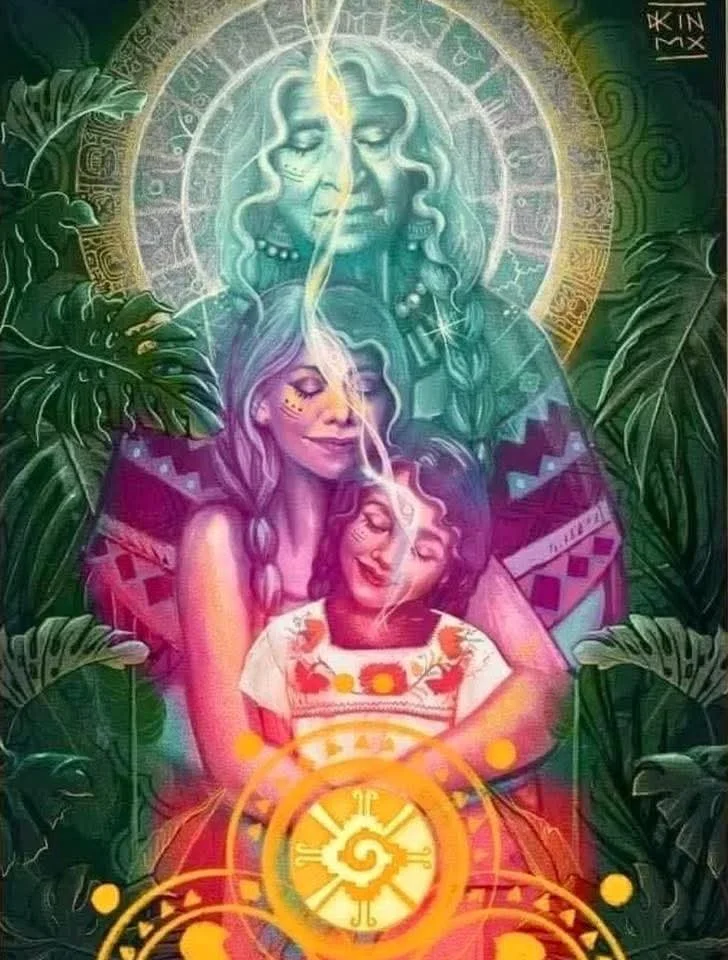
web of life

The nervous system of the high achieving woman

What looks like ambition is often something older and the body always knows the difference.

High achievement is culturally celebrated as a character trait. We treat it as something a person simply is driven, ambitious, goal-oriented. But for many women, particularly those who have spent time in my practice or ones like it, achievement began as something more fundamental than ambition. It began as safety.

A child who learns that performance earns approval, that excellence keeps the peace, that being useful prevents abandonment, that staying busy stops the scary feelings, does not grow out of that lesson easily. She grows into it. She gets very, very good at it. So what happens is the nervous system, which learned early that output equals love, safety and the feeling of belonging, encodes that equation into its baseline operating state.

What you experience and see, when you interact with her is an organised, capable, often extraordinary human. She shows up early, follows through, holds a lot. She is the one people call when things need doing. She probably has a full calendar, willpower in spades, and a level of follow-through that others genuinely admire.

She may also be exhausted in a way that rest isn't fixing. Because somewhere underneath the doing, there is a restlessness she can't quite name a low hum telling her she should always be working on something. She may also find that she has an anxiety that surfaces the moment she tries to stop.

I am not writing this blog about burnout in the conventional sense. It is about what lives underneath the high-achieving pattern in the nervous system, in the body and why the solution is rarely what it appears to be. Whilst I am focusing this on women, I have many men that I work with who have a similar patterns. I also had this pattern myself, so I know it intimately and I know what helped me let go of it.

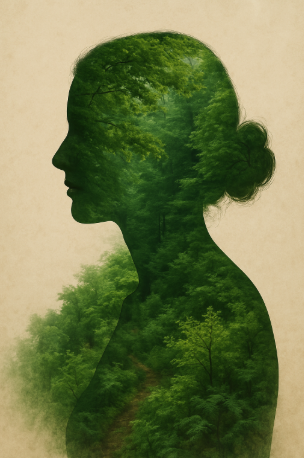
Digital art - Kellie Stirling

So, where does this begin?


Many high-achieving women were children who were praised for being capable. For excelling. For being responsible beyond their years. In that early environment, a lesson got encoded not as a conscious belief, but as something more fundamental; output brings attunement and performance earns love. Being ‘able’ even when deep inside you were anything but, is what gets you chosen.

So the child learns to produce and she is rewarded for it everywhere she goes. She gets seen when she achieves, supported when she delivers, admired when she holds it together. Over time, the lines blur between what she truly wants and what she chases in order to feel okay.

By adulthood, this has become identity. This is not a strategy that was chosen but an identity that she grew into. Her nervous system, which learned early that output equals safety, encodes that equation into its baseline state. The inner voice never fully quiets. There is always something she should be working on, something that needs to be done, the list is never ending, the brain spins with ideas. Any time she tries to slow down there is a level of anxiety that appears. So busyness keeps that anxiety at bay.

What that busyness is doing though is keeping her nervous system in a constant state of urgency. The body is operating off adrenaline as opposed to genuine life force energy. Deep inside she is desperately craving a break but she has no idea how to physically do that and still feel okay.

Here is a distinction I find myself returning to again and again in my work; there is a profound difference between a system running on urgency and a system running on genuine energy.

From the outside, they can look identical. Both produce. Both deliver. Both show up. But inside, the experience is entirely different. A system running on genuine energy has access to a real sense of aliveness, a felt connection to what matters, to pleasure, to choice and it feels safe to rest when it needs to. A system running on urgency is fuelled by adrenaline and cortisol, your stress hormones. It is staying ahead of something. The busyness is not an expression of vitality, it is a way of managing a low-level dread.

So back to this point of needing, no, craving a break but not knowing how to do that and feel safe. This is not because she lacks self-awareness, but because stopping doesn't feel like relief. It feels like exposure. The nervous system that is organised around doing as safety, experiences stillness as a threat signal. Rest is not neutral. It is where the thing she unconsciously has been outrunning, might catch up her.

So when I work with women like this, there is a real skill I need to deploy about the pace at which we slow down her nervous system. Because if we slow down too fast, her nervous system will contract because it feels unsafe.

The high-achieving pattern is not a personality type. It is a survival strategy that became an identity. if she is not achieving who is she really? The tricky thing about a survival strategy becoming identity is it is very hard to untangle, but not impossible, because doesn’t it feel like you are losing a behaviour it feels like you are losing yourself.

So the inner work isn’t just about doing less or achieving less, it is about connecting with the part of yourself that is still running, still proving and bracing. Waiting in fear that someone realises that you actually have limits. The reality is when you are in this place, you have lost connection with what your limits actually are. You have lost connection with the feeling of when the body says no.

The nervous system is not infinitely elastic. Allostatic load, which is the cumulative cost of sustained stress responses, of chronic activation, of never quite returning to baseline, builds slowly and announces itself late. For years, willpower compensates. Most of the women that come into my practice have willpower in spades and they use it as the dominant strategy to keep working. Until they don't because their body stops and refuses to do anything. All the strategies that worked in the past don’t work anymore; the scaffolding that has held it all together often collapses.

I find that this threshold often arrives at midlife, sometimes with perimenopause, sometimes with a loss or a transition, sometimes with no obvious trigger at all. The burnout that arrives doesn't resolve the way burnout used to. The anxiety seems to come from nowhere and there is a particular hollowness and sense of emptiness that begins to surface after achievements. She reaches the goal, and finds nothing there. Just the question: what's next? Until she gets to the point where she thinks, what actually is the point of all of this doing?

She may think her body is breaking down. But what it might actually be doing is asking a question it has held for a long time: ‘what are we running from?’

The body has been sending signals for years and she learned, somewhere along the way, not to hear them. The accumulation is what finally makes them impossible to ignore.

Back to identity again. The deep existential question comes up ‘who am I?’ or sometimes I hear in my practice ‘I don’t know who I am anymore?’.

For those of us whose self-worth was built on output, this is not a philosophical question. It is a genuinely destabilising one. Slowing down doesn't just feel uncomfortable. It can feel like disappearing. This is why the conventional advice like, do less, set better limits, take a holiday really misses the point, or is too big of an ask for the nervous system. It needs to be titrated. You cannot manage your way out of a survival strategy. You cannot override a nervous system that genuinely believes stillness is dangerous. The work has to go somewhere deeper.


In my experience, the women who move through this most meaningfully are not the ones who learn to slow down for the sake of it. They are the ones who build a real relationship with the part of themselves that is still running still proving, still bracing, still waiting to be found out.

That part was not wrong to develop, it was a survival strategy created by your adaptive child. It was often exactly what was needed but now it deserves to be met, not managed. Turned toward, not overridden. Given the same quality of attention, attunement and care that she has spent her whole life giving to everything else.

As she learns to connect with a sense of safety in her body and connect with this part of herself that does not feel safe to stop, the nervous system begins to find a different kind of ground. One that doesn't have to be earned. It was always there to begin with.

We are not learning to stop achieving. We are learning to attune to the parts of ourselves that were never allowed to rest, and to that deep sense of self that was always more multi-dimensional and complex than what we produced.


Trauma, Joy and the Space between

I was reading the newspaper on the weekend and I saw an interview with Bessel van der Kolk.  It was one of those Q and A style interviews and he was talking about MDMA therapy which is very interesting but he was asked a few general questions about trauma.  In one of his responses he said ‘I don’t know a single person who doesn't have trauma’.  This stopped me and it got me thinking about our definitions of trauma, the clinical definitions and then what we understand about it in popular culture.

We've inherited a story about trauma that is too narrow, too dramatic. We imagine it belongs to people who've survived catastrophe, war, abuse, disasters, big accidents.  Yes it is associated with those things but there are many more categories that we work with in somatic experiencing practice.  What I have noticed with many clients is that we place it at a safe distance from ourselves and from our ordinary yet very complex lives.  The reality is most of us carry something we don't have a name for. A tightness that arrives without warning. A habit of bracing. A way of going quiet in rooms where we used to feel at home.

Trauma isn't the story of what happened to us. It's what happened inside of us in response to what happened or a series of things happening.   It is the imprint it left on your nervous system, the way your body learned to brace, to shut down, to stay small, to stay safe. It doesn't care how big or small the event looks from the outside. It only knows what it felt like to be you, in that moment, without enough support or safety to absorb what was happening.

That's a very different thing and when you understand that it changes your meaning making around the topic of trauma.

Because if trauma is that ordinary, that universal, it means we are all, to varying degrees, navigating life with some part of us still keeping watch, still waiting for something or maybe still braced for what might come next.

Sometimes it is also about things that didn’t happen.  Not being attuned to, not feeling like we are being seen or heard.  Not receiving physical touch.  Not feeling like we belong and having to disconnect from what we feel in our body to survive the environment we are in.  

It widens the lens on it a bit doesn’t it?

There is a huge cost to all of this.  It costs us presence. It costs us the easy pleasure of being in our own bodies. It costs us spontaneity, delight, the capacity to be genuinely moved by something beautiful. Not because we don't want those things but because a nervous system that has learned to protect you from pain will, inevitably, protect you from the full depth of joy as well.

Let me tell you what I know about healing.  If trauma lives in the nervous system, so does healing. Healing doesn’t only happen through processing pain, it lives and grows through joy, connection, pleasure and co-regulation.

We seem to have created this story that healing trauma means processing pain and diving into it which is not strictly correct.  In my somatic world it definitely isn’t.  We’ve over-associated healing with pain processing and under-recognised the role of pleasure and connection. I understand why because trauma often narrows interoception; we feel less, or only certain ranges. But did you know that pleasure expands interoception? We begin to feel more safe and co-regulation gives the nervous system a lived experience of safety in relationships.

So joy isn’t superficial, it is regulating, organising and restorative.

Another really inspiring thing happened last week that motivated me to write this blog.  I was watching the Artemis landing and I had been following the astronauts a little when they were in space.  Jeremy Hansen the Canadian astronaut made a comment:

"Our purpose on the planet as humans is to find joy, to find the joy in lifting each other up, by creating solutions together instead of destroying."

He said seeing the Earth from space helped them all realise this.  This brought tears to my eyes, especially with all the crazy shit going on in the world at the moment.

We are not here to be unaffected. We are not here to have gotten it all sorted. We are here, nervous systems and all, to feel as much as we can bear to feel and to help each other bear a little more.  We are here not just to heal ourselves, but to help each other feel safe enough to come back to experience and feel the fullness of life.

This is what helps us metabolise and integrate the overwhelm that we all experience often each day.

This is what I mean when I talk about integration.  It is not fixing, not erasing, not arriving somewhere unblemished. Integration is the slow, patient process of your nervous system finding enough safety to loosen its grip. To let a little more life in. To discover that aliveness is available to you again.

The signs of that are most often quieter than you might expect. A moment when you actually taste your food. A laugh that surprises you from somewhere low in your belly. The ability to receive kindness or a compliment without immediately deflecting it. A morning when your body doesn't feel like something to manage, but something to inhabit.  A changed reaction to regular dysfunctional behaviour you experience from another on the regular.

Coming full circle on my thoughts at the start of the blog, when you understand all of this it really changes how you view all the people that come into your life each day.  I think it brings us more compassion toward each other and it makes us reflect on what we can do to support each other.

When we understand that everyone is carrying something; that the person who cut you off in traffic, the colleague who snapped at you, the friend who disappeared when you needed them, the parent who couldn't quite get it right.  When we understand that all of them are navigating some version of a nervous system that learned to cope, we start to see and feel our world a little differently.  

I am not talking about excusing what isn't okay. I am talking about a kind of tenderness that makes more room for yourself and others. For the whole complicated, tender mess of being human together.


You can't think your way into feeling

Feeling your feelings is harder than it sounds.

We have increasingly found sophisticated ways not to feel. We've all heard it. Just feel your feelings. It sounds so simple , almost obvious. Yet, for most of us, it's one of the hardest things we'll ever do.

Not because we're weak, or broken, or doing something wrong. But because somewhere along the way, we learned that feelings weren't entirely safe. Then, quietly and collectively, we built an entire world that confirmed it.

The interesting thing about feelings is that they show us one simple truth, the body knows first. You know when you walk into the room and sense the emotional climate? That is what I am talking about, the nervous system reads the room first and we feel it.

Feelings aren't thoughts about emotions. They are physical events.

A tightening in the chest. A hollow opening in the stomach. Heat rising in the face. Heaviness settling in the shoulders like something invisible just landed there. The body receives experience first, before the mind has a chance to name it, frame it, or find somewhere useful to put it. Feelings don't live in your head. They live in tissue, in breath, in the subtle language of your nervous system.

So when we talk about avoiding feelings, what we're really talking about is learning to move away from sensation. From the body's own signal system and most of us have been doing it for so long, we don't even notice we're doing it.

The avoidance rarely starts as a choice. For most of us, it began as an inheritance.

We absorbed it from the culture we were born into, a culture that prizes productivity over presence, resilience over vulnerability, and forward motion over the messy, necessary work of actually processing what's happening inside us. “Push through. Stay positive. Don't dwell”. We've dressed emotional suppression up in the language of strength for so long that many people genuinely can't tell the difference between regulation and repression.

The "good vibes only" movement, for all its cheerful intentions, is perhaps the most recent iteration of a very old story; that difficult feelings are a problem to be solved rather than a signal to be heard.

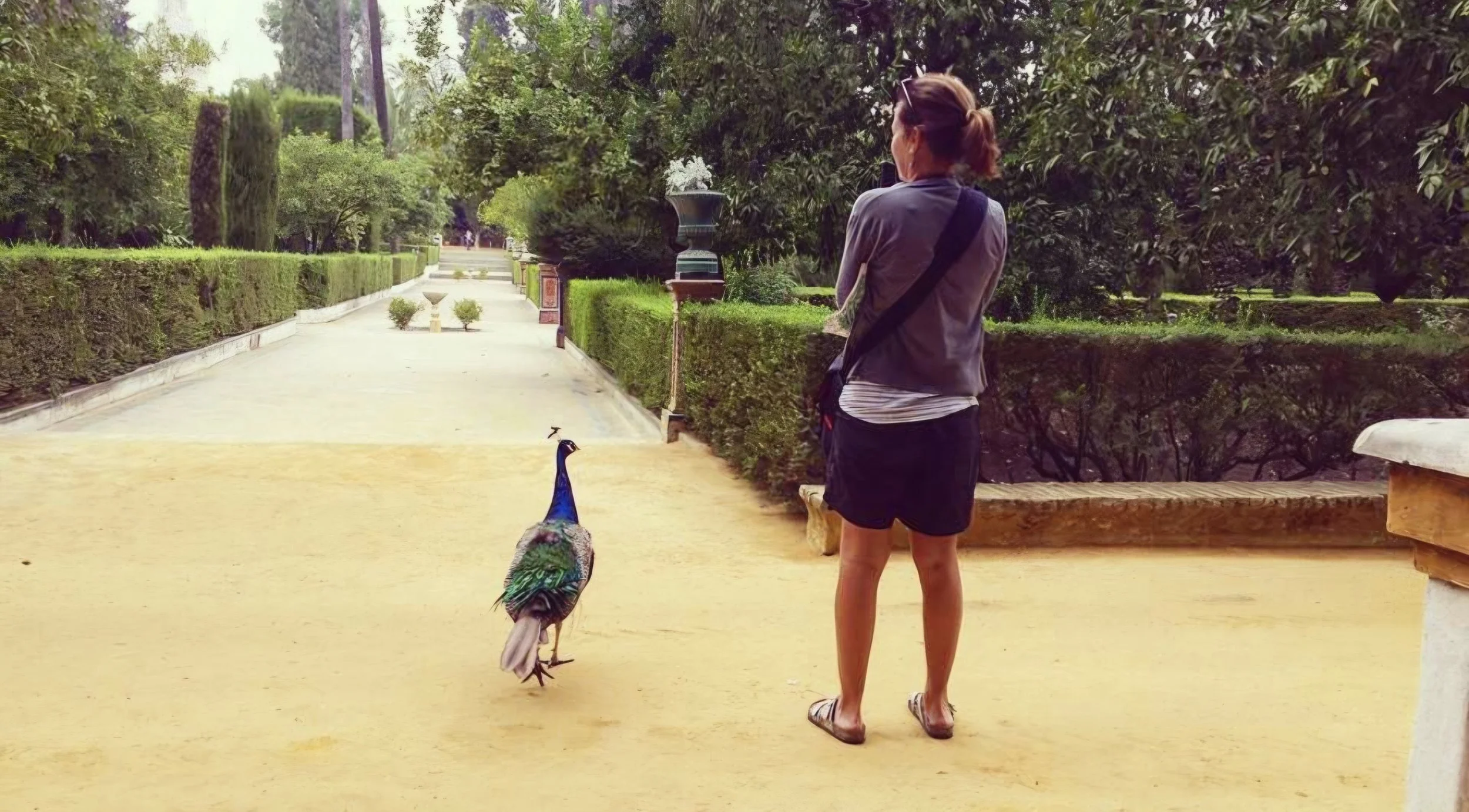
Image - Kellie enjoying the beautiful Alhambra Gardens, a few years ago. A quiet moment of feeling peace, awe and wonder, …….. with an unexpected new friend.

But culture is just the backdrop. The more intimate teaching happens closer to home.

In many families, emotions, particularly big, difficult ones, were not something that could safely exist in the shared space. Not because parents were cruel, but because they were human; carrying their own unprocessed histories, their own unmet needs, their own nervous systems doing the best they could.

Children are exquisitely attuned to the emotional climate of their home. They feel the tension before anyone speaks. They notice the shift in atmosphere when a particular topic is raised. They learn, with remarkable speed, which feelings are welcome and which ones make the air go strange.

So they adapt. They make themselves smaller. They learn to swallow the tears, contain the anger, perform the calm. Not because they were told to, though sometimes they were, but because they felt what happened in the room when they didn't. The withdrawal. The anxiety. The subtle but unmistakable signal that this was too much.

This is not a failure of the child. It is a profound act of adaptation. The child keeps the peace. The child holds the system together. The child learns that their inner world is less important than the emotional stability of the adults around them. The problem with this is it is not the child’s role in the family system to hold space. They don’t have the capacity in their own bodies to do this. Their nervous systems grow well when they have support and co-regulation for parents and caregivers.

That learning doesn't leave when we grow up. It becomes the architecture of how we relate to ourselves.

For some, this went even further. Perhaps there was a parent who struggled, with depression, with alcohol, with the weight of their own unresolved grief. Perhaps the emotional temperature of the household was genuinely unpredictable, and learning to monitor and manage it became a matter of felt safety.

These children became extraordinarily skilled at reading other people. They developed a finely calibrated sensitivity to mood, to need, to the earliest signs of distress in those around them. They learned to intervene before things escalated. To soothe, to deflect, to become whatever the moment required.

What they didn't learn was how to turn that same attention inward.

When your nervous system is organised around tracking others, when your survival, in some early and embodied sense, depended on getting that right , your own feelings become background noise at best. At worst, they feel like a liability. An indulgence. Something to be attended to only once everyone else is okay.

Which, of course, is never. Because these choices were intelligent strategies that our nervous system made, that helped us survive moments when protection, choice and support was missing. Over time they become habituated responses, very strong neural pathways that keep us alive. Those intelligent responses live in the nervous system and tissues; muscles stay contracted, breath stays shallow and the body stuck in a fight response, prepared for a fight that is no longer happening.

Culturally we started to notice in workplaces that we had a problem with poor emotional regulation and here's where it gets interesting.

Emotional disconnection, burnout, relational breakdown, it became impossible to ignore so we developed a response and we called it Emotional Intelligence.

We built frameworks. Competency models. Training programmes. We gave people a vocabulary for their inner world and a five-step process for navigating it. In many ways, it was very well-intentioned a genuine attempt to bring feeling back into professional and personal life. I want to say I think it is brilliant that organisations started to highlight this because left to their own devices, many people wound never come across this content. As I always say, you have to start somewhere.

But look at what we actually did. We took the most embodied, relational, lived thing there is and…. we put it in a PowerPoint. We made emotion into a skill to be optimised. Name the feeling, manage the feeling, deploy the feeling strategically. Which means it's still, fundamentally, a head operation. You're just thinking about feelings in a more sophisticated way. The body, where the feeling actually lives, barely gets a mention.

Emotions arise from the nervous system particularly the limbic system. This is a different part of the brain to the neo-cortex which is receiving this powerpoint information, which is all about logic and reason. If you want to build emotional capacity you have to work with those parts of the brain where implicit memory lives and you do it through the language of the nervous system, which we call ‘The felt sense’.

This, I think, tells you everything about how deep the conditioning runs. That even our solution to emotional disconnection had to be made safe by intellectualising it. We couldn't let it be messy and bodily and unquantifiable. It had to have a score. A framework. A return on investment.

We looked at the problem of not feeling and responded by finding a more sophisticated way to not feel. There is a huge cost of staying ‘just north of yourself’.

When we consistently move away from sensation, the feelings don't disappear. They go underground deep into our unconscious. They show up as anxiety without a clear source, as a vague flatness, as a body that's always tense for no reason you can name. They emerge sideways in sudden irritability, in chronic pain, in the persistent sense that something is off even when life looks fine on paper.

There's also a quieter cost. When we numb or bypass the difficult feelings, we inadvertently turn down the volume on the good ones too. Joy becomes harder to access. Aliveness feels further away. We go through the motions of a full life while feeling strangely absent from it.

Perhaps most poignantly, when we can't feel our own experience, we cannot feel others’ and we struggle to feel genuinely met by others. The connection we most want keeps glancing off a surface we've spent years polishing smooth. In relationships this is a major driver of loneliness because we cannot connect with our emotions let alone talk about them and share what is deep in our heart with another. That level of vulnerability is terrifying.

The body keeps the ledger, it waits, sometimes for decades, for the conditions to be safe enough to finally put some of it down.

We often talk about feeling feelings as though it's a matter of bravery of simply deciding to stop avoiding and diving in. But that framing misses something important.

Feeling, especially for those of us who learned early to move away from sensation, is a capacity that needs to be built. The nervous system needs to learn, slowly and with support, that it can be with experience without being overwhelmed by it. That sensation can be felt and survived. That there is enough space, enough ground, enough steadiness to actually let something land.

This is the heart of the somatic work I do with people. Not pushing into feeling, but gently expanding what can be experienced without the system needing to flee. It's slow work. It requires patience, curiosity, and a willingness to be a beginner in your own inner life.

It is some of the most important work I know.

Somatic work doesn’t force patterns to disappear it meets them with careful pacing and respect. Healing begins when we attend closely to the physiology and introduce layers of support that were not present in the original moment: co-regulation, steadiness, choice, support and the permission to be and move ever so slowly. Slow is more in somatic healing.

The nervous system begins to soften and loosen. It realises that it is no longer in a fight and the body learns that it does not have to hang on so tightly. The support that was missing is finally here.

If any of this resonates, here's a gentle place to start. The next time you notice an urge to reach for your phone, or to get suddenly very busy, or to launch into problem-solving mode, pause. Just for a moment.

Ask: what's happening in my body right now?

You don't need to feel everything. You don't need to go anywhere overwhelming. Just notice. A breath. A tightening. A warmth. A nothing.

That small, curious turn toward the body, that noticing, is the beginning of coming home to yourself.

This is unlike anything you'll find in a competency framework, nobody can teach it to you from the outside. It has to be lived, slowly, from within.

If you would like some support and learn how to build this capacity so that you have more energy to cope with what life throws your way, come talk to me.

Some reflections on Nostalgia and Collective Grief

There’s a trend circulating at the moment on social media. “Mum and Dad… what were you like in the 90s?” People are posting old photos, grainy images, oversized denim, sun-faded afternoons. There’s something almost tender about it. A collective wistfulness and I’ve noticed it in myself too.

Recently, I’ve been watching Ryan Murphy’s series on John F. Kennedy Jr. and Carolyn Bessette Kennedy. There’s something about it, the aesthetic, the pace, the feeling that evokes a different era. A quieter one. It stirs something. Not just memory but something deeper. The visuals evoke memories of my twenties living in London in the UK and times I visited New York in that time period.

Nostalgia is a slow form of grief where time shifts without our awareness. Chapters of our life end really quietly without much self awareness whilst we are living them. There are people, places and versions of ourselves that we never really got to say goodbye to, because we didn’t realise that we were at the end of something, until it was over.

We don’t really think of nostalgia as grief. Many of us learned that nostalgia was fondness or sentimentality. The yearning for the good old days. It is a felt sense, it’s very somatic; our senses are the gateway to our memories. A song comes on and reminds you of a time and place. You smell something and a whole era of your life comes flooding back. You might come across an old photo and as you look at it you remember the version of yourself that you see in your hand. How it felt to be that version of you. Sometimes you miss that version of yourself and sometimes you smile and think I am glad I am past all of that.

A few mornings ago, I was walking with my 17-year-old son. He’s been feeling the weight of the world lately like many young people are. The complexity of it. The uncertainty. The constant stream of information that never really lets the nervous system settle.

And he asked me: What was life like when you were 17, Mum?” So I told him about 1989. There were no mobile phones or internet. You rang your friends on the house phone and hoped they were home. People turned up when they said they would and most of the time you waited. We used to spend a lot of time waiting around for each other. Shops were closed on Saturday afternoons and Sundays. Nights were quieter. Life moved more slowly. As I spoke, I could feel something in my body soften. What was strengthened in our nervous system when we waited around was a greater capacity for uncertainty and a quiet trust that connection would come.

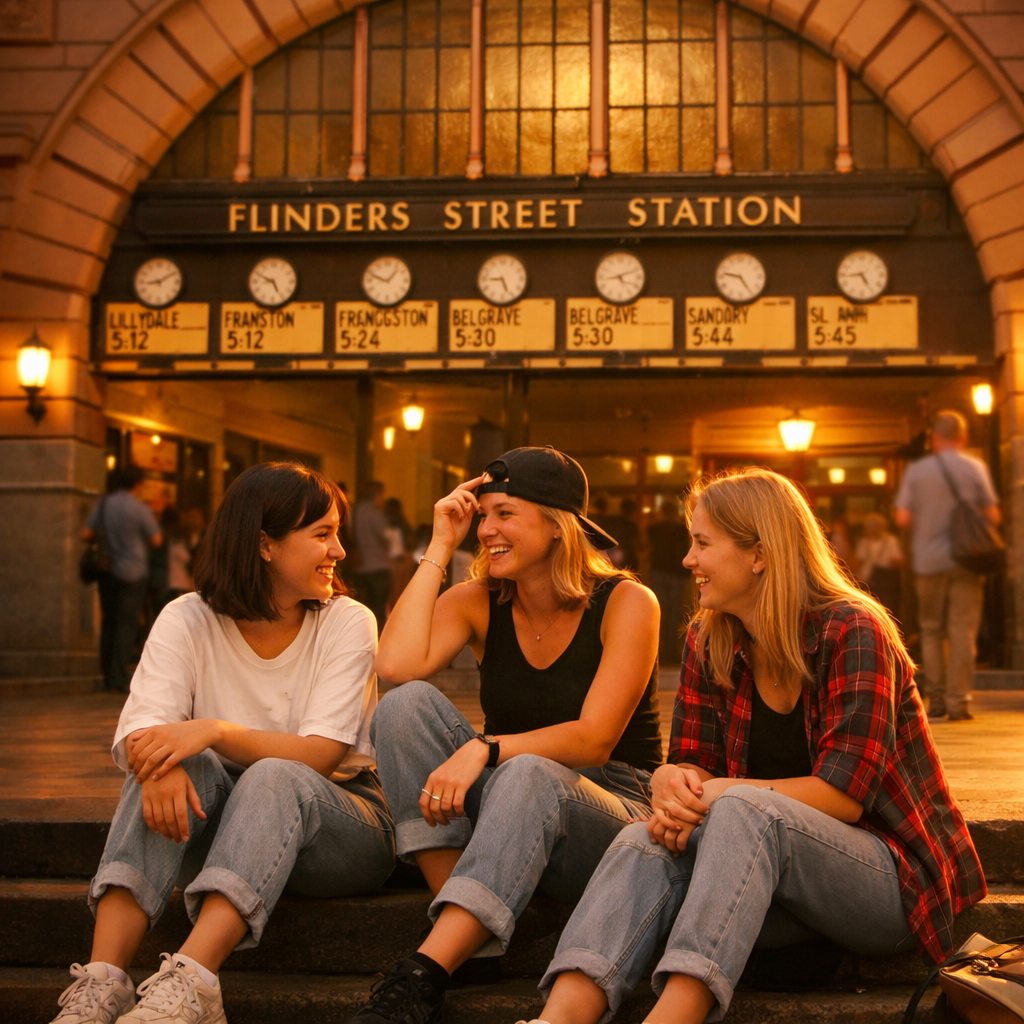
Digital image, Kellie Stirling. Waiting for our friends by the clocks.

Not because everything was better, it wasn’t. But because something about the pace of life was different. It was a little more contained, less exposed and relentless. I think that’s part of what we’re feeling when we experience nostalgia at the moment.

It’s often described as longing for the past but I don’t think we’re really longing for a decade. I think we’re longing for that felt sense. A way of being in ourselves when the world moved differently.

Later that day, I was in the car with my sons. My eldest, who’s nearly 20 and an engineering student at University, was driving. We were talking about fuel shortages and what might change in the future, electric cars, shifting systems, renewable energy options, the way the world is having to adapt.

I found myself asking: “What do you think we’ll learn from this?” He said, quite simply: “I think people have to realise that the only way we’re going to get through this is together. We have to collaborate. We have to support each other. We’ve got to change.”

I felt it land in my body as he spoke because in that moment, something shifted. Nostalgia looks back. But what he named looks forward. We can’t recreate the conditions of the 90s. The world is more interconnected now. It is more complex and demanding on our attention, our nervous systems, our capacity to process.

The slower pace we remember wasn’t just a lifestyle it was an environment that offered a kind of built-in regulation. There was less information, stimulation. and there were more natural boundaries between “on” and “off.”

That world doesn’t exist in the same way anymore. So the question isn’t, how do we go back? It’s: ‘How do we live well here? Perhaps this is where nostalgia becomes something more than wistfulness. Maybe it becomes a kind of remembering. Remembering not of a time but of what mattered and what was valued.

There was connection, presence and rhythm. It felt a little more spacious for our nervous systems and there was more connection and time spent in different types of community.

We are being asked to express those things differently now, not through simplicity, fewer inputs or retreating from the world, but through conscious collaboration with greater discernment. By learning how to stay connected within it.

What my son named, in that simple sentence, is something I see in my work every day. Whether I’m working with leaders, couples, or individuals navigating change the same truth emerges: we regulate in relationship and we find our way through complexity together.

So maybe the nostalgia many of us experiencing at the moment isn’t asking us to return to the past.

Maybe it’s helping us feel what we’re missing, so we can choose how to bring it forward. We may not get the slower world back, but we can create moments of slowness. We may not escape the complexity but we can learn to meet it with others, rather than alone.

I think perhaps that is the quiet invitation underneath all of this; not to go back but to become more intentional about how we live now.

Together.

The wisdom women carry

Reflections on International Women’s Day.

I am a bit late to international women’s day this year. It happened on the weekend, we had a long weekend where I live and my week last week was really hectic. It arrived before I realised what date it actually was. Sometimes I get a bit ‘meh..’ about it too.

International Women’s Day often celebrates women for their achievements. The roles we hold, the barriers we break, the leadership we demonstrate. All of these things are very important. But I wanted to bring to your attention the deeper truth I witness in my work with women is something quieter, older, and far more powerful. It is the wisdom women carry in their bodies.

The wisdom forged through cycles of life. Through life’s transitions, challenges and the roles we take up in our lives. This wisdom that is forged through birth and loss, relationships that begin and end, careers that are built then changed, and identities that reshaped. All of this through the long and often invisible work of healing.

Women’s bodies are cyclical by nature. We are designed for seasons; for expansion, contraction, renewal and rest. Yet many of us have spent decades living inside systems that expect us to operate like machines: linear, productive, always moving forward.

Digital Art, Kellie Stirling

However, a woman’s body never forgets its inherent nature. Eventually it calls us back and there are many different ways it speaks to us to do that. Often this call becomes louder during or after the big life transitions of becoming a mother and in our midlife when perimenopause arrives.

In midlife in particular, things really start to get shaken up. The old identities that once held us together begin to loosen. The roles that defined us, mother, partner, professional, caretaker often no longer fit in the same way they once did. What can start to feel like we have lost our inner compass a little at this point. What can feel like disorientation is actually something else entirely.

A threshold.

In my work as a somatic experiencing practitioner and somatic coach, I often see women arrive at this threshold carrying years of invisible labour, emotional labour, relational labour and generational patterns they have carried quietly for their families and communities.

When we slow down enough to listen to the body, something remarkable happens. The nervous system begins to soften and the old protective patterns that once helped us survive can gently loosen their grip.

Beneath those protective patterns something else emerges. It is not weakness or fragility. It is profound strength and a deep sense of knowing. This sense of knowing, this strength, comes from women who have lived.

What does it mean to have lived? It comes from our lived experience where we have have felt deeply, lost deeply, loved deeply. It looks like women who have learned that true power does not come from pushing harder, but from becoming more deeply connected to themselves, to their bodies, and to the web of life around them.

International Women’s Day, for me, is not only about celebrating what women achieve in the world. It is about honouring the depth of women’s inner worlds. Women who try so very hard to keep healing and growing as human beings. It comes from honouring the quiet courage it takes to heal and the wisdom that emerges when we listen to the body.

I notice the profound capacity women have to transform pain into compassion, for themselves, for others, and for future generations. When a woman heals, the ripple effect of it travels far beyond her. There is a saying that the mother is the anchor in the family system and constellation; when mum is okay, the family is okay. So when a woman works on her own healing the ripple effect is to all the social system she exists within. To her family, her intimate and platonic relationships and to her leadership.

The impact is far reaching.

So today I honour the women who are doing the deep work, the women who are reclaiming their bodies. The women questioning the systems they were taught to live inside and learning to reconnect with their deep knowing and learning to trust it again.

This kind of change rarely makes headlines but it is the kind of change that has a huge impact, one tiny step at a time.


When the Roots are revealed

A nervous system reflection on collective disgust, power, and disillusionment

There are moments when the collective emotional field shifts.  You can feel it, not just in headlines or conversations, but in the body. A heaviness. A tightening. A quiet sense of repulsion that sits somewhere in the triad of disgust, anger and grief.  Lately there has been a lot of upheaval in our lives and lots of information revealed that has frankly, shocked many of us to our core.

It is not just the big stuff.  I feel like every day I read the newspaper or look online and something about the abuse of power is there.

So it is not surprising that many people have been describing feelings of disgust, disbelief, and despair as more information circulates about powerful people, networks, and systems that appear far more complex and paradoxically far more human than we once imagined.

The reactions are strong and they make sense because this isn’t just an intellectual response.

It is a nervous system response and we notice that the body knows before the mind can explain.

When people feel disgust, the body is doing something very specific.

Disgust is a boundary emotion.  It is the nervous system saying, this is not safe, it has crossed a line and I need distance.  Disgust is an interesting emotion because it doesn’t say fight, it says move away.  Our visceral reactions with disgust are often really strong; recoiling, nausea, tightening in the throat and gut, facial expressions that close down intake.  It is like our body is saying, ‘do not ingest this’.  Which makes sense when you think that disgust evolved evolutionarily to protect us from contamination, like rotten food or toxins.  When you explore it psychologically that same neural circuitry extends to moral violations, ethical breaches, abuses of power and relational betrayal.  So when people feel disgust at certain events or revelations, the nervous system is experiencing something more than ‘this is wrong’.  It is experiencing a very different message.  The message is more ‘this feels contaminating to my sense of safety or moral order’.

It is a little bit different to anger.  Which we then might experience closely after it.  Anger is a mobilising energy that wants to restore integrity or fairness.  After that, for many if anger offers us no respite, then comes something heavier.  A flattening, fatigue and often a sense of despair. The moment when the body recognises that the systems involved feel too large to influence.

Now lets think about disillusionment for a minute. At a nervous system level, disillusionment isn’t just disappointment. It’s the moment when something we were orienting toward; a person, system, belief, or story, no longer provides stability. The illusion wasn’t just an idea, It was an organising principle that helped shape our mental models of how things are, how we perceive everything works together.

So when it falls away, the body momentarily loses its map. You might feel a drop in energy, a slowing or flattening, maybe heaviness in the chest or a kind of internal ‘oh…’ that comes with a sinking feeling in your belly. It is almost like our body is saying ‘I don’t know where to place my trust now’. With disillusionment, it is like relational disappointment and so we might be feeling something like a micro grief because we are carrying sadness rather than outrage (or maybe outrage too!). It might feel like we are grieving the certainty, innocence and simplicity we once knew.

In the context of what we are experiencing with information revealing abuse of power, these responses are not signs that something is wrong with us. They are signs that our bodies are orienting to what feels morally and relationally unsafe.

When trust and power collide

Human beings are wired to seek safety through connection.  Connection with trusted structures like families, communities, organisations, leaders, institutions.  When those structures feel compromised, the impact is deeper than opinion or politics.

It can feel like an attachment rupture at a collective level.

Deep inside of us we ask, Who can we trust now?  What is actually true?  How do we orient in the world?

In my work with teams and leadership systems, I often see a similar dynamic. When trust breaks in a leadership group, the entire nervous system of the team shifts. People become hypervigilant, cynical, or withdrawn. Energy that once went toward creativity or collaboration turns toward self-protection.

In society, the collective field behaves much the same way.

Digital art, Kellie Stirling

Another way we can look at it is by using a metaphor; The forest and the storm.

Sometimes a forest looks healthy from a distance.  The canopy is full and the trees stand tall. When we zoom up above and look down, everything appears stable.

But a storm arrives, and suddenly weak branches fall. Rot hidden deep within the roots is exposed. What seemed solid reveals its fragility.  The storm did not create the decay, it simply revealed what was already there.

This is often how systemic realities come into awareness not all at once, but through moments that expose the invisible networks of power, proximity, and influence that shape human systems.  The discomfort people feel is partly the shock of seeing complexity where we once wanted simplicity.

Living with complexity without collapsing

Our nervous systems like clear categories: good or bad, safe or unsafe, hero or villain.

Complexity asks more of us.  It asks us to hold multiple truths at once that people can be influential and flawed, connected and compromised, admired and deeply human.  It is asking us to hold the tension of polarity, of competing priorities.

When this ambiguity becomes too much, we tend to move toward extremes.  It can look like outrage that burns hot and fast or sometimes numbness that shuts us down.  Often we protect ourselves by demonstrating cynicism that protects us from disappointment.

But there is another possibility, a slower and more embodied stance.  That is Witnessing.

Not bypassing what we feel. Not rushing to certainty. Simply allowing the body to register what is present while staying connected to our capacity for discernment.

Staying human in a dysregulated world

When collective stories stir strong emotional responses, it helps to come back to what our nervous systems can actually hold. To orient to the present moment and to notice where we still have agency.  Can we find where we have choice in how we speak, how we relate, how we show up in our own circles of influence?

Systems change slowly and nervous systems change slowly too.  Often the most grounded response is not to harden, but to stay soft enough to feel, while strong enough to hold boundaries.

How can we rejuvenate and grow in the face of decay, how can we hold space for it?

In nature, decay is not the end of the story.  When something breaks down, it creates space for renewal. Nutrients return to the soil. New growth becomes possible.  Perhaps this is also true in human systems.  Moments that expose cracks in our collective structures can feel deeply uncomfortable, even destabilising, but they also invite reflection.

We can ask ourselves what kind of leadership we want to grow now within ourselves and what values we choose to root into, even when trust feels fragile.  The work is not only to witness what has been revealed.  It is to stay human, grounded, discerning, and connected as the system reorganises around us. The more we can stay in peace and calm and maintain a clear focus, the more easily we can navigate this time.  Can we stay connected to a vision of a much more compassionate and loving world for all of us as familiar systems shift and reshape around us?

If you are struggling at the moment with the chaos of the world, here are some reflection questions for you.

What sensations arise in your body when something feels morally confronting?

What helps you stay grounded and discerning when trust feels fragile?

What kind of leadership are you choosing to embody in your own sphere right now?


Functional Freeze: When you are coping but not living

For many of the people I work with, they don’t arrive saying, “I’m traumatised.”  They arrive saying things like:  “I’m exhausted, and I am not sure why and I am thinking it might be related to trauma.” or “I am functioning but I really feel flat”.  Others feel like they have lost their spark and zest for life.  Some people know that something is inherently not right, their life looks fine but they feel ‘out of whack’, or sometimes stuck, something about their life is off.

They are holding jobs, relationships, families, leadership roles and often they are capable, intelligent, emotionally aware. Yet, deep inside, something feels stalled or a bit disconnected.

This is what we call, functional freeze.

What is functional freeze?

Functional freeze is a nervous system state where you are operational but disconnected.  Many of us have this in our body. Remember, our nervous system responses are very natural because our Autonomic nervous system (ANS) is our body’s surveillance system.  With functional freeze the brake and the accelerator are both on at the same time.  However, unlike collapse, where everything stops, functional freeze allows you to: keep working, keep caring for others, keep meeting expectations, keep “showing up”.

We can do all this but it comes at a cost.

We often find that the body is braced, that our emotional range narrows. So, joy, desire, creativity, and spontaneity have maybe quietly drained away.  From the outside, life looks fine. On the inside, we can feel numb, effortful, or strangely empty.

Functional freeze serves as a type of camouflage so it can render us, (or a part of us) invisible.  It allows us to be hidden in plain sight, just going through the motions.  The authentic part of ourself, our core essence, is unavailable for participation.

Digital Art, Kellie Stirling

How does functional freeze develop?

Functional freeze often develops in people who had to adapt early.  People who learned, consciously or not, to not be a burden.  They were told to just get on with it, that their feelings had to wait or, if they just kept on going, they would be ok.  It develops in children who couldn’t protest or leave, in relational systems where anger or need was not safe.  So people learn that compliance is a survival strategy.

Metaphorically, we become like the owl, invisible in the tree, feathers blending into the background.  Quiet, but with those big eyes taking everything.  Our flight is quiet and stealthy.  Often when we see an owl in the natural environment we are delighted. They are quiet, wise and all knowing and there are so many we often don’t see because of their expert camouflage. These strategies are not flaws.  They are intelligent adaptations to environments that didn’t reliably support emotional expression, rest, or dependency.

Many high-functioning adults grew up in families or cultures that rewarded: Independence, self-reliance, achievement and emotional restraint.  The nervous system learned to override sensation and emotion in order to keep moving. For a long time, this works.

Until it doesn’t.

Why functional freeze often shows up in midlife?

Midlife is a threshold.  Biologically, emotionally, relationally, the body begins to renegotiate capacity.  So what you could once tolerate, override, or push through starts to feel harder because hormonal shifts change stress tolerance.  This means that  emotional labour accumulates and this happens all in a time in life where caregiving, leadership, or relational demands increase.  Our nervous system starts to have less appetite for suppression and the allostatic load in our body, which is the amount of stress we can tolerate, hits a high.  Our body says “I can't do this dance of squashing everything done anymore, I am exhausted”.  To suppress our emotions and sensations requires an enormous amount of energy from our body.

Those old strategies that once kept you successful now feel unsustainable.

This is why people often experience midlife as a loss of motivation or meaning and where they may experience increased conflict in relationships.  Maybe they find themselves being emotionally reactive or irritable or that they are tired and wired, they have an exhaustion that rest does not fix.  Often there is a sense of “I can’t do this the way I used to’ and also a despair at feeling anchorless and uncertain of where to orient from and to next.

This isn’t failure.

It’s the body asking for a reorganisation, not more effort.

What is important to know is that functional freeze is not laziness or burnout.  It is not a low energy state, it is a contained energy state.  Mobilising energy is present but it is being actively inhibited, our body is working hard to not move.  People in functional freeze are often deeply conscientious.  They care a lot, they try and they keep on going.  What’s happening isn’t a lack of motivation, it’s a protective nervous system state.

Freeze conserves energy when the system has learned that stopping isn’t an option or that help wasn’t available.  It is a very quiet version of survival.

What helps functional freeze begin to thaw?

Functional freeze doesn’t resolve through insight alone.

Understanding why you feel this way can be validating  but it’s not enough.  What helps is gentle, titrated reconnection with the body, often through, slowing down without forcing rest and noticing sensation rather than analysing emotion.  It is about small experiences of choice, agency, and pleasure being experienced interoceptively.  It is about experiencing embodied relational safety and not having to perform anything.

We know when we are ‘thawing’ a bit because we might notice a deeper breath or an emotion coming up spontaneously.  We also might notice a clearer ‘no’ or ‘yes’ in our body when it comes to making choices or that we are able to rest for a moment without feeling guilty. These are not dramatic breakthroughs, they are signs of life returning.

The invitation of functional freeze

Functional freeze is not something to purge or cathartically push out.  It takes slow and gentle work and it is an invitation to stop living from adaptation and start living from presence.  To shift from coping to inhabiting your life.  With the right therapeutic support it is a nervous system state that you can come out of.

So that you can let your body, not just your mind, lead the next chapter.  For many people, this is the initiation of midlife: not becoming better at surviving, but becoming more available to aliveness, truth, and an authentic way of being in the world.

Fawning: why we mirror, merge and self-abandon

Seven years ago, I read Pete Walker’s book on complex PTSD, and it was the first time I truly understood the nervous system response of Fawning. I had known the behaviour as “people pleasing,” but I hadn’t realised until then that fawning was a protective response our body utilises. As I explored it more deeply, I realised it was everywhere and that it was not a personality trait, but a strategy our system uses to keep us safe, particularly in the face of a power-over dynamic.

How many times had I sat in conversations in the workplace where a person was labelled a people pleaser as it if was a personality flaw with no true understanding or curiousity of what was driving it. Let alone acknowledgement that this person does not feel safe. I realised right then that fawning shows up in so many ways. I see it in people who over-function, some organisations are run off the back of employing a workforce who constantly does this. Entire customer service cultures are built on fawning.

Fawning is a nervous system strategy that supports us to stay in connection when we feel unsafe and we are in a double bind; where there are real consequences for us not to fawn. We all do it. Women are a little more predisposed to it because we have lots of estrogen and oxytocin is the neuromodulator of our body. What that means is that bonding and connection helps us regulate and process our lives. It can come up at anytime because it is a strategy your autonomic nervous system uses to keep you safe. If it doesn’t work you go to fight and flight, then freeze. It is a cascade.

Men fawn too, not to soothe, but to belong. Male fawning often looks like “fitting in,” but underneath is the same physiology. In very masculine coded work cultures you see this all the time. Men fawn to avoid being the odd one out. They mute their sensitivity or complexity, mimic bravado or certainty, abandon their authentic relational needs and shape-shift to avoid being shamed.

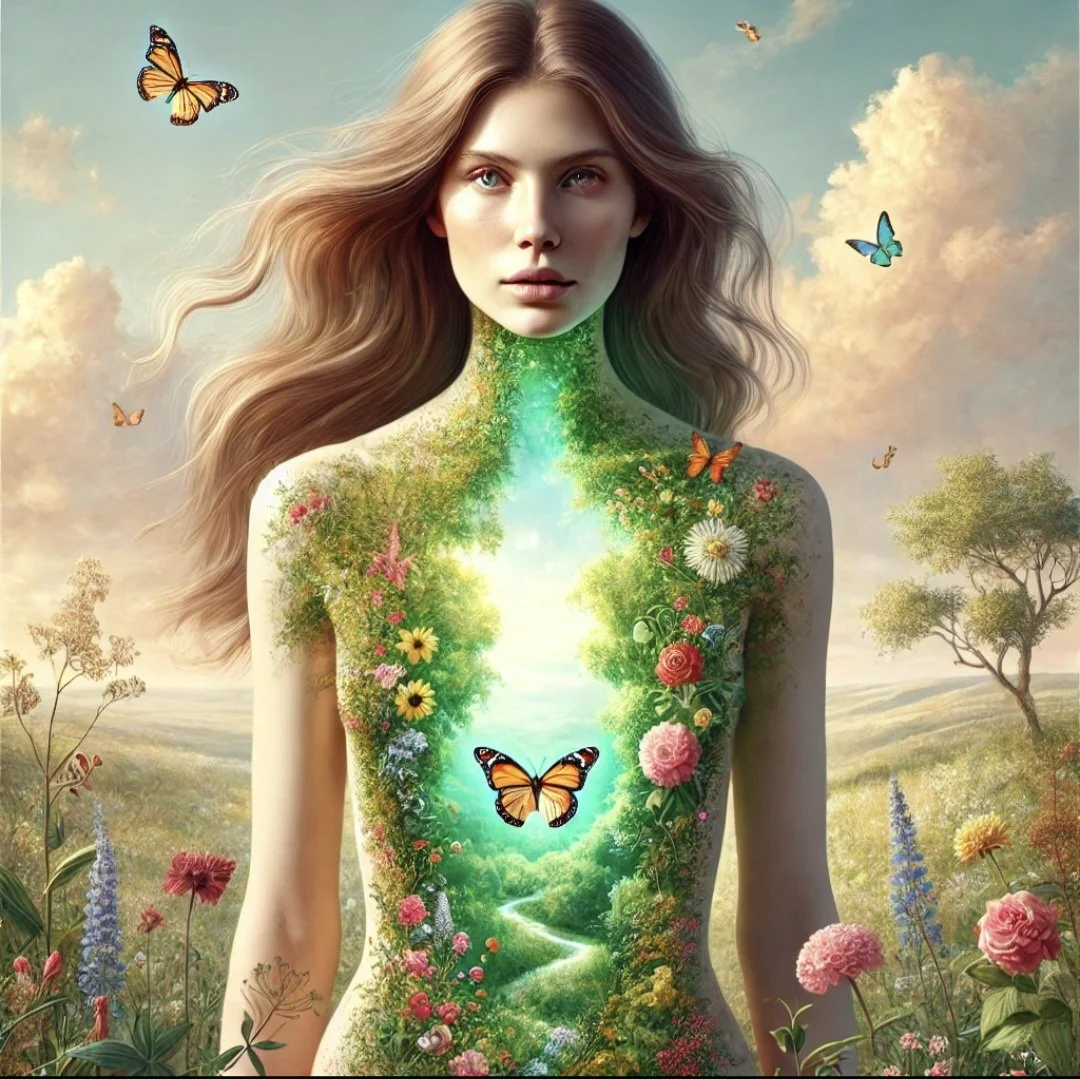
Digital Art, Kellie Stirling. Woman merged with nature

When we fawn we shapeshift, so we morph into a version of ourselves that feels the most likely to keep us safe. For some people, fawning looks like becoming more of who they are; more charming, smart, generous, funny or adored. For other people it is about being less of who you are; less vocal, creative, smart, self-assured or even able to set boundaries. Fawning shows up sexually, in money situations or, in the constant emotional regulation of other people.

We all know about fight, flight and freeze. The fawning response is different because it is a hybrid of these. The hyperarousal part of fawning encourages us to lean into relationships that are causing us harm so we to appease the person. The flight response, self-abandoning to stay safe. The hypoarousal part, or freeze part, numbs our connection to our needs and desires, so we don’t feel the effects of the harm we are experiencing.

When we fawn, we mirror or merge with someone else’s desires or expectations of us to stay safe. We do this to defuse potential conflict because that is our best chance of maintaining safety. In most of these situations there is a power over relationship. Someone has power over us. When we merge or mirror, whilst it keeps us safe, we forgo our own desires and agency and become overly accommodating of others. We become shapeshifters moulding ourselves to each scenario and person. We abandon ourselves, what we care about, our opinions, desires and what we value.

Fawning is so culturally imbued in our society that we are conditioned from a young age to do it. Think of these statements: “give your uncle a kiss”, “be the better person”, “take the high road’, “be a team player’, “you have to learn to compartmentalise it'‘, “just go with it”. We say these every day and they normalise fawning.

Fawning is a common coping system for people dealing with ongoing relational trauma. It also occurs in larger systems of oppression or marginalisation where we must let go of aspects of ourselves to secure membership or a sense of belonging. Over time fawning becomes a systemic pattern.

Individuals don’t just fawn, systems induce fawning. Some examples I see frequently include: A leader who is dysregulated will have a whole team fawning to avoid triggering them. A family with a narcissistic parent creates children who become emotional caregivers or family systems with rigid hierarchy. Workplaces where vulnerability is punished. Relationships where one partner regulates through dominance.

Fawning is not a personal pathology; it’s a predictable adaptation to power-over cultures. So you can see it is not about being nice, it is a nervous system adaptation to relational power dynamics.

One of the deepest wounds of fawning I have observed is the disconnection from anger. Many fawners cannot feel their anger; not because it isn't there, but because it has been repressed for survival. Anger felt too dangerous, too destabilising, too likely to provoke retaliation or abandonment.

So internally, they learned that their anger was not safe and put them at risk. The thing is their anger doesn’t disappear, it goes underground. Into the unconscious.

Over time, this suppressed anger can turn into resentment, chronic tension because you are constantly bracing, exhaustion or collapse, health issues particularly autoimmune issues and a fierce inner critic who constantly self blames.

Restoring healthy aggression, the energy of our boundaries, clarity, and self-protection is essential. But it must be done slowly. Really slowly. Because letting that much anger thaw all at once can overwhelm the system that originally buried it to stay safe.

How do we stop Fawning?

Well it starts with finding safety in the body. You can’t talk yourself out of a fawn response nor can you mindset your way through it. Your nervous system needs to feel safe in the body to try anything new.

The work looks like being able to notice the early cues the anticipatory smile, the shallow breath, the scanning of the other person’s mood and gently interrupting the impulse to fix or appease. Learning to feel tiny drops of healthy anger in an incredibly titrated, slow and digestible way. Allowing the internal critic to soften, which often happens naturally when anger can finally move outward instead of being turned inward

Learning to stop the fawn process from being pervasive is the process of reclaiming power-within, instead of surviving through power-over dynamics. Our fawning response is wisdom it is not a flaw. It has kept us safe and will continue to do so, when we need it in the moment. Our fawn has kept the peace and helped us to function in environments that could not hold our full aliveness.

It is profoundly healing for us to notice our fawn patterns (and to continue to be able to notice them in the moment) and gently let them loosen their grip. Over time it becomes a survival strategy we have access to, not our default mode of functioning. When you start to let go of it you are not losing the nice aspect of yourself, you are becoming more You.

Lying in the Dark

One of the things I find most interesting is that we are all, on some level, afraid of the dark. I don’t mean the literal dark, like the night. I mean we are afraid of dark emotionality, dark times, dark moods, that dark place we go when we our life is changing dramatically, death. We are afraid of all that dark.

What I find so striking is that the dark isn’t foreign to us. It’s the first home we ever had. Before we had language, consciousness and identity, we were held in a warm, fluid, completely dark womb.

For nine months, the dark was our sanctuary. We were nourished, protected, and completely connected without ever seeing a thing. We didn’t need sight to feel safe, or light to orient. Our bodies knew how to rest and grow in the dark.

Isn’t it ironic that we spend the rest of our lives fearing the very place we began?

Popular culture treats the dark as something dangerous or disorienting, a space where we lose ourselves. But from a somatic perspective, the dark is often where we find ourselves again. Because the dark asks nothing of us. It doesn’t demand performance, productivity, clarity, or answers.

The dark invites us to rest, to slow into ourselves and just be.

The dark womb is an archetype of profound safety, not because it is soft and easy, but because it strips away everything that is unnecessary. In the dark, we are not seen for what we do. We are held for who we are.

Maybe that’s the deeper truth; the dark isn’t here to frighten us, it’s here to return us to ourselves.

There are seasons in life when everything familiar falls away. Not by choice or spiritual aspiration but because life itself becomes a burning ground. My cancer journey was one of those seasons.

I remember feeling stripped bare, not just physically, but emotionally and existentially. It wasn’t simply the fear or the medical complexity. It was the sense of being dismantled at every layer. The parts of me that used to hold me together stopped working. My usual ways of coping fell away. There was nowhere to run, nowhere to hide inside myself. In fact, I found the best place to be was in the present. I must admit that it felt like being dropped into the dark womb of the world and strangely, or maybe not that strangely at all, that’s exactly where the healing began.

We all have experiences in life where we feel like everything is being burned down and we are going to fall into our own dark hole. You don’t need to have cancer to experience this. Midlife, menopause, divorce, grief, trauma healing, big career transitions, or sometimes all the above at the same time. The thing is they all bring us to the same threshold.

That threshold is a place where you realise you can no longer be who you were, you feel rudderless, but if you can stick with it you have this deep sense of knowing that you are being carved into who you truly are. You are becoming yourself.

While this process can feel brutal, it’s also profoundly sacred.

Sometimes life breaks us open so the truth can finally be felt. Sometimes life drags us into the dark so we can be remade. Sometimes life strips us bare so we can emerge more honest, more embodied, and more deeply alive.

When we come through the other side of these big life transitions, we often notice that yes we are still here, but we are not the same person we were before. We will never be that person again.

There will be parts of you that survive and are the same, there are parts that are gone and there are new parts of you that are being birthed.

During my treatment I spent my days resting and I read a lot. I came across Meggan Watterson’s Divine Feminine Cards (which are great by the way) and within them I found the archetype of the Black Madonna. I would shuffle the cards and many times she would just drop out.

The Black Madonna, archetypally, represents the power we all have to emerge from dark times transformed. Jungian Analyst, Marion Woodman believes that the Black Madonna represents a new awareness or consciousness toward out bodies. She represents the wisdom we can only gain when we go through the painful fires of transformation.

The Black Madonna is not the soft, glowing mother of the light. She is the fierce mother of the dark.

She is the one who meets us in our descent, not to pull us out, but to sit with us in the shadow until something true emerges. She is the archetype of the underworld, the womb, the ashes, the grief that breaks us open.

By connecting with this energy I can tell you that I felt spiritually held; not by something that promised rescue, but by something that promised presence.

The Black Madonna taught me that the dark is not a punishment. It’s a crucible. A crucible is what alchemists used to melt down metals to turn them into gold. The dark and our grief that often comes with it, are a crucible, a container that holds us.

So what burned away for me? Well a few things, a compulsion to hold everything together and the pressure I put upon myself to be endlessly available, a need to make other people comfortable and identity shaped by survival rather than by my soul. What emerged and was born was a quieter and steadier self with clarity about what actually matters, a deeper respect for the wisdom of my body and its profound capacity to heal, an acceptance in the fragility of life whilst at the same time being able to hold a deep trust in life.

The darkness, the feeling of burning down or being stripped bare, it wasn’t destruction it was actually refinement.

If you are in your own dark season right now, feeling like you are burning down, or you are lying down in a hole and can’t move, I want you to know this. What is burning down or being stripped away was never meant to be there.

Like the Black Madonna, the dark can hold you whilst you let go of whatever you need to. It is not to rush you or rescue you, but to support you and witness your becoming.

Because sometimes the most loving thing life can do to us is strip us bare so we can finally see ourselves clearly.


Belonging everywhere, nowhere and to ourselves

If you have ever wondered ‘where do I belong?’, you are not alone. I see it come up in coaching work all the time. Every big transition in life stirs that questions within us. It is our body and our psyches way of recalibrating. Making space for the next version of you to emerge.

The tender questioning of where we belong isn’t a flaw, it is part of being a human. Each transition asks us to find a new version of ourselves. It is a basic survival needs of humans to feel that we belong. We humans are mammals and we are wired for connection.

We spend so much of our lives searching for belonging; in relationships in communities and at work. Sometimes we find it. There are moments when belonging wraps itself around us so softly we barely notice it. Sometimes it slips through our fingers. The truest home we will ever know is the one we carry with us: our body. My body is the house that I live in. The place I return to when everything else feels uncertain, the memory and echo of every place I have ever been and seen, live within it.

Every version of me that once searched for home lives in my body.

There are moments when the world opens to us, when we feel connected to a person, a landscape, a shared purpose. These moments are luminous. We feel the pulse of life running through us, the sense that we’re part of something greater.

It’s easy to think, this is belonging. It is, for a time. But belonging to the world is fluid, it changes, shifts, and evolves as we do.

Then there are the seasons when we don’t fit anywhere. We grow and we change constantly. The old roles don’t suit us, the conversations feel thin, the places that once felt like home start to feel foreign.

That ache of displacement can stir a deep questioning, Who am I now? Where do I belong?
It is here that imposter syndrome often arises, whispering, I’m not enough. I don’t belong here.
But imposter syndrome isn’t proof of inadequacy. It’s a symptom of disconnection from self-belonging, a signal that we’ve drifted from our inner home and started measuring our worth through someone else’s eyes. It is not surprising to me that many people experience this at work, particularly when they are promoted to a new role, because we are constantly judged by external frameworks in organisations. Like show dogs who constantly have to jump through hoops to please. Few people feel like they can be themselves at work. If you do feel that, you are one of the lucky people.

When we come home to ourselves, the landscape changes. We remember that we belong, first and foremost, to ourselves, to the body we inhabit. We reconnect with our own heartbeat, our breath, our quiet sense of deep inner knowing.

Belonging to yourself is not about isolation; it’s about full bodied integrity. It’s the grounded sense that, no matter where you are, you can meet life from a place of wholeness. It is the warmth in your chest when you tell your truth, the grounded spine when you say no, the quiet smile when you know that you don’t need to prove a thing. You no longer need to perform or prove. The voice of imposter syndrome softens because you no longer outsource your worth.

Somatically, this is felt. A softening in the shoulders. A deepening of breath. A quiet, anchored presence that says: I am here. I am enough. I am mine.

In midlife something shifts for most of us. A new north star begins to emerge.

Midlife often unravels the old anchors. The identities that once defined us, parent, partner, professional, caretaker, begin to dissolve or shift. Our compass spins. The ground beneath us feels less certain. It is less about fitting in and more about who you are becoming.

But this loss is not emptiness; it is space. It’s the fertile ground where the new north star begins to form; one that reflects not who we were told to be, but who we truly are.

To find that star, we have to do the healing work: to meet the parts of ourselves were left behind, to grieve what’s ending, to feel the sensations of transformation moving through our body. This is where somatic work becomes essential.

Through the interoceptive lens, through noticing what’s happening inside, we begin to meet our emerging self not as an idea, but as a lived experience. We reconnect with our wholeness, with all the parts of us that are ready to come home.

We belong everywhere and nowhere and ultimately, within. Belonging is not something we earn or find; it’s something we remember.

The work of midlife, and really of a lifetime, is to come home, to feel safe inside your own skin, to live from the quiet strength of belonging to yourself. From that place, connection flows naturally. You can meet life, love, and change with openness, because your roots are within you.

So pause.
Breathe.
Feel the house you live in.
Let your body remind you. You already belong.

Ancestral Trauma and the Midlife Body

How midlife awakens the ancestral stories we carry in our bodies

Midlife has a way of loosening what’s been tightly held. As our hormonal landscape shifts, things that once stayed neatly tucked away, old grief, inherited fear, unspoken stories, they begin to rise. This isn’t failure or falling apart. It’s the body’s way of inviting us to heal what has been carried for generations.

Our body is the keeper of our stories, and sometimes it holds the stories of our ancestors that came before us. We know through research on epigenetics that this is true.

Sometimes the ache we feel didn’t start with us. Sometimes the heaviness in our chest, the tightness in our belly, or the deep tiredness that no amount of rest can soothe, belongs to a story that was never ours to carry. We are born into other people’s stories.

We inherit much more than eye colour and bone structure from our ancestors. We also inherit their nervous systems. This is shaped by the environments, events, and relationships that came before us. The body remembers what the mind forgets.

What is Ancestral Trauma?

Ancestral trauma refers to the transmission of unprocessed emotional pain, fear, or survival patterns from one generation to the next. These are not always passed down as explicit stories. More often, they live in silences, in the shape of a family’s nervous system, or in the ways we unconsciously learn to stay safe. Ancestral Trauma lives in the body’s tissues, rhythms and reflexes.

It can show up in many different ways. Chronic tension that never seems to release, or maybe a tendency to over-function, taking responsibility for everyone else’s wellbeing. Or for some it is deep fatigue or burnout that isn’t fixed by rest.

“When you heal the wound in yourself, you heal the wound of generations before you and generations after you.”
Michael Meade

A grandmother who survived war may never speak of what she endured, but her vigilance might live on in a granddaughter who finds it hard to relax. I have worked with many women who come to me and say they literally cannot stop working and rest, even though their body is screaming out for it and they don’t understand why. The pattern often lies in what has been inherited in their autonomic nervous system.
A father who grew up in scarcity may raise children who, even in abundance, feel guilty resting or taking up space. These imprints are adaptive, they helped someone survive once. But what was once protection can become limitation when it’s no longer needed.

Why does this show up in midlife?

To be fair it can show up earlier. It is just that in midlife, part of our developmental challenge is to come back to the truth of who we really are. This impulse can show up in a myriad of ways. Many people ignore it, so it will hang around until they pay attention. In my experience with my clients, there is a deep discomfort with life and a strong impulse or urge to seek more meaning, purpose, or something different. They find they cannot continue on the way they have been travelling so far.

As our hormonal landscape changes, our emotional landscape does too. The hormones that once buffered and balanced our stress responses shift, and the body’s elegant system of containment begins to loosen. Things that once slipped neatly under the surface start to rise. Old grief, ancestral sorrow, unprocessed experiences; they all start knocking on the door of awareness. So it is not that life suddenly gets harder it is that what has been kept buried in the dark, suddenly starts knocking on the door asking to be seen. While this can initially feel unsettling, it’s also profoundly healing. The body, in its own divine timing, invites us to metabolise what we’ve inherited, so we can step into the next chapter lighter and more integrated.

Our body is a storyteller.

In my work, I see how ancestral stories express themselves somatically. The body carries what hasn’t yet been felt or integrated. Chronic tension, gut and reproductive issues, or a sense of deep fatigue, often emerge as the body’s way of trying to resolve inherited stress.

I’ve worked with many women who, even after hysterectomy or menopause, still hold a palpable energetic imprint in the womb space. These might be a story of loss, silencing, or generational grief that predates their own experiences. When the body is met with compassion and attunement, those old imprints can begin to release. What was frozen starts to move.

Healing doesn’t always mean understanding the exact story, it means restoring a sense of safety so the body no longer has to carry it alone and the pattern that has been long held, can be expressed and completed because there is enough of a felt sense of safety in the body for it to let what has been stuck, be released.

Recognising that an inherited pattern lives within us is not about blame or burden, it’s about freedom. When we see that our over-responsibility, perfectionism, or shutdown might have roots in someone else’s survival, we can meet it with compassion rather than self-judgment. In that awareness, something softens.
We begin to relate to our own patterns differently, not as flaws to fix, but as messages from the body inviting us to complete what was once incomplete.

It is important to remember that these patterns and imprints you inherit, they come from survival and they also come from love. A mother’s hypervigilance was once love and protection of herself and her family. A grandfather’s stoicism was a protective response, grounded in love to protect himself and his family system. They did the best with what they had to keep surviving.

The ripple of healing.

The beauty of this work is: when we heal, we don’t just heal for ourselves. The nervous system reorganises and recalibrates. We slowly and gently start to change how we show up in relationships, in our families, and in our communities. That healing ripples backward and forward . It honours those who came before, and is freeing to those who will come after us.

Ancestral healing is not a thinking activity it is a somatic and relational one. The best therapeutic modalities to heal it are somatic experiencing, internal family systems, somatic attachment work like NARM, family constellations work and ritual, ceremony and nature based practices. Rarely is it one modality. It is often a few woven together to integrate, depending on what is showing up for an individual.

Ultimately the goal is about restoring flow and connection, within the body, within the family system and within the wider relational field of our lives.

As you read this, gently place a hand on your heart or your belly.
Feel your breath, and remember; you are part of a long line of survivors and lovers and dreamers.
What might shift if you allowed your body to trust that it no longer has to hold it all alone?

Burnout, chronic stress and boundaries

Every week, I meet people who are utterly exhausted, not because they or aren’t capable, but because they’re working inside systems with no boundaries left. Restructures, shifting roles, endless “transformations”, it’s like the organisation itself is in permanent fight-or-flight, constantly reacting to the next thing.

Many people finding it almost impossible to get into the ‘meaty’ parts of their role, they are simply skirting along the top, doing the things they have to do to keep functioning. Inside that chaos, people are expected to just keep pushing and pushing until their bodies finally say, no more.

They lose touch with the ability to listen to their body’s boundaries or they notice them and ignore them. When you are bored, exhausted, shutdown or unmotivated, that is a boundary. The body is saying no, not for me.

Chronic stress traps the body in survival states, fight, flight, freeze or eventually collapse. Over time, we lose connection with our most basic autonomic cues, those subtle sensations that tell us when to rest, pause, or say no.

We override those messages so often that “pushing through” becomes who we are. The nervous system becomes so used to being “on” that stillness feels unsafe.

Many of my clients tell me they don’t even know what rested feels like anymore, they only know the space between deadlines. When they start slowing down in our sessions, they’re often deeply moved by the experience. It’s as if their body finally exhales. They realise they haven’t felt that kind of slowness, safety, and presence for years.

The Myth of Resilience

In my experience, most organisations completely misunderstand resilience. They talk about “building resilience” as if it’s about pushing through, grinding harder, or coping better with dysfunction.

But nervous system resilience isn’t about endurance, it’s about return. It’s the capacity to come back into your window of tolerance, that place where you feel calm, connected, and curious, after you experienced hyper or hypoarousal in your autonomic nervous system. That’s where perspective returns, creativity awakens, and we can actually relate to others instead of reacting from stress.

Pushing through isn’t resilience. It’s disconnection disguised as dedication.

Systemic Boundaries and the Body

When an organisation has poor systemic boundaries, no clear priorities, constant change, or unrealistic expectations, people end up carrying the system’s chaos in their own bodies. The organisation offloads its dysregulation onto its people.

A nervous system can’t heal without stabilisation, neither can a culture. We need workplaces that honour pause, stabilisation, containment, and rhythm, the same sequence that helps a nervous system recover from chronic stress. Stabilisation creates the ground. Containment provides safety. Rhythm restores flow.
Without that, burnout isn’t a personal failure, it’s a systemic inevitability.

When Agility becomes agitation

Many workplaces today pride themselves on being “agile”; always pivoting, always moving. But without true systems thinking capability, agility easily turns into agitation. Instead of responding intelligently to what’s happening, organisations start grinding, pushing, and reacting. People carry the cost, through exhaustion, disconnection, and burnout.

So instead of becoming more fluid and responsive, organisations become hyper-reactive. They confuse activity with progress, speed with strategy, and flexibility with chaos. When leaders can’t see the system as a living organism, with cycles, rhythms, and interdependencies, they unconsciously perpetuate stress throughout the whole structure.

Without true systems thinking capability, “agility” gets flattened into constant motion, change for change’s sake, rather than mindful adaptation. When we don’t understand the organisational system as a living system, we keep driving it past its own capacity. The solution isn’t to become more efficient; it’s to become more attuned.

Healing from burnout and chronic stress isn’t about bouncing back; it’s about coming home. It is remembering what it feels like to inhabit your own body again, to breathe, to rest, to notice. It is about understanding what a Yes and a No feels like in your body. It is feeling safe to be slow.

True resilience begins when we stop pushing through and start listening, to ourselves, to each other, and to the quiet wisdom of our own biology.

If you are feeling overworked, overwhelmed or burned out, it is a reminder to take time out for yourself. Take a mini break. Notice your breath. Notice when your body tightens, braces, speeds up, or checks out. That’s your nervous system whispering that you’re at the edge of your window of tolerance.

For leaders and organisations, it’s time to redefine resilience, not as pushing through, but as coming back home to ourselves. Back to stabilisation. Back to rhythm. Back to the wisdom of the body, individual and collective.

Because when the system learns to breathe again, everyone within it can too.

The power of midlife initiation

Our culture, driven by the cosmetics industry, has created a very distorted, narrow narrative around women, ageing and menopause. One the one hand we are subjected to endless anti-ageing advertising that equates youth with worth, desirability and visibility. On the other side there is a one size fits all mainstream solution, given to women when they reach perimenopause or menopause that HRT will solve all their problems and you can carry on as if nothing has changed.

All of this ignore a deeper truth; menopause is not a problem to fix. It is a profound transition physiologically, psychological and spiritually. In many cultures, it has been seen as an initiation into wisdom and power. Our western productivity focused culture, dismisses that and is focused on keeping women youthful and functional rather than moving through this transition with dignity, agency and choice.

What is frustrating for me about this is it creates many big losses and maladaptive issues. The two biggest I see are:

  • They don’t get the holistic support they need to actually learn to listen to their body, honour its new rhythms and integrate changes and,

  • For society in general, we miss out on the leadership, wisdom and creativity once women aren’t hormonally geared toward reproduction and are able and free to channel that energy somewhere else.

When women step into this new season of life, they expand into their social and relational power. This is the stage of eldership, where wisdom, creativity, and leadership can flourish.

I am not saying HRT is wrong, it can be super supportive when you are going through this transition which takes years, but it shouldn’t be the only story. Midlife offers an invitation to step into a new way of being with our body and with life itself, rather than staying locked in the old story.

Menopause, when not pathologised, is often a time when childhood and ancestral trauma comes to the surface, because the body is less able and willing to keep these patterns locked down. Hormonal changes will drive changes in the autonomic nervous system (ANS) so layers of freeze stuck in the ANS can come up strongly. It is your body telling you it cannot carry this anymore.

I do a lot of work helping women reclaim healthy aggression and what I find is that we are so culturally conditioned to suppress our anger, which is suppressing our life force energy, our boundaries and our right to take up space. So doing this work to reclaim our aggression is deeply countercultural. Because what the cultural script tells women is quiet down, look young, stay useful in ways we deem okay (appearance, productivity and caretaking). The deep truth about menopause is it asks us to reclaim all of this. It is inviting us to reclaim our vitality in a different form, one that is fierce, wise, protective and deeply relational.

In modern society we see a loss of interdependence in modern family systems. In many cultures, grandmothers were never ‘done’ after menopause. They became pivotal in holding the community web, through storytelling, wisdom keeping, guiding younger adults, offering support to children without being a primary caregiver. Our isolated nuclear family model is what contributes heavily to burning women out, not the fact that they are ageing.

So the cultural story becomes ‘you are no longer fertile you are less valuable’. When actually the truth is the opposite. This is the time in life when women expand their social and relational roles, if the culture allows it. Throughout my career I have seen many women thrive once they entered midlife, either in new business ventures, in community work, in advocacy work. They really are in their prime.

So this life stage is not just about personal healing, it is about cultural repair.

Midlife is this pivot point: either a woman breaks free from the old narratives and survival patterns, or she risks staying trapped in victimhood, silence, or suppression. When a whole generation of women stays trapped, society loses out on the wisdom, leadership, and fierce love that could be shaping our communities, workplaces, and systems.

At a peace summit in Vancouver in 2009 the Dalai Lama said ‘the world will be saved by the western women’. Well I think its women globally actually. If women embrace this midlife initiation, they don’t just heal themselves, they begin to model a different way of being in power. A power that is relational, embodied, self-authored, and deeply interconnected into the web of life around them.

When a woman can step through her midlife transition with the right support, they don’t just attend to their own healing and personal growth, they become catalysts for cultural change. Connecting to their voice, their presence, expanding their capacity to step into and become their personal power, ripples out into families, workplaces and communities.

This is the work of midlife: not just healing ourselves, but reshaping the world through connection with the deep essence of who we really are and the authority of who we are becoming.


When Hormones stop hiding the Truth. Perimenopause exhaustion, the reckoning after survival mode

I was having a conversation with one of my sons the other day about parenting now versus what I received. He thought it wasn’t much different accept for the presence of technology and having to navigate the impact of that on children. I said it was different because our parents often had their parents nearby and we were also a part of a community who looked after each other. Today we live in such an individualistic way and whilst in our area we have a strong community, the fact remains that people are really busy and trying to get by the best they know how and having to do it largely on their own.

Then I thought to myself, so many of the women I work with arrive at perimenopause in survival mode. Completely exhausted from all their years of mothering. For many, the years of mothering where we have sleep deprivation, a heavy emotional labour that we carry and years of trying to juggle work and home, the endless giving of energy mean that they live in a constant state of adrenaline and cortisol, just to get through the day. The lack of the ‘village’, of communal nervous system regulation means women are doing it alone all the time.

The workplaces we are in are designed for male bodies that have a linear hormonal cycle, predictable energy no ebb or flow. Not a 28 day cycle that has big fluctuations. Women’s bodies are cyclical, not linear. Energy, focus, and capacity shift across the menstrual cycle, and later in life, across hormonal seasons. But the expectation is “always on,” with no space for luteal slowdown, rest, or recalibration.

As technology innovation, particularly with AI and productivity culture has become the norm we see 24/7 emails and messaging which results in blurred boundaries. The demand is: faster, always available, produce more. Women’s bodies , designed for rhythmic cycles of activity and rest, are being pushed into an unnatural pace. This results in dysregulation, burnout, sleep disruption, and a sense of disconnection from their body wisdom.

As we normalise this we tell ourselves, this is what mothering means today, this is what being an adult woman means today. But the cost is high because our nervous system becomes very frayed and depleted. So by the time perimenopause arrives and estrogen and progesterone are both low, we experience; disturbed sleep, small stressors can trigger big reactions, our emotional regulation is harder, and or body doesn’t bounce back the same way it used to.

Most of us haven’t learned much about the impact of our hormones on our nervous system at all.

So yes, there is a question we have to explore about learning about our hormones and their impact on our nervous system and our behaviour. But for me, the bigger question is; How do we design lives, workplaces, and communities that honour the body, especially the cyclical, relational, deeply intuitive female body? And if you are thinking male bodies aren’t impacted by all of this, think again. Until we address all of this, our health, healing our nervous system, learning to find some regulation, it will all feel like we are swimming upstream.

Perimenopause as Turning point.

The reality is perimenopause often reveals to us the impact of decades living in survival mode. As estrogen and progesterone decline, their buffering affects on the nervous system start to fade. Estrogen is supportive of bonding, it is the soothing and accommodation hormone, it supports oxytocin and the bonding and pleasure from connection that that brings. Progesterone brings us calm. Also these two hormones don’t decline in an orderly fashion during our perimenopause transition. Progesterone declines first and estrogen has lots of ups and downs that makes us feel internally chaotic, as it moves towards its lower levels once we reach menopause. What they do both reveal is nervous system exhaustion and without their support we can no longer mask the cost of being in survival mode.

Art - Visions in Blue


Oxytocin, pleasure and women’s nervous systems

Oxytocin is a key neuromodulator of the female nervous system. For male bodies Dopamine does this. Pleasure, touch, connection and community increase oxytocin, which builds resilience and vagal tone. Reduced estrogen can reduce oxytocin but pleasure can replenish it. Pleasure isn’t an indulgence, it is biology. Every moment of genuine pleasure — a hug, gentle self-touch, laughter with a friend, being moved by music, lying in the sun, safe intimacy, sexual and sensual pleasure — stimulates oxytocin, the neuromodulator that calms the female nervous system. Oxytocin counters cortisol and adrenaline, it strengthens vagal tone (our capacity to return to calm) and it builds a felt sense of safety and belonging. When you look at from this perspective, pleasure becomes medicine for midlife. It replenishes what decades of survival mode drained away.

Vagal Tone and Menopause

Vagal tone measures the activity of the vagus nerve, which regulates the body's "rest and digest" functions, and it's often assessed through heart rate variability (HRV). So Vagal tone is the body’s ability to regulate stress and return to calm. A lower vagal tone = more reactivity, poor recovery from stress, disrupted sleep. Estrogen decline may reduce vagal tone, making regulation harder. There are practices that help: yoga nidra, breathwork, gentle movement, singing/humming, somatic experiencing, safe touch. Yoga Nidra has been a game changer for me and I have found when I do it consistently, I sleep well. My brain also feels more relaxed. Somatic experiencing has many ways it helps but in this context it helps people build their interoception which is their ability to be with their internal experience - feelings, sensations, emotions. So when we become dysregulated it can be so helpful because we have a connection with all our feelings and emotions and have strategies to be with them and let them move through us. Rather than resisting them. All of this isn’t just “self-care”, it’s rewiring the nervous system for the next stage of life.

The bigger question: Lifestyle and systemic change

The real problem isn’t our biology - it is the culture we live in. Lack of community, unsupportive workplaces, and unrealistic expectations push women into survival mode. Women’s cyclical bodies need rhythms of rest and renewal, but society doesn’t recognise or honour them. We are made to feel like something is wrong with us. We are made to feel we are not resilient enough. Menopause is clever in many ways, It is a truth teller that often opens our eyes to dysfunction in our facets of our life. Culturally it reveals this mismatch. It’s not a personal failing; it’s a cultural design flaw. I wonder what would happen if work hours were designed around the rhythms of a female body?

Post Menopause brings Sovereignty

Menopause is not just loss, it’s an initiation into a new stage of power. With nervous system healing, women can access deeper calm, intuition, and authority. Post-menopause can be a time of reclaiming sovereignty, no longer running on survival mode but living in alignment with what nourishes us. Menopause is the autumn season of our life and often involves lots of reflection and review where we are called to let go of what we don’t need anymore. Many women often find their physical and mental health creates a strong impetus for all these changes to happen. It is hard to ignore what no longer works for us.

Menopause is not a medical “problem”it is a cultural opportunity: a chance to change how we live. Every time a woman honours her cycle, chooses rest, or reclaims pleasure, she disrupts the old patriarchal model and helps build a new one. So here we arrive with an invitation. What would it look like if we built a culture that truly supported women’s bodies — not just to survive, but to thrive?

For me the bigger question here is It’s not women’s bodies that are broken. It’s the systems we’re forced to live in that ignore how women’s bodies actually work.

Co-regulation, sharing joy, awe and wonder

My husband and I go for a walk most days. It’s our rhythm — a way to move our bodies and catch up on the day. Yesterday, something unexpected caught our eye. Tucked along the top of a fence were a handful of tiny plastic ducks, placed as if they'd just wandered into the world on their own. There was no sign, no explanation. Just… ducks.

We both smiled, paused, and shared that kind of gentle, wide-eyed delight you get when something small pierces through the ordinary — wonder, joy, amusement. We giggled and wondered who might have placed them there. There are several schools in the area and we thought maybe one of the high school students. We wondered, is it art? Is it a puzzle? Or, did someone do it just for their own delight? And as we walked on, I noticed: I felt better. Not just because of the ducks, but because of how we felt together.

You see, you could have easily missed these tiny ducks they were as big as an Australian 5 cent coin. If you were caught in your head thinking about some problem, or looking elsewhere, looking at your phone, you would never have seen them. I will admit my husband saw them first, I was looking at some trees wondering when winter will end and when might the leaves start to arrive. As we started looking together, we saw 8 little ducks along two streets over an 800 metre stretch.

That moment we experienced together was co-regulation.

Co-regulation is more than a feel-good moment — it’s a biological necessity. Our nervous systems are constantly scanning the environment and people around us for cues of safety or threat (neuroception). When we feel safe with someone, our ventral vagal system activates — this is the branch of the parasympathetic nervous system responsible for connection, calm, and social engagement.

Co-regulation is the process by which our nervous systems connect and attune to one another, helping each other return to a state of balance, calm, or connection; especially after stress or activation. It’s something we are wired for, from birth. In infancy, we rely on caregivers to regulate our nervous system through touch, voice, gaze, and presence. As adults, we continue to rely on co-regulation in our relationships, though we often forget just how powerful it is.

At its heart, co-regulation is:

  • Relational regulation: one person’s regulated state helping another feel safe, grounded, or more connected.

  • Non-verbal: eye contact, tone, facial expression, body language, even silence can co-regulate.

  • Mutual: it’s not about fixing, it’s about being with.

  • Built on safety: when we feel safe with someone, our nervous system can soften and settle.

Co-regulation matters to the nervous system because it is foundational to nervous system health supporting vagal tone, heart rate variability and overall resilience. It supports our emotional well-being because when we share these tiny moments of joy, we feel less alone and more supported, seen and understood. It fosters trust and attunement, between partners, within families, friendships and teams, Co-regulation is supportive of trauma healing. Remember Trauma occurs when we experience too much, too fast, too soon or too little for too long. Healing happens in safe relationships when we can go slowly together. It is fair to say that without co-regulation our nervous system could end up in a constant state of vigilance or shutdown. With co-regulation we slow down, we are more present and we expand our capacity to feel joy, grief, pleasure and connection.

How do we find these moments for co-regulation?

Well every day offers us opportunities of ‘moments of tiny joys’.

We often think co-regulation has to be deep, profound or emotional. It can be, and, it can also be simple and playful too. What matters is the shared presence and the ability to attune to each others experience.

When I was going through cancer treatment five years ago, I decided I wanted to practice orienting to pleasure and what feels good to support my nervous system. You see I knew that small moments of pleasure are very healing for the nervous system. So I used to go for a small walk twice a day. This was during the pandemic, so often I would see my neighbours and we would stop and chat from a small distance; remember we had to social distance, and my immune system was smashed from chemotherapy, so I really had to mind how close I got to people. But what I really attuned to was admiring people’s gardens and the plants and flowers. You see I love gardens. My husband and I really looked forward to these small walks because they helped both of us in our own way and we could appreciate the moments of tiny joy in what was a really tough time for us.

“Being awestruck dwarfs us, humbles us, makes us aware we are part of a universe unfathomably larger than ourselves… Wonder makes us stop and ask questions about the world… whether spectacular or mundane.”
— Phospherescence - Julia Baird

What are some practice ideas for you to find little moments of co-regulation with another person?

Walking rituals: Regular, low-stress time in movement and nature together.

Noticing beauty: Make it a shared game to find one “small wonder” each day — something delightful, surprising, or tender.

Name the moment: Saying aloud, “That’s so sweet!” or “That made me smile” helps anchor the moment and co-regulate more deeply.

Touch points: Eye contact, a hand squeeze, a shared laugh — they reinforce safety in subtle, nervous-system-friendly ways.

You can build a micro-ritual around this — one that supports connection even during stress or busyness.

So here is your invitation to think about what brings you shared delight, awe and wonder?

What are the small and unexpected things that bring you joy?

When was the last time you felt a quiet togetherness in a moment of delight?

Is there someone you could begin a small ritual of ‘tiny moments of joy’ with?

Remember, co-regulation doesn’t require words, big feelings or problem solving. It begins with another.

Healing our abandonment wounds

Many of us have abandonment wounds. They are deeply imprinted in the nervous system, often at a very young age. When our early emotional needs weren’t met—when we lacked attunement, presence, or consistent caregiving—an abandonment wound can take root deep within us.

There are many reasons this happens, sometimes it is a really stressed or depressed parent, a parent who is extremely unwell themselves, and unable to connect and attune to us. Sometimes it is circumstance. I have worked with many people who were premature babies who spent their first few weeks in a humidity crib, so didn’t get the touch from their parents in those first few weeks to soothe their tiny nervous system. Even though one of their parents were most likely there with them all the time, sitting by them, they were separated by a little wall.

This is how deeply wired we are for connection and co-regulation when we are tiny. Our nervous system learns through regulation from our parents and caregivers.

Abandonment wounds are not always obvious. Sometimes they show up not as a gaping wound, but as a subtle hum of anxiety in our relationships. A feeling of being "too much" or "not enough." A belief that love must be earned, not received freely.

To avoid the unbearable terror of disconnection, many of us learned to fawn. We became hyper-attuned to the emotional landscape of others. We learned to appease, to over-function, to say yes when we meant no. We self-abandoned in hopes of staying connected.

Fawning is a survival strategy. It’s what our nervous system chose when fight, flight, or freeze didn’t feel safe or available. While it helped us survive, it often keeps us from truly living—because it asks us to leave ourselves behind.

Healing the abandonment wound isn’t about blaming our caregivers—it’s about reclaiming the parts of us that learned love meant losing ourselves.

Attunement is largely body based; eye contact, mirroring through action and language and most importantly, we attune through touch. These are all essential in establishing secure attachment. When these components are missing our nervous system learns to perceive that we will be left on our own.

Art - Giulia Rosa

For female nervous systems, which are more finely tuned to social engagement because we have lots of estrogen, which creates oxytocin, wiring us for connection and bonding - this perceived abandonment can often be felt more intensely. So we fawn to establish connection.

When we fawn, when we please, appease, over-function, we abandon our own needs. We stop asking for what we want, because we know our needs won’t be met. We hyper-attune or hyper-socialise to stay connected and receive the sense of love, safety and belonging that we all need at a very foundational level just so we can function.

Healing self abandonment begins when we learn not to abandon our selves. When we learn to feel our big sensations and emotions and stay in our body, expanding capacity inside of us to be with what what life throws our way. When we learn to self-soothe and have our little strategies to come back to our zone of resilience. This establishes a sense of safety and trust within ourselves and then we learn to trust others.

It starts with learning how to stay with ourselves. To feel what we couldn’t feel then. To expand our capacity to be with emotion and sensation—including the terror that once overwhelmed our small bodies.

Very slowly, as we learn to stay, something beautiful happens; we begin to trust that we will no longer abandon ourselves and that safety, the safety of self-attunement, becomes the foundation for all our relationships.


Why the feminine are the change makers - part 1

I have been doing a bit of work with a biodynamic cranio osteopath on my pelvis. I have had pelvic issues for years, predominantly starting with a car accident as a kid, and things just go layered upon it. I have worked with different body workers over the years and I have to say it is in a pretty good state now. If you aren’t familiar with this modality it is a lot of neuro-affective touch work, and the body in all its wisdom and intelligence, reorganises, because it knows how to heal. It is very similar to the touch work we do sometimes in somatic experiencing.

My osteopath and I have big chats when I am on the table. Last session she asked me “do you think it is trauma that causes all the autoimmune issues in women”. (if you don’t know the stats, something like 80% of autoimmune condition sufferers are female bodies). I said sometimes, but I think it is because as women we carry so much of the relational field and after a while that takes an enormous toll on a woman’s body if there is not enough sharing of the load going on in the family system or she does not have a good circle of support around her. After a period of time the body screams whether it be relational rupture, physical pain or discomfort, illness. It tells us, things need to change now!

So let’s talk about that because there is a price we pay for holding the relational field.

Why do we hold the relational field and how does it prime us to lead change?

Well some of it is biological, some is cultural and some is archetypal.

Biologically and neurologically we are wired for connection. Our estrogen creates the oxytocin that drives us to connect and attune to our children.

Women’s bodies are literally designed to attune:

  • Oxytocin, the bonding hormone, is more prevalent in women. It surges during intimacy, birth, breastfeeding—but also during conversation and emotional connection.

  • Our mirror neuron systems, which help us sense and empathise with others' emotions, tend to be more active.

  • From a nervous system lens, many women are socialised (and biologically primed) to track relational dynamics, often before we even understand we’re doing it.

The social conditioning is strong. From a young age, girls are typically taught to; caretake others’ feelings, keep the peace, maintain connection and be “good,” agreeable, relationally aware. We are socialised to value harmony over truth.

On a deeper level, the feminine principle (not just in women, but especially expressed through them) is associated with; holding, containing, gestating, weaving the web between things

So the relational field—that unseen space between people where emotion, meaning, energy, and nervous system cues travel—is often carried by the feminine. Not because it’s our duty, but because we feel it first, and most acutely.

Women tend to track what's happening in the in-between. This might look like noticing when something feels “off” even if nothing is said, adjusting ourselves to keep harmony, carrying the emotional labour of a relationship or family.

While this conditioning can be limiting, it also hones an early sensitivity to emotional tone, unspoken tensions, and disconnection. We’re trained, often unconsciously, to sense and hold the relational space around us. My neighbour always said to me, ‘if mum is okay the whole family functions well. If she is not the cracks start to occur’. We are the emotional anchor in the family system.

From a more archetypal or somatic-mystic view, the womb is not just a biological organ but a relational centre; a place where life is created, held, and nourished. Even for women who do not have a physical womb, the energetic imprint always remains. The womb and ovaries have a incredibly strong energetic imprint, so even if you have an hysterectomy, the energetic imprint never leaves you.

This womb-space can sense the field like a tuning fork. It picks up resonance and dissonance, and often prompts us to move toward repair, connection, or withdrawal. So even beyond personality, trauma history, or conditioning—there is an embodied deep knowing that many women carry. A sense of what’s happening in the space between.


The big challenge.

Many women hold the relational field at the expense of themselves.

We track everyone else’s nervous systems, needs, moods—and forget our own. We become hyper-attuned, hyper-responsible, and depleted. This is where somatic reclamation, reconnecting with our body, becomes essential. Learning the skills to come back to your body so you can hear it when it is speaking to you. We learn to track ourselves first, then engage from a resourced place. This is what transforms holding the relational field from a burden into a gift.

It is this gift, that tells us when change is needed.

Women don’t hold the relational field because we ‘should’, we hold it because we are tuned to life, to connection, to what moves between. To coherence in the field, to what is working well and what is not working well.

Midlife, when the cost and payment becomes due.

In midlife, the body begins to speak more loudly. Years of holding the field—of tracking, softening, absorbing—can begin to show up as: chronic fatigue, autoimmune conditions, thyroid dysfunction, mystery symptoms, emotional exhaustion and uproar or a sense of grief no one can name.

Many women reach a point where their bodies refuse to keep playing the role. Where the cost of emotional labor has accumulated and the body keeps the score. Not because we are broken. But because we are done.

I often wonder if all of these health issues in midlife or the tough perimenopause journey experienced by some midlife women are the body’s way of saying:

“You’ve spent a lifetime turning against yourself to preserve connection. Now I’m turning inward to get your attention.”

It’s not our fault. But it is our invitation—to begin again, from the inside out

But we’re also being called now to hold it differently; not by abandoning ourselves, but by anchoring into our bodies, our knowing, our rhythm.

That is where true healing begins, not just for us, but for the whole field we’re in.

The healing path isn’t about abandoning our relational gifts. It’s about reclaiming ourselves as part of the field we’re so attuned to.

It’s about learning to: track our own nervous systems first, let others hold space for us, to feel safe saying no, set boundaries without guilt and recognising that we are not here to carry it all alone

This is where deep nervous system healing and somatic work become essential. They help us untangle the pattern of self-abandonment woven into our care.

We were never meant to carry it all.

We are capable of holding so much but we were not meant to hold all of the emotional dysregulation of others, all of the unspoken weight of a relationship. Nor were we meant to hold all of the relational field of a family, the workplace, the world - at the cost and detriment of our own health.

This is a huge price to pay and our midlife transition is the initiation into change we need to let some or all of it go. When this initiation happens it causes change in all the relational fields we are in.

So if you are finding ourself, exhausted or unravelling at midlife, you are not failing, your are awakening. Your body is asking you to step out of the role of ‘holding all the relational energy’ return to yourself.

I work with women who are ready to listen to what their bodies are saying, to come home to their own rhythm, needs, and truth.


Part 2, coming next week…..


The anatomy of life transitions

Transitions are not problems to fix, they are patterns to Inhabit

We often think of change as linear but it is not at all, it is often a spiral, or a network of spirals. Life transitions are the unspoken pulses that shape our lives. Like the changing of seasons, they are natural and inevitable but they often catch us off guard, pulling us into the unknown. Whether it's the end of a relationship, a career shift, menopause or a profound personal awakening, transitions are both a death and a birth — a letting go and a stepping forward.

When big change happens in our life we are taught to treat change like an emergency. Something is really wrong with us. We search for clarity, next steps, and solutions as if something has gone wrong.

But what if transition isn’t something to fix?

What if it’s a pattern to inhabit?

I’ve come to see life transitions not as interruptions to life, but as part of its underlying design. The common model of life transitions is ending, the liminal space in between and then emergence or new beginnings. Whilst I think this is true to an extent, I believe its actually a bit more complex than that. The metaphor that captures this most powerfully for me is the torus: a self-renewing, spiralling field found everywhere in nature—from galaxies to trees, to the electromagnetic field of the human heart.

The Toroidal Field: A Natural Pattern of Change

A torus is a continuous, dynamic flow. It is not linear. It is not chaotic. It is regenerative. If you can’t picture it in your head it is a donut shaped field where energy moves up the middle and around the edges to the bottom and back up again. The heart has a toroidal field. The earth is a toroidal field.

Image source here

In nature, we see it in the vortex of a storm, the flow of sap in trees, the shape of magnetic fields, the inhale and exhale of breath. In us, it shows up in the rhythm of emotions, healing, grief, growth, and yes—transitions.

The torus reminds us that everything alive follows a rhythm of emergence, dissolution, and return. This rhythm can help us reframe how we experience life changes: not as problems to solve, but as intelligent patterns we are invited to move with.

The Four Phases of Transition (Through the Lens of the Torus)

Transitions often unfold in four phases, which mirror the toroidal flow:

1. The Known Self (Center)

This is the phase of structure and identity. You know who you are, what your roles are, and how the world responds to you. There is stability, predictability, and sometimes stagnation.

2. The Stretch (Expansion)

Something begins to shift. A role no longer fits, perimenopause starts, a relationship starts to change, a loss arrives, or a new longing awakens. You begin to spiral outward, away from the known. This phase can bring both fear and discomfort one minute and exhilaration and joy the next. It often triggers urgency—we want to know what’s next. We feel thrown off our centre - which we literally are because we are moving to the edges of the torus shape.

This is the start of what feels like a wild ride, it begins to get tough but this is a necessary unwinding.

Resistance often comes up here. Whilst this is to be expected, our nervous system feels very uncomfortable often at this point, it is bound to constrict and pull in with fear or anger as a defensive strategy if we have no context to make sense of what is happening. Or maybe we collapse into sadness and grief. This is the time to ask for help or support.

3. The Void (Outer Edge)

The old story has fallen away, but the new one hasn’t formed yet. This is the liminal phase—a sacred pause. It can feel like floating in the dark, ungrounded. We can feel like we have completely lost our connection with our north star or our rudder is missing. This is where many people feel most lost, because the inner compass that once guided them is no longer available. It can feel like being on a road less travelled—or in some cases, a road never travelled before.

This inner void is like a composting process. What no longer serves begins to break down and dissolve. Old identities, beliefs, or stories decompose in the darkness. And just like on a forest floor, that breakdown nourishes the ground of becoming. It's slow, it's unseen, and it's absolutely essential. Composting isn’t glamorous—it’s earthy, rich, and full of alchemy. Nothing is wasted here.

This space is deeply fertile. This is where integration, rest, and surrender happen. The soil of transformation is richest here. This is the time we often need the most support, to hold space for us through the via negativa, the road of letting go. This can also be the hardest because most of us have never experienced what it feels like to let go, we are afraid we may never get up if we do completely let go.

Again at this point more resistance can come up.

When we resist, it adds turbulence to the natural movement of the spiral out, and that can create loops of stagnation, denial and reactivity which shows up somatically in our bodies as tiredness, fatigue, over-activation, as our system tries to hold onto what is known but dissolving, or alternatively rush hard into what is emerging without allowing time to fully metabolise the middle.

4. The Return (Integration)

Eventually, something new takes shape. Not as a quick fix, but as a deeper coherence. You begin spiralling back inward, bringing with you what you’ve learned. You emerge changed. Not a return to the old self, but a return to your centre—wiser, more whole.

I always say to my midlife clients, the developmental challenge of midlife is to be radically honest with ourselves. So that means there is a lot of busting up belief systems, reconnecting with parts of ourselves we have pushed into our unconscious. It is time to do your healing work and come back to that very core essence of who you are. Let go of all the ego strategies that have got you here that don’t serve you well anymore in your adult life. Come back to the real you. You can see that by using the metaphor of the Torus, the core isn’t just a psychological concept, it is also physically coming back to your core.

I see this also in somatic experiencing because the toroidal field shows a natural expression of our vitality and coherence. What I learned form Brigit Viksnins, who is a pretty fabulous trauma resolution teacher is this. The core in the toroidal field is our life force, our true selves, our inner sovereignty. This supports boundaries, presence and our capacity to be with our own emotions and the emotions of others. It sets our blueprint of health. Trauma disrupts the flow of energy, we fragment, collapse in, leak outward, get disorganised, freeze and get stuck outside of our true centre. Our trauma leaves an imprint that can make it hard for us to get back to our centre.

These four phases are not steps to rush through. They are invitations to inhabit. They are cyclical, often overlapping. You may revisit them again and again in any given transition.

Inhabiting the Pattern

Most of us are conditioned to resist the stretch and rush through the void. But when we orient to transitions as toroidal patterns, we allow ourselves to stay in the flow of life itself.

In somatic work, I see how the body holds these transitions intimately: the contraction of loss, the expansion of grief, the trembling spaciousness of the void, the grounded return of integration. Nature doesn’t rush its seasons—why should we?

Whether it’s menopause, a relationship ending, a career shift, or a spiritual awakening, each transition carries the same energetic intelligence. We are being stretched, softened, and re-shaped. And the more we honour the pattern, the more we can inhabit the change with greater ease.

A New Orientation

If you’re in the middle of the stretch, or sitting in the void, you are not broken. You are in motion. You are in the field. The torus is holding you.

Transitions are not detours.

They are invitations into deeper coherence.

So the next time change arrives, try asking not "How do I fix this?" but instead:

"Where am I in the pattern?"

And then, with grace, let yourself inhabit the unfolding.

Reflection Questions for you

  • Where in your life are you being stretched or dissolved?

  • Can you name the phase of the transition you are in?

  • What might shift if you trusted this phase as intelligent, necessary, and even sacred?

Constant Striving, the hidden fawn behind 'not enough'

So many of my clients arrive with heavy hearts masked by impressive resumes. They're driven, capable, endlessly striving. And quietly, they carry a question they rarely say aloud: ‘Why do I still feel like I’m not enough?

Often what brings them to me is they desperately want something in their life and the way they currently orient in the world is not helping them get there. So whether it is a healthy conscious relationship where they can be their true selves, or wanting to overcome burnout, or to find more meaning or purpose in their life; what sits underneath all of this is a body in desperate need of rest and a new way of showing up in the world. They are so used to pushing their way through life and they have will power in spades, that fuels that constant striving toward their goals. They are so wired for productivity and to keep on going, that it does not feel safe in their nervous system to slow down.

Striving can be a survival strategy. It looks like lots of ambition but underneath it is actually an adaptation, as the nervous system has wired itself to fawn, seeking safety through performance, achievement, pleasing and perfecting. So it is just not about saying yes to others, it is about proving your worth to stay connected to them.

Where does this strategy arise from?

It often comes from having caregivers who were conditional in giving us their attuned presence, where love or safety and connection were conditional. Often we received the love we needed when we did something brilliant, or we were easy to deal with, ‘good kids’. This is not a flaw we have but actually a rather brilliant adaptive response by the body to keep us safe. The belief system that is created is “If I can just be good enough, useful enough, impressive enough—maybe then I’ll be safe, loved, or chosen”.

It’s survival through self-erasure. And it’s so deeply ingrained in many of us that it can feel like “who we are,” when it’s actually a brilliant adaptation.

How does culture reinforce the need to strive?

This isn’t just personal it can also be cultural. I also believe that productivity culture has been a major influence on this response in many adults. It’s not just personal history that shapes the fawn-strive pattern—it’s cultural, systemic, and reinforced daily in many workplaces. Productivity becomes a proxy for worth. And in that system, rest feels risky.

Productivity culture has institutionalised the fawn response. It rewards over-functioning and punishes rest. In many workplaces, people have internalised the belief: “My value is in what I produce.” “If I slow down, I’ll fall behind, or be seen as lazy, dispensable, or weak.”

So even outside of trauma histories, entire cultural systems are designed to keep nervous systems in a low-grade state of doing to survive. Especially in organisations where performance is tied to identity, job security, or belonging.

How does this striving response show up in adults?

Striving isn’t just a fawning response that is about people-pleasing in obvious ways—it can look like:

  • Overachieving to be seen as valuable or loveable,

  • Taking on too much to avoid being abandoned or criticised,

  • Hustling for worth, because rest feels dangerous or "lazy",

  • Always being the one who fixes, leads, or holds it all together,

  • Adapting your identity to meet what others need or expect,

  • Over functioning in relationships.

In essence, striving is a fawning nervous system response. It says: If I can just be good enough, useful enough, impressive enough—maybe then I’ll be safe, loved, or chosen.

Cant Stop, won’t stop

We joke about ‘can’t stop, won’t stop,’ but for many, it’s not a quirky motto—it’s a trauma response. It’s the body never having felt safe enough to slow down and rest. We wear it as a a badge of honour, or even an odd personality trait—but underneath it, for so many, it’s the body saying:
“If I stop, it might all fall apart.” “If I rest, who will I be?” “If I slow down, will the pain catch up with me?”

It’s not hustle culture—it’s hypervigilance dressed in productivity. It’s a nervous system that has never known true safety, only safety-through-doing. This is so deeply woven into high-functioning, heart-centred people who’ve built their worth through care-taking, fixing, over-responsibility, and striving to be irreplaceable.

The laugh we attach to “can’t stop, won’t stop” is often a nervous system trying to normalise its own exhaustion, because admitting we’re tired or scared feels too vulnerable.

Striving is often the voice of a nervous system that never felt safe to simply be.

What are the costs of constant striving?

The costs are high for many people. They include: Transactional relationships that are based on performance not presence and this leaves many people feeling lonely and disconnected from their peers at work, feeling like they are misunderstood or that they don’t fit into the organisation they work for. This sense of belonging is not there. It is also the body never getting to rest, and after many years, we see that manifest in burnout, health issues, anxiety and disconnection from the self.

What are we really longing for?

Contentment and belonging are the deep yearning we are searching for when we are striving, So often, we think we’re chasing success, or mastery, or healing—but underneath it all, we’re chasing that feeling:
That feeling can be: The deep exhale of contentment; the relief of being with people who see us, know us, and don’t need us to be any different, the safety of not having to perform, strive, or explain ourselves, the belonging that whispers: “You are enough, just as you are, and you always have been.”

It’s the nervous system’s longing to come out of hypervigilance and into co-regulation. To be met, not managed. Held, not judged. Loved, not evaluated.

And it’s not a small thing. That kind of contentment rewires us. It gives us a new blueprint for what’s possible in connection—with ourselves and with others. It helps us to feel safe enough to slow down

Where do we start with healing?

Striving may have kept us safe, but it’s not the same as being truly seen. Slowly, we begin to rebuild safety in being, not just in doing. We need to titrate our experience of slowing down because it will feel unsafe for the nervous system to just stop. So our path is to move from fawning to feel comfortable just being. This is somatic work working deeply with the autonomic nervous system because we are dealing with unconscious trauma imprints.

Imagine your body as a riverbed that has been carved deeply by years of rushing water—this water is your striving. It’s fast, focused, and relentless, always moving toward the next bend. The river believes if it can just keep flowing fast enough, it will reach some final place where it can finally rest.

But the riverbed is tired. It longs for a gentle stream. For stillness. For the moss to grow again on its rocks. It longs for a pause so life can return to its banks.

Some things you could try on your own:

The micro pause

This is a micro-practice to do anytime you feel the drive to prove, do, or fix surging up. You can try it right now if you like.

  1. Settle – Let your body arrive where it is. Feel the weight of gravity. Feel the support of the earth or chair beneath you.

  2. Place a hand on your heart or belly – Choose what feels most tender or accessible.

  3. Say softly, either out loud or silently:
    “Right now, in this moment, I am enough.”
    (Even if part of you doesn’t believe it—just let it land and see what happens.)

  4. Notice what shifts – Is there any softening, resistance, warmth, tears, numbness? All responses are welcome.

  5. Stay with the sensation for 30 seconds or so. No need to fix or change it. Just witness your being—not your doing.

When your body is giving you signs to slow down, know that you are not broken. Trust the innate wisdom and intelligence of your body and what it is trying to say to you. You have adapted brilliantly but now your body is ready for something new. If you would like to explore your pathway to slowing down, to being more present, to stop being everything to everyone, to stop hustling, come talk to me about somatic experiencing or coaching.

Healing Our Trauma: Reclaiming Our Connection with Nature

For me, there is nothing better than walking barefoot in the sand on the beach, then having a dip in the sea. I love floating in sea water and the rocking that comes with floating on top of waves as they ebb and flow. It is highly restorative. It grounds me and brings me back into my body. I can feel my nervous system coming into my zone of resilience.

In the quiet of a forest, the crash of ocean waves, or the vast openness of a starlit sky, many of us feel something stir within—a longing, a recognition, a sense of home, a feeling of belonging. But for many, that connection feels distant, as if nature is something separate from us rather than a living web in which we belong.

Much of this disconnection stems not just from modern life but from unhealed trauma—both personal and collective. Our nervous systems, shaped by past wounds, can keep us in states of hypervigilance or numbness, making it difficult to truly be present with the natural world. However, as we heal, something shifts. We begin to experience nature not just as scenery but as an extension of ourselves, rich with wisdom and reciprocity.

So how does trauma disconnect us from nature?

When we experience trauma, our nervous system adapts to keep us safe. If safety was scarce, our body may have learned to stay on high alert, scanning for danger even in peaceful settings. If overwhelming experiences left us feeling powerless, we may have learned to disconnect, numbing ourselves to sensations—including the subtle, grounding presence of nature.

Maybe you are thinking but I haven’t really experienced trauma why do I feel disconnected from my body. Well, modern life is very challenging and often it is the micro-aggressions of daily life that overwhelm us and this stacks up in our nervous system. All of these moments of overwhelm sometimes hit us when we least expect it and we experience pain, illness or relational rupture.

Many of us also carry inherited trauma, passed down through generations. Our ancestors may have lived through displacement, war, colonisation, or environmental destruction, severing their relationship with the land. That rupture doesn’t just exist in history books—it lives in our bodies, shaping how we relate to the earth. The study of epigenetics has explained this to us, so we can see how this unhealed trauma is passed down through generations in both cell expression but also in the attachment system in each of us, that is formed through the maternal bond between an baby and their caregivers.

In modern life, this disconnection manifests in subtle ways as we project our internal disconnection outwards and this shapes how we relate to ourselves, others, the world and life itself. We may find it hard to slow down enough to notice the intricate beauty of a leaf, the rhythmic cycles of the seasons, or the deep nourishment that comes from being immersed in nature. We are stuck on the hamster wheel of flight and fight. Instead of feeling like we belong to the land, we often treat it as a resource to be extracted and used, a background to our human-centered world.


How does healing our trauma restore our sense of belonging within us and also to something greater than us?

The good news is that healing our trauma—whether through somatic work, deep nervous system repair, or ancestral healing—opens the door to a profound reconnection with nature. As we learn to regulate our nervous system, we develop the capacity to be present, to notice, and to receive. The very same skills that allow us to process and release trauma—slowing down, attuning to our sensations, and cultivating safety—are the ones that allow us to feel at home in the natural world.

When we heal, we begin to:

Feel the land as alive – Instead of seeing nature as an object, we start to sense its intelligence, its rhythms, and its ability to communicate. We might begin to feel the energy of trees, the presence of the wind, or the way a particular landscape holds us.

Move beyond fear and control – Trauma often teaches us to control our environment for safety. As we heal, we can interact with nature in a more reciprocal way—learning from it rather than trying to dominate it. When we feel safe in our own bodies, we can soften into a sense of safety in the world.

Trust the body’s belonging – Nature is not something we visit; it is something we are. As we learn to listen to and trust our body and appreciate its deep wisdom, we also learn to trust the wisdom of the earth. We develop a deep understanding of the rhythms of nature and the rhythms in our body. Our understanding of one pattern helps us see this replicated through our own body and other systems we interact within.

Feel the cycles of life more deeply – Instead of fearing endings and beginnings, we start to embrace the cycles of nature as part of us. We see death, decay, rebirth, and renewal not just in the world around us but in our own emotional and spiritual journeys.

Increased self-awareness and environmental awareness - When we tend to our inner landscapes, we become more attuned to the landscapes around us.

Healing give us a new way of relating to each other and a new way of orienting ourselves in the world.

As we heal, we begin to walk through the world differently. We no longer see ourselves as separate from nature but as part of an ongoing conversation with it. We listen more deeply, honour its gifts, and recognise that the earth, like us, holds both wounds and the capacity for regeneration.

Our personal healing ripples outward. When we feel connected to the land, we are more likely to protect it, not from a place of fear or guilt but from love and reverence. Our actions shift from extraction to reciprocity, from dominance to stewardship.

Healing trauma is not just personal work—it is planetary work. As we reconnect with ourselves, we reconnect with the earth. And as we learn to belong to our own bodies, we remember that we have always belonged to the web of life.

Digital Art - Kellie Stirling


What if healing is not just about feeling better, but about remembering our place in the great unfolding story of the earth?

Perhaps the most radical thing we can do is to slow down, place our hands on the earth, and listen.

Healing happens in community and when we connect with something bigger than us. There are many ways we can look at nature and draw a comparison with our body and its innate intelligence and understanding of how to heal.

Just as nature moves through seasons of growth, rest, decay, and renewal, our nervous system cycles through activation, integration, and restoration. Honouring these natural rhythms supports long-term well-being. Here are some other comparisons that might deepen you understanding of both our body and nature’s capacity to generate healing and growth through the building of virtuous cycles and coherence.

Roots & Grounding – Trees grow strong by sending their roots deep into the earth. Similarly, we cultivate resilience by grounding ourselves in connection—whether to our breath, body, relationships, or a sense of purpose.

Storms & Emotional Intensity – A thunderstorm may feel chaotic, but it brings necessary rain and clears the air. Intense emotions may feel overwhelming, but when we allow them to move through us, they can bring clarity and transformation. Emotions like natures storms pass through us when we let them be expressed. When we allow ourselves to feel emotions fully, we become more open to experiencing the depth of nature.

Ebb & Flow of the Ocean – The tides rise and fall in a constant dance with the moon, just as our emotions and energy levels naturally fluctuate. Trying to force constant calmness is like trying to stop the ocean’s waves—it’s unnatural.

Symbiosis & Co-Regulation – Ecosystems thrive through interdependence; plants, animals, fungi, and microbes all support each other. Likewise, humans regulate best in connection—our nervous systems co-regulate through relationships, just as trees share nutrients through their roots.

Fire & Transformation – I have always been fascinated by the dual nature of fire. It can be a force for regeneration and a force of destruction. Wildfires, though destructive, create space for new growth by clearing out the old. In our nervous system, moments of challenge or breakdown can lead to profound transformation when we move through them with support.

Where do we start?

Of course you can start with the simple connections you can make with nature around you. Even if it is taking a walk on the grass in your bare feet start there. Do it with a friend or your partner, take a walk together. Trauma occurs in the absence of a compassionate witness, so healing happens in the connection with one and in the presence of community. We are wired for social connection, we are not meant to do life on on our own.