radical self love

Trauma, Joy and the Space between

I was reading the newspaper on the weekend and I saw an interview with Bessel van der Kolk.  It was one of those Q and A style interviews and he was talking about MDMA therapy which is very interesting but he was asked a few general questions about trauma.  In one of his responses he said ‘I don’t know a single person who doesn't have trauma’.  This stopped me and it got me thinking about our definitions of trauma, the clinical definitions and then what we understand about it in popular culture.

We've inherited a story about trauma that is too narrow, too dramatic. We imagine it belongs to people who've survived catastrophe, war, abuse, disasters, big accidents.  Yes it is associated with those things but there are many more categories that we work with in somatic experiencing practice.  What I have noticed with many clients is that we place it at a safe distance from ourselves and from our ordinary yet very complex lives.  The reality is most of us carry something we don't have a name for. A tightness that arrives without warning. A habit of bracing. A way of going quiet in rooms where we used to feel at home.

Trauma isn't the story of what happened to us. It's what happened inside of us in response to what happened or a series of things happening.   It is the imprint it left on your nervous system, the way your body learned to brace, to shut down, to stay small, to stay safe. It doesn't care how big or small the event looks from the outside. It only knows what it felt like to be you, in that moment, without enough support or safety to absorb what was happening.

That's a very different thing and when you understand that it changes your meaning making around the topic of trauma.

Because if trauma is that ordinary, that universal, it means we are all, to varying degrees, navigating life with some part of us still keeping watch, still waiting for something or maybe still braced for what might come next.

Sometimes it is also about things that didn’t happen.  Not being attuned to, not feeling like we are being seen or heard.  Not receiving physical touch.  Not feeling like we belong and having to disconnect from what we feel in our body to survive the environment we are in.  

It widens the lens on it a bit doesn’t it?
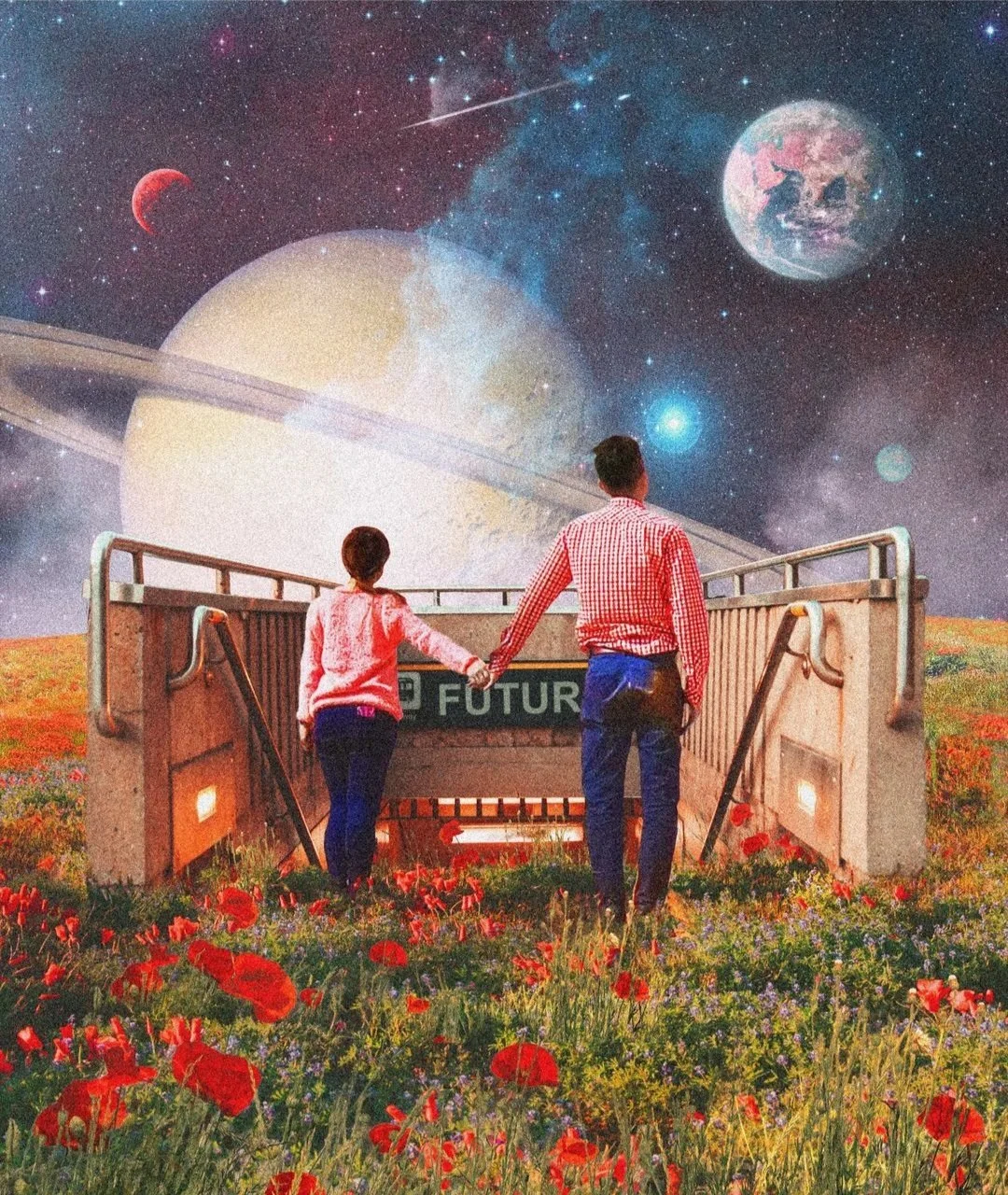
There is a huge cost to all of this.  It costs us presence. It costs us the easy pleasure of being in our own bodies. It costs us spontaneity, delight, the capacity to be genuinely moved by something beautiful. Not because we don't want those things but because a nervous system that has learned to protect you from pain will, inevitably, protect you from the full depth of joy as well.

Let me tell you what I know about healing.  If trauma lives in the nervous system, so does healing. Healing doesn’t only happen through processing pain, it lives and grows through joy, connection, pleasure and co-regulation.

We seem to have created this story that healing trauma means processing pain and diving into it which is not strictly correct.  In my somatic world it definitely isn’t.  We’ve over-associated healing with pain processing and under-recognised the role of pleasure and connection. I understand why because trauma often narrows interoception; we feel less, or only certain ranges. But did you know that pleasure expands interoception? We begin to feel more safe and co-regulation gives the nervous system a lived experience of safety in relationships.

So joy isn’t superficial, it is regulating, organising and restorative.

Another really inspiring thing happened last week that motivated me to write this blog.  I was watching the Artemis landing and I had been following the astronauts a little when they were in space.  Jeremy Hansen the Canadian astronaut made a comment:

"Our purpose on the planet as humans is to find joy, to find the joy in lifting each other up, by creating solutions together instead of destroying."

He said seeing the Earth from space helped them all realise this.  This brought tears to my eyes, especially with all the crazy shit going on in the world at the moment.

We are not here to be unaffected. We are not here to have gotten it all sorted. We are here, nervous systems and all, to feel as much as we can bear to feel and to help each other bear a little more.  We are here not just to heal ourselves, but to help each other feel safe enough to come back to experience and feel the fullness of life.

This is what helps us metabolise and integrate the overwhelm that we all experience often each day.

This is what I mean when I talk about integration.  It is not fixing, not erasing, not arriving somewhere unblemished. Integration is the slow, patient process of your nervous system finding enough safety to loosen its grip. To let a little more life in. To discover that aliveness is available to you again.

The signs of that are most often quieter than you might expect. A moment when you actually taste your food. A laugh that surprises you from somewhere low in your belly. The ability to receive kindness or a compliment without immediately deflecting it. A morning when your body doesn't feel like something to manage, but something to inhabit.  A changed reaction to regular dysfunctional behaviour you experience from another on the regular.

Coming full circle on my thoughts at the start of the blog, when you understand all of this it really changes how you view all the people that come into your life each day.  I think it brings us more compassion toward each other and it makes us reflect on what we can do to support each other.

When we understand that everyone is carrying something; that the person who cut you off in traffic, the colleague who snapped at you, the friend who disappeared when you needed them, the parent who couldn't quite get it right.  When we understand that all of them are navigating some version of a nervous system that learned to cope, we start to see and feel our world a little differently.  

I am not talking about excusing what isn't okay. I am talking about a kind of tenderness that makes more room for yourself and others. For the whole complicated, tender mess of being human together.


Emotional Alchemy

Sometimes I feel like I have the anger of 1000 women inside of me. It's fleeting now. It was stronger when I was younger. Then I decided to so something about it.

I was angry about the way women are treated in the workplace. I was angry about women's health and how little focus it got. I was angry about how women were marginalised from financial resources. I was angry about how humans were destroying the earth. I was angry that people were so emotionally stunted and disconnected from their humanity.

I realised that we don't get angry about stuff we don't care about. On the other side of Anger is great passion. I am a passionate woman. How could I alchemise that anger into passion and focus it on something that was so much bigger than me. Something that would help others, help people thrive in their life. How could I set my anger into motion, alchemise it into passion?

That's the thing about emotions. We have to let them move, be in motion. One thing I have learned from Tantra is we can alchemise our emotions. They are signposts for us but we’ve have been culturally numbed from listening to them. Look at the messaging we get. “take the high road”, “keep calm and carry on’. No thanks. When you listen and feel them there is something there. On the other side of Anger is Passion. Of Grief, there is Gratitude and Love, Despair there is Faith, the other side of Fear is Joy. Frustration is telling us something could be so much better, there is growth on the other side of that.

I realised that actually we were all so emotionally disconnected and that had such a really big impact on relationships. What would happen if we learned to let our emotions be in motion? What would happen if we learned to better talk about what we need in relationships? What would happen if we could better at listening to each other?

We don’t really learn how to do relationships when we are younger do we. When I do couples coaching so many men say to me they wish they had learned all of this in their twenties. it would have made their life so much easier, would have made their relationships more joyful.

Women have to internalise so much of their emotional life. It's not ok to be angry, frustrated, sad. Who wants to be the angry bitch? So we numb ourselves to it, we put ourselves to sleep. Then we wonder why when we reach perimenopause our body is screaming at us to wakeup from that sleep. Our numbed emotions are seeping out us, sometimes in small spurts, sometimes in explosions.

Six years ago I walked out of an Executive Coaching session with a female senior executive who was working in investment banking and basically having to hide a huge part of herself in plain sight just to fit in and be safe. She was having to dim her radiant light big time just to fit into the masculine culture.


I thought fuck this, the only way women can step into their power is if they learn how to be in their bodies, to reclaim them, to learn how to express their emotions and actually be ok with that how felt. Not to numb themselves out and repress them. Because that was what I was seeing time and again. All these numb women.

A radiant empowered women loves her emotions, claims her erotic self, she glows from the inside out. I wanted to help women stop having to hide so much of themselves. God I wanted it for myself too. My intuition was telling me embodiment was the key. Sexuality was key it is so foundational to who we are. It doesn’t exist exclusively of our relationships; with ourselves and others.

So I followed my intuition and went off off studied sexuality, relationship coaching. Breathwork, embodiment work, it was life changing. it's a bit of a life long journey I think there is so much to learn. It was like opening up a big chest of gold and having a rainbow pop out of it.

I found that place in myself, learned how it felt. You cannot coach and teach something like embodiment if you haven't experienced it yourself.

Best decision I ever made. It was transformational. This work is transformational. I also met some unbelievably awesome women on my journey.

Screen Shot 2021-07-07 at 6.51.41 pm.png

I want this for all women. I want to unwind all that conditioning. It's thousands of years of conditioning that we are unwinding here. I want women to stop feeling numb and start feeling alive. I want them to reclaim their anger. To speak up for issues that are unjust. To stand in there power and defend their boundaries. To say No I am not OK with what is going on here.

Because I know of you if heal womens relationships with their bodies it will help men. It will help the planet.

Every time I see a woman go through six months of coaching, I'm always amazed by the difference and the person I meet at the end. They glow from the inside. It improves their relationships - all of them. I love my clients, I love working with woman because they try so bloody hard.

The Dalai Lama is famously quoted as saying “The world will be saved by the Western Woman”. Based on what I've seen in the last five years I believe it down to my bones.

One of the best ways you can start to wake up to your emotions is through Dance. Dance out those emotions. I made up a little Emotional Alchemy playlist for you on spotify.

If you want to dive deep and learn how to alchemise your emotions, I have some spots open for coaching right now. Drop me a line if you want to talk about it or you can book a free Clarity Call.

The plight of the over-achiever

I coach many women who are high achievers. I consider myself a reformed over achiever, so it makes sense they connect with me. I have walked a similar path. Often what we find through coaching is that a lot of their excessive productivity, their overachieving, their excessive exercising, their busyness, is a response to trauma. A way of soothing their nervous system. I was reminded of this last week when a friend of mine ,who is a somatic experiencing therapist, put up a post about it. I thought hmm I have to write a blog post about this because I see it all the time. Hell I lived it for 30 years.

The thing that is most challenging about this disposition is that we live in a culture that values and promotes it. Productivity and On 24/7. Many organisational cultures are supported by capability models and values that reward behaviours such as team player, reliable, staying power - which is styled as resilience, focused and determined. Behaviours that simply reinforce this behaviour and often backed up by financial bonuses that reward it. Productivity is valued over rest and periods of quiet. We learn to push up against our window of tolerance in our nervous system and feel ok in a constant state of hyper-arousal. This often leads to burn out physically and in some cases some pretty ‘crazy’ behaviour. I put crazy in inverted commas because it is often perceived as crazy by others and may cause some distress, but is just a sign of a person not coping.

“So much that we do is not logical on the surface. Walking on beaches, growing flowers, lavishing attention on a dog. But it’s actually the very heart of what makes life work”

— Steve Biddulph, Fully Human - a new way of using your mindQuote Source

So where does this over-achieving drive come from? My husband and I met in one of the large global consulting firms and we always laughed and said the place was full of insecure over-achievers. It is true that that is the behavioural model of what they recruited. Often this comes from a strong need to please emanating from an individual’s inner child. From deeply unconscious feelings of unworthiness, or that they do not deserve what they are receiving in life and are constantly seeking to prove that they do. It often begins as a way to be noticed and rewarded by a parent, but over longer periods of time, becomes a way of coping, feeling loved and acquiring a sense of belonging. Stressed out over a conversation; sit at the desk and work. The part of ourselves that needs love, safety or belonging receives that by ‘doing’ stuff and ticking off boxes. The race against the clock to get stuff done.

So how do we stop this pattern? Well the first place is recognising that maybe you have it. I think for me in my twenties I used to work super hard for a couple of years and then take off for a few months and go travelling. Well you can only do this for so long. I got to the point where I realised that the way I worked was not sustainable and that I needed to take on less work, I found this challenging because I have “big shoulders’ and what I mean by that is I can carry a lot mentally and emotionally when it comes to load. I find this quality to be also there in my coaching clients. Also most over achievers are pretty smart, they can talk themselves in or out of most things in life. They talk themselves out of listening to their body, its calls for help whether it be pain for illness and learn to just push through.

For women, I think getting back to the natural rhythms of your menstrual cycle can be a huge help because for one week, give or take, every month, you have a period, it is a time of winter, a time to rest. It will not matter if you do not go to the gym much that week. Your body needs to rest and rejuvenate. I have found this form of relating to my body, beneficial on so many levels. In my experience taking this rest time every month is playing the longer game. It is looking after your energy levels long term. It gives your body recovery time. Acknowledging and accepting that the feminine body is a cyclical one and our energy levels go up and down and are meant to change is a huge step. Choosing to live this way in line with your natural rhythms is truly a blessing. If you no longer have periods you will probably find if you explore, that your energy levels line up with the cycles of the Moon. Check out when the full moon is around, you are often full of energy, when it is a new moon, it is time to rest.

Acknowledging that your energy is not there forever is very important. According to Taoist Tantric theory we are only born with a certain amount of energy - or Qi as the Taoists call it. We have to learn to nourish and replenish it. Mindfulness practices are great but they are not focused on the body. For women in particular, our body facilitates our growth through rites of passage, we are movement. Gentle body based practices that forge a mindful connection with the body are very beneficial. Such practices would include Qi Gong, a Jade Egg Practice, Sensual movement, restorative forms of Yoga, some aspects of Pilates.

Learning to listen to your body and really listen to what a YES and NO feels like inside of your is exceptionally important. It is important for boundaries and it is important for your health and wellbeing.

Ultimately it is also about exploring practices and choosing relationships that nourish and lift us up. Practices that allow the body to recover, so we shift out of that constant state of hyper-arousal, survival mode of fight and flight, and into a state of regulation. Relationships that foster this are vital. When you look at the circle of relationships in your life: immediate family, broader family, close friends, community friends, work friends, what are those that sustain and support you, that allow you to be in that place of nervous system regulation? Review your work culture; is it supportive of your longer term growth away from these survivalist patterns?

Choosing practices that stimulate your five sense and bring pleasure to your life, that bring you back to a place of awe and wonder at the beauty of the world, and to celebrate that you are alive, are incredibly nourishing and offer an incredible doorway to calibration of your system.

My personal tip, when I feel my ego kick in and I get in a frenzy to get something done, I just slow it down and take a rest or go for a walk. The drive for me now comes from creativity and I am a very creative person. So when it feels in flow I do it. When it feels tiring or like I am pushing through, I stop.

It is never to early to choose you. To say a big YES to you. Your pleasure belongs to you, never forget that.


Please pass this onto anyone you feel may benefit from reading this. Drop me a line if you you have any thoughts. I have 2 spots open for coaching . If you are interested, we can have a chat on a free clarity call to see if we are a fit to work together.

Perspective is everything

I recently read a book called ‘Cassandra Speaks’ by Elizabeth Lesser. My friend Jackie texted me and said ‘I’ve just read this book you will love it, a must read’. (thanks Jack by the way). It is a story about women. It is a story about understanding the stories of women and how they create meaning in our lives. How we act them out every day.

Words are powerful and so are lack of words. When we don’t talk about issues it creates a vacuum and a void, so people make up stories in the absence of that. I learned this pretty quickly about 25 years ago when I started doing change management work in the corporate sector. Human’s learn and communicate through stories, we have been doing it for thousands of years. Stories are powerful. You can drive change just on a narrative when you take a narrow view of an issue. Brexit anyone?

We talk about what we value in society. Think about that, especially those of you who are getting older. How do you feel about ageing and death? In a cultural context, where youth is prized. Where we don’t really want to deal with old people. Atul Gawande wrote about this a few years back in his book, Being Mortal. (another great read). You try and look for a stock photo picture of a women in her forties. I am telling you it is near impossible.

Think about the ancient stories that centre around women. There are not so many. When we are involved we are usually the supporting character or the evil person. If it is an older person in the story, she’s a woman usually evil or a witch. The evil ugly step mother, Cruella da Ville ring any bells.

Which brings me back to my main point. If we want to thrive and lead a more empowered life as a human race we really have to be able to listen, watch and read about other perspectives. I have a great coach friend Julia who is very opinionated. This is one of the things I really love about her. She is also fierce. I rarely agree with her on many issues. On the big stuff I often do though. I like her values too. I am always curious to hear what she has to say about any issue. She opens my eyes, ears and heart to other ways of looking at an issue. We can have different perspectives and still be friends.

How we frame up a dilemma in our life determines what we see and what we don’t see, which impacts on the decision we make. Being able to take up many perspectives and enquire into them broadens the capacity of what you can see. These are basic foundations of systems thinking.

The world is in a really tough place at the moment and people are in a lot of pain. How can we take more empathy for the position of another? See where they are at and ask questions. It is easy to stay in your narrow lane when you are under stress. Do a little audit of the music you listen to, the style of books you read, the media you pay attention to. It is very easy to get stuck in your bubble and do the othering thing. Othering is when we attribute negative characteristics to people or groups that differentiate them from the social norm. It is a way of negating an individuals humanity and they are seen as less worthy of dignity and respect.

Women have been ‘othered’ for years. Othering is intersectional. This means there are other marginalised groups who may also intersect with this. For example a woman of colour or a woman who is disabled, a woman of colour who is elderly. Marginalised on a few accounts. Get the picture?

So here is my tip for you. If you want a better world, if you want to be more empowered, if you want to see more compassion and kindness; it starts with you. Challenge your own thinking, seek out alternative points of view on an issue, do not just cling to your co-conspirators all the time. Listen to some new music. Try some new practices. Challenge your own internalised belief systems. I was a big Hatha Yoga devotee for years and then three years ago I discovered Kundalini Yoga by virtue of the fact I shared a room on a retreat in Mexico with a wonderful lady who is a Kundalini Yoga teacher. Gave me a new tool for mindfulness and a great friend!

You will build some new neural pathways, you will meet some new people in your life. It may help you navigate the harder stuff in life with greater ease. You may very well discover a whole treasure trove of cool parts of yourself that you never knew existed. Challenge the stories you have been told.

If you want to experience life differently, look through different lenses. You never know what you may find.