Burnout

The kings and queens of the push through

I tend to work with a lot of high achievers who come to me in midlife in a quandary. They are either burned out, they have lost their motivation or they have lost their inner compass. They are incredibly capable people. Brilliant creatives, leaders and thinkers, the people everyone relies on to get the job done or come up with the solution.

When they come to me there is something fundamental happening underneath, deep in their system, that they can’t solve or workout. They have lost connection with their deepest needs and desires. Their emotions, what they value, what is important to them has become fuzzy. Something is wrong in their world and they cannot put their finger on it. They are overly tired or have lost their zest. This drives them crazy, they feel like a failure because they are so used to solving all the problems. They love solving problems and creating value.

It is a body in freeze.

For many of us, we are still functioning and functional freeze is the nervous system’s quiet survival strategy: a blend of dorsal vagal shutdown with just enough sympathetic activation to keep you moving, performing, achieving.

You look “fine,” you produce, you deliver, you impress people but you have lost connection with your internal world. You’re upright, responsive, competent but you feel dead on the inside. No real vitality, internal pulse or felt sense of self.

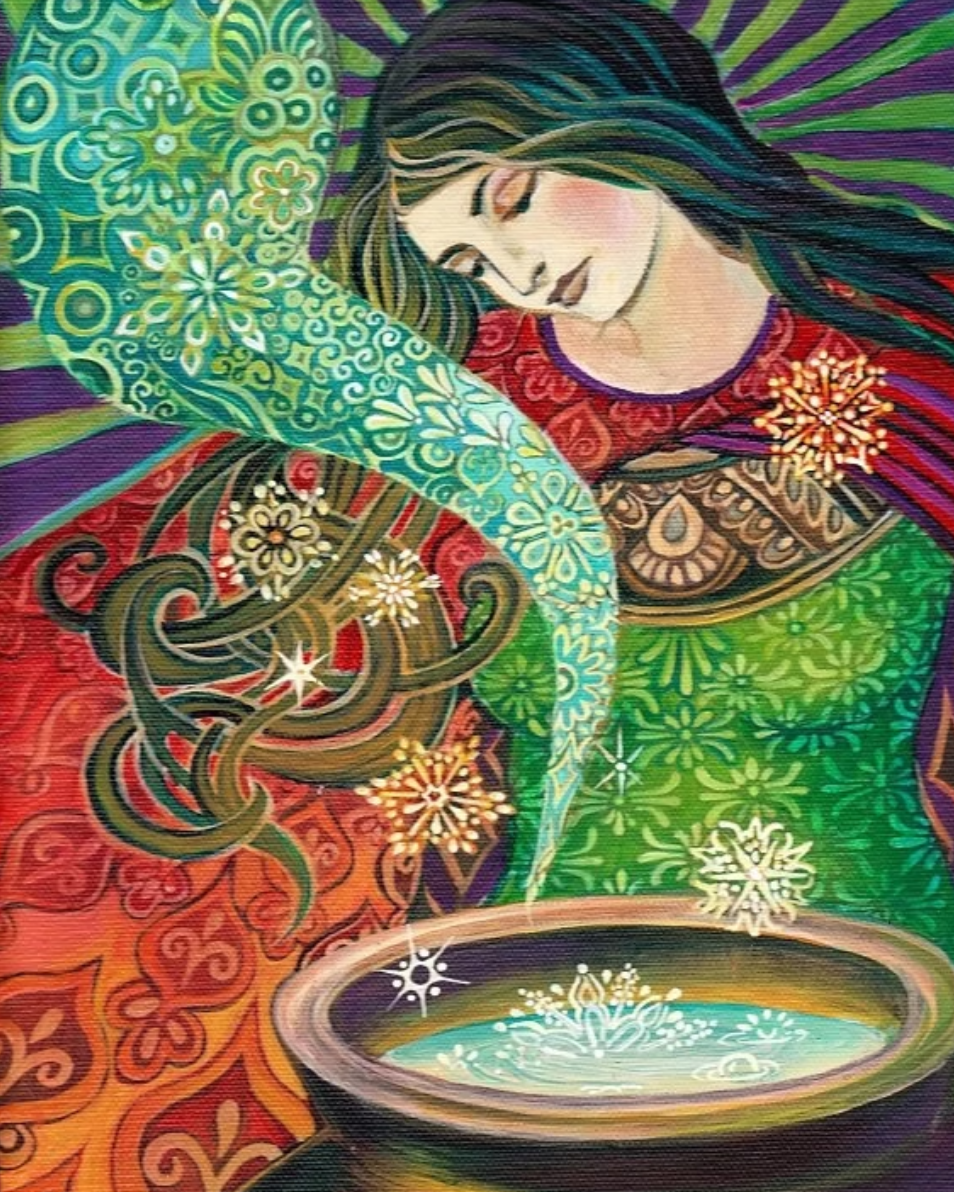
Digital Art - Kellie Stirling, People thawing their freeze

For many overachievers, this becomes the air they breathe until their body says No, not any more. Often it happens at midlife.

So how does this overachieving freeze pattern start?

Well most overachievers learned early in their life that there needs were either: inconvenient, ignored, criticised, overwhelming to caregivers, unsafe to express or simply too much.

So they adapted in the only way their system knew how, they turned down the volume on their body and turned up the volume on their mind. They became brilliant, fast processors, high-capacity thinkers. They became the problem-solvers, the responsible ones, the reliable ones.

But brilliance built on freeze has a cost. We stop listening to the signals from our body. We stop listening to the signs of tiredness, of what a NO feels like in our body. We learn to override our basic impulses. It is not coincidence. Is is a pattern.

Productivity culture is built on functional freeze.

We applaud over-functioning and self-sacrifice. We reward output and speed and we celebrate people who “just keep pushing through”. I think a lot of Gen X’ers learned to do this early, because in their teenage years they spent a lot of time on their own and just had to get on with life.

We call this excellent work ethic, resilience or commitment. But what if much of what we call “productivity” is actually a socially-validated freeze response?

I have had so many clients, mid forties to late fifties, post-menopausal, who make a big career change and then come to me saying, I don’t know what is wrong with me, I just feel out of sorts. I get stuff done, I am a doer. Nothing is wrong with any of them. Their body has just simply stopped cooperating with the override. Or guys who come to me and say they know their life has to change, they are on the precipice of existential change but they don’t know where to start.

When you have spent decades powering through the classic, go, go go. Your body has a way of bringing you back into right relationship with it. As we age, our hormonal cocktail starts to change and menopause has a way of stripping down and highlighting our compensatory strategies. The freeze structure that held everything together began to collapse. Remember the developmental challenge of midlife is radical honesty, come back to the truth of who you really are.

Gently and slowly we work together to slow down. My client's nervous system immediately start to show what they have been trying to outrun. The survival strategies that were created as children to stay safe aren’t working anymore. Their body is setting a boundary. The freeze is ready to be thawed.

This is why burnout in midlife spikes.

Women lose hormonal scaffolding that kept them overriding their body. and men hit existential thresholds where achievement can’t fill the inner void. Our careers peak while capacity starts to decline. Many parents carry the emotional and logistical load for teens and ageing parents. and many of us find the nervous system can’t run the childhood strategy anymore.

People think they’re falling apart. But what’s falling apart is the freeze, not the person. Burnout is both exhaustion and it’s the breakdown of the freeze scaffold. Burnout is the point where the body says, “I’m not going to keep doing this.”

Overachievers don’t lose their motivation they lose their override strategy. When the freeze starts to thaw, we start to feel all the things we have been pushing down for years. The anger, fatigue, hunger, sadness, longing, boundaries, desire and our No.

For many overachievers learning what a No feels like in their body can be a big revelation.

Many overachievers are very creative. They have lots of ideas. They get excited by their ideas, creatively, strategically, intellectually their mind is alive. They can get flooded by them too and want to put them all into action. Not doing so feels like a failure. Something I have learned personally that I help my clients with is our freeze makes us believe these ideas have to be acted on.

Every impulse becomes pressure, every spark becomes a project, every inspiration becomes responsibility something we feel we absolutely must do. This is where burnout can accelerate.

One of the most powerful shifts in my own midlife has been learning that you don’t have to act on every idea. You can feel it, sit with it and let it breathe.

Sometimes an idea is complete simply by being witnessed. Sometimes it is enough to journal it, or talk it through with a colleague or friend. Sometimes you just have to write it down and let it sit for a few months.

This is how you slowly retrain your system, that not every idea has to be acted on. You start to rewire your nervous system and you will notice that the compulsion to act will turn into more capacity. The pressure to act can turn into being present, and the need for action will become digestion.

To come out of functional freeze we work slowly, relationally and somatically. We learn to track micro-sensations and small pulses of movement. We learn how to set tiny boundaries, small steps at a time. We learn how to titrate our life. Small changes 1% more each day. We learn to enjoy receiving the co-regulation from our somatic therapists and/or coaches. We start to notice we are slowing down, 1% more each day and then we can recognise that rest isn’t a weakness it is a signal. We start to notice, that we are noticing how we feel and we let our ideas sit and percolate rather than having to act on them.

Most importantly we learn that our value isn’t earned by producing. Value is inherent because you are here, you are alive. Your body is your home, your garden, your temple. It is not a machine.

Your needs matter.


Fawning: why we mirror, merge and self-abandon

Seven years ago, I read Pete Walker’s book on complex PTSD, and it was the first time I truly understood the nervous system response of Fawning. I had known the behaviour as “people pleasing,” but I hadn’t realised until then that fawning was a protective response our body utilises. As I explored it more deeply, I realised it was everywhere and that it was not a personality trait, but a strategy our system uses to keep us safe, particularly in the face of a power-over dynamic.

How many times had I sat in conversations in the workplace where a person was labelled a people pleaser as it if was a personality flaw with no true understanding or curiousity of what was driving it. Let alone acknowledgement that this person does not feel safe. I realised right then that fawning shows up in so many ways. I see it in people who over-function, some organisations are run off the back of employing a workforce who constantly does this. Entire customer service cultures are built on fawning.

Fawning is a nervous system strategy that supports us to stay in connection when we feel unsafe and we are in a double bind; where there are real consequences for us not to fawn. We all do it. Women are a little more predisposed to it because we have lots of estrogen and oxytocin is the neuromodulator of our body. What that means is that bonding and connection helps us regulate and process our lives. It can come up at anytime because it is a strategy your autonomic nervous system uses to keep you safe. If it doesn’t work you go to fight and flight, then freeze. It is a cascade.

Men fawn too, not to soothe, but to belong. Male fawning often looks like “fitting in,” but underneath is the same physiology. In very masculine coded work cultures you see this all the time. Men fawn to avoid being the odd one out. They mute their sensitivity or complexity, mimic bravado or certainty, abandon their authentic relational needs and shape-shift to avoid being shamed.

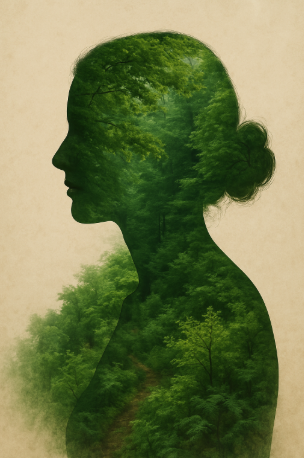
Digital Art, Kellie Stirling. Woman merged with nature

When we fawn we shapeshift, so we morph into a version of ourselves that feels the most likely to keep us safe. For some people, fawning looks like becoming more of who they are; more charming, smart, generous, funny or adored. For other people it is about being less of who you are; less vocal, creative, smart, self-assured or even able to set boundaries. Fawning shows up sexually, in money situations or, in the constant emotional regulation of other people.

We all know about fight, flight and freeze. The fawning response is different because it is a hybrid of these. The hyperarousal part of fawning encourages us to lean into relationships that are causing us harm so we to appease the person. The flight response, self-abandoning to stay safe. The hypoarousal part, or freeze part, numbs our connection to our needs and desires, so we don’t feel the effects of the harm we are experiencing.

When we fawn, we mirror or merge with someone else’s desires or expectations of us to stay safe. We do this to defuse potential conflict because that is our best chance of maintaining safety. In most of these situations there is a power over relationship. Someone has power over us. When we merge or mirror, whilst it keeps us safe, we forgo our own desires and agency and become overly accommodating of others. We become shapeshifters moulding ourselves to each scenario and person. We abandon ourselves, what we care about, our opinions, desires and what we value.

Fawning is so culturally imbued in our society that we are conditioned from a young age to do it. Think of these statements: “give your uncle a kiss”, “be the better person”, “take the high road’, “be a team player’, “you have to learn to compartmentalise it'‘, “just go with it”. We say these every day and they normalise fawning.

Fawning is a common coping system for people dealing with ongoing relational trauma. It also occurs in larger systems of oppression or marginalisation where we must let go of aspects of ourselves to secure membership or a sense of belonging. Over time fawning becomes a systemic pattern.

Individuals don’t just fawn, systems induce fawning. Some examples I see frequently include: A leader who is dysregulated will have a whole team fawning to avoid triggering them. A family with a narcissistic parent creates children who become emotional caregivers or family systems with rigid hierarchy. Workplaces where vulnerability is punished. Relationships where one partner regulates through dominance.

Fawning is not a personal pathology; it’s a predictable adaptation to power-over cultures. So you can see it is not about being nice, it is a nervous system adaptation to relational power dynamics.

One of the deepest wounds of fawning I have observed is the disconnection from anger. Many fawners cannot feel their anger; not because it isn't there, but because it has been repressed for survival. Anger felt too dangerous, too destabilising, too likely to provoke retaliation or abandonment.

So internally, they learned that their anger was not safe and put them at risk. The thing is their anger doesn’t disappear, it goes underground. Into the unconscious.

Over time, this suppressed anger can turn into resentment, chronic tension because you are constantly bracing, exhaustion or collapse, health issues particularly autoimmune issues and a fierce inner critic who constantly self blames.

Restoring healthy aggression, the energy of our boundaries, clarity, and self-protection is essential. But it must be done slowly. Really slowly. Because letting that much anger thaw all at once can overwhelm the system that originally buried it to stay safe.

How do we stop Fawning?

Well it starts with finding safety in the body. You can’t talk yourself out of a fawn response nor can you mindset your way through it. Your nervous system needs to feel safe in the body to try anything new.

The work looks like being able to notice the early cues the anticipatory smile, the shallow breath, the scanning of the other person’s mood and gently interrupting the impulse to fix or appease. Learning to feel tiny drops of healthy anger in an incredibly titrated, slow and digestible way. Allowing the internal critic to soften, which often happens naturally when anger can finally move outward instead of being turned inward

Learning to stop the fawn process from being pervasive is the process of reclaiming power-within, instead of surviving through power-over dynamics. Our fawning response is wisdom it is not a flaw. It has kept us safe and will continue to do so, when we need it in the moment. Our fawn has kept the peace and helped us to function in environments that could not hold our full aliveness.

It is profoundly healing for us to notice our fawn patterns (and to continue to be able to notice them in the moment) and gently let them loosen their grip. Over time it becomes a survival strategy we have access to, not our default mode of functioning. When you start to let go of it you are not losing the nice aspect of yourself, you are becoming more You.

Lying in the Dark

One of the things I find most interesting is that we are all, on some level, afraid of the dark. I don’t mean the literal dark, like the night. I mean we are afraid of dark emotionality, dark times, dark moods, that dark place we go when we our life is changing dramatically, death. We are afraid of all that dark.

What I find so striking is that the dark isn’t foreign to us. It’s the first home we ever had. Before we had language, consciousness and identity, we were held in a warm, fluid, completely dark womb.

For nine months, the dark was our sanctuary. We were nourished, protected, and completely connected without ever seeing a thing. We didn’t need sight to feel safe, or light to orient. Our bodies knew how to rest and grow in the dark.

Isn’t it ironic that we spend the rest of our lives fearing the very place we began?

Popular culture treats the dark as something dangerous or disorienting, a space where we lose ourselves. But from a somatic perspective, the dark is often where we find ourselves again. Because the dark asks nothing of us. It doesn’t demand performance, productivity, clarity, or answers.

The dark invites us to rest, to slow into ourselves and just be.

The dark womb is an archetype of profound safety, not because it is soft and easy, but because it strips away everything that is unnecessary. In the dark, we are not seen for what we do. We are held for who we are.

Maybe that’s the deeper truth; the dark isn’t here to frighten us, it’s here to return us to ourselves.

There are seasons in life when everything familiar falls away. Not by choice or spiritual aspiration but because life itself becomes a burning ground. My cancer journey was one of those seasons.

I remember feeling stripped bare, not just physically, but emotionally and existentially. It wasn’t simply the fear or the medical complexity. It was the sense of being dismantled at every layer. The parts of me that used to hold me together stopped working. My usual ways of coping fell away. There was nowhere to run, nowhere to hide inside myself. In fact, I found the best place to be was in the present. I must admit that it felt like being dropped into the dark womb of the world and strangely, or maybe not that strangely at all, that’s exactly where the healing began.

We all have experiences in life where we feel like everything is being burned down and we are going to fall into our own dark hole. You don’t need to have cancer to experience this. Midlife, menopause, divorce, grief, trauma healing, big career transitions, or sometimes all the above at the same time. The thing is they all bring us to the same threshold.

That threshold is a place where you realise you can no longer be who you were, you feel rudderless, but if you can stick with it you have this deep sense of knowing that you are being carved into who you truly are. You are becoming yourself.

While this process can feel brutal, it’s also profoundly sacred.

Sometimes life breaks us open so the truth can finally be felt. Sometimes life drags us into the dark so we can be remade. Sometimes life strips us bare so we can emerge more honest, more embodied, and more deeply alive.

When we come through the other side of these big life transitions, we often notice that yes we are still here, but we are not the same person we were before. We will never be that person again.

There will be parts of you that survive and are the same, there are parts that are gone and there are new parts of you that are being birthed.

During my treatment I spent my days resting and I read a lot. I came across Meggan Watterson’s Divine Feminine Cards (which are great by the way) and within them I found the archetype of the Black Madonna. I would shuffle the cards and many times she would just drop out.

The Black Madonna, archetypally, represents the power we all have to emerge from dark times transformed. Jungian Analyst, Marion Woodman believes that the Black Madonna represents a new awareness or consciousness toward out bodies. She represents the wisdom we can only gain when we go through the painful fires of transformation.

The Black Madonna is not the soft, glowing mother of the light. She is the fierce mother of the dark.

She is the one who meets us in our descent, not to pull us out, but to sit with us in the shadow until something true emerges. She is the archetype of the underworld, the womb, the ashes, the grief that breaks us open.

By connecting with this energy I can tell you that I felt spiritually held; not by something that promised rescue, but by something that promised presence.

The Black Madonna taught me that the dark is not a punishment. It’s a crucible. A crucible is what alchemists used to melt down metals to turn them into gold. The dark and our grief that often comes with it, are a crucible, a container that holds us.

So what burned away for me? Well a few things, a compulsion to hold everything together and the pressure I put upon myself to be endlessly available, a need to make other people comfortable and identity shaped by survival rather than by my soul. What emerged and was born was a quieter and steadier self with clarity about what actually matters, a deeper respect for the wisdom of my body and its profound capacity to heal, an acceptance in the fragility of life whilst at the same time being able to hold a deep trust in life.

The darkness, the feeling of burning down or being stripped bare, it wasn’t destruction it was actually refinement.

If you are in your own dark season right now, feeling like you are burning down, or you are lying down in a hole and can’t move, I want you to know this. What is burning down or being stripped away was never meant to be there.

Like the Black Madonna, the dark can hold you whilst you let go of whatever you need to. It is not to rush you or rescue you, but to support you and witness your becoming.

Because sometimes the most loving thing life can do to us is strip us bare so we can finally see ourselves clearly.


Belonging everywhere, nowhere and to ourselves

If you have ever wondered ‘where do I belong?’, you are not alone. I see it come up in coaching work all the time. Every big transition in life stirs that questions within us. It is our body and our psyches way of recalibrating. Making space for the next version of you to emerge.

The tender questioning of where we belong isn’t a flaw, it is part of being a human. Each transition asks us to find a new version of ourselves. It is a basic survival needs of humans to feel that we belong. We humans are mammals and we are wired for connection.

We spend so much of our lives searching for belonging; in relationships in communities and at work. Sometimes we find it. There are moments when belonging wraps itself around us so softly we barely notice it. Sometimes it slips through our fingers. The truest home we will ever know is the one we carry with us: our body. My body is the house that I live in. The place I return to when everything else feels uncertain, the memory and echo of every place I have ever been and seen, live within it.

Every version of me that once searched for home lives in my body.

There are moments when the world opens to us, when we feel connected to a person, a landscape, a shared purpose. These moments are luminous. We feel the pulse of life running through us, the sense that we’re part of something greater.

It’s easy to think, this is belonging. It is, for a time. But belonging to the world is fluid, it changes, shifts, and evolves as we do.

Then there are the seasons when we don’t fit anywhere. We grow and we change constantly. The old roles don’t suit us, the conversations feel thin, the places that once felt like home start to feel foreign.

That ache of displacement can stir a deep questioning, Who am I now? Where do I belong?
It is here that imposter syndrome often arises, whispering, I’m not enough. I don’t belong here.
But imposter syndrome isn’t proof of inadequacy. It’s a symptom of disconnection from self-belonging, a signal that we’ve drifted from our inner home and started measuring our worth through someone else’s eyes. It is not surprising to me that many people experience this at work, particularly when they are promoted to a new role, because we are constantly judged by external frameworks in organisations. Like show dogs who constantly have to jump through hoops to please. Few people feel like they can be themselves at work. If you do feel that, you are one of the lucky people.

When we come home to ourselves, the landscape changes. We remember that we belong, first and foremost, to ourselves, to the body we inhabit. We reconnect with our own heartbeat, our breath, our quiet sense of deep inner knowing.

Belonging to yourself is not about isolation; it’s about full bodied integrity. It’s the grounded sense that, no matter where you are, you can meet life from a place of wholeness. It is the warmth in your chest when you tell your truth, the grounded spine when you say no, the quiet smile when you know that you don’t need to prove a thing. You no longer need to perform or prove. The voice of imposter syndrome softens because you no longer outsource your worth.

Somatically, this is felt. A softening in the shoulders. A deepening of breath. A quiet, anchored presence that says: I am here. I am enough. I am mine.

In midlife something shifts for most of us. A new north star begins to emerge.

Midlife often unravels the old anchors. The identities that once defined us, parent, partner, professional, caretaker, begin to dissolve or shift. Our compass spins. The ground beneath us feels less certain. It is less about fitting in and more about who you are becoming.

But this loss is not emptiness; it is space. It’s the fertile ground where the new north star begins to form; one that reflects not who we were told to be, but who we truly are.

To find that star, we have to do the healing work: to meet the parts of ourselves were left behind, to grieve what’s ending, to feel the sensations of transformation moving through our body. This is where somatic work becomes essential.

Through the interoceptive lens, through noticing what’s happening inside, we begin to meet our emerging self not as an idea, but as a lived experience. We reconnect with our wholeness, with all the parts of us that are ready to come home.

We belong everywhere and nowhere and ultimately, within. Belonging is not something we earn or find; it’s something we remember.

The work of midlife, and really of a lifetime, is to come home, to feel safe inside your own skin, to live from the quiet strength of belonging to yourself. From that place, connection flows naturally. You can meet life, love, and change with openness, because your roots are within you.

So pause.
Breathe.
Feel the house you live in.
Let your body remind you. You already belong.

Things I have learned about meeting my edges

Edges we all have them. Some whisper slowly and some flatten us in a moment. A few years ago, a friend said to me, you meet your edges with grace. At the time I must admit I was perplexed by the comment. Mainly because like many people, when I hit my limits and edges I struggle. Edges arrive in many forms, a conversation that stirs something deeply uncomfortable, a season of uncertainty, a devastating illness or a body that whispers enough. So I have been reflecting on this comment this year and I thought I would write about it.

I used to think edges were something to overcome. Now I see them as initiations, thresholds where life invites me to grow a new layer of being. I view them as portals not problems. I have come to understand that every edge , whether burnout, grief, conflict, or uncertainty, is a threshold moment. I don’t try to cross it quickly. I tend the threshold until my whole being is ready to step through. I take my time (where I can), and on the other side, I always emerge with a new layer of wisdom that I quietly weave back into my life, my relationships and my work.

I have always viewed my edges and limits from a perspective of curiousity not control. When something feels uncomfortable, in my body, a relationship, or a system, my first instinct isn’t to fix it. I listen to it with my five senses. I try and get close enough to sense what wisdom it’s carrying. Through years of embodiment and somatic practice, I have trained my nervous system to stay present with discomfort until it reveals the deeper pattern beneath it. This has not been easy, it is very hard work.

Connecting with my body has taught me when to rest, when to deepen and when to let go and shed. There is regenerative intelligence in going slower, what looks like retreat can often be fertile integration. My Winter season has taught me to trust the stillness. Spring, to let new growth emerge without forcing it. The tides, always the tides, to remind me that contraction and expansion belong to the same dance.

I’ve discovered that when I meet an edge, the first thing that matters is slowing down. My mind wants to sprint ahead, but my body asks for stillness. If I can pause long enough to feel what’s happening underneath the surface, the contraction, the ache, the flicker of fear, something shifts. The edge becomes less like a wall, and more like a doorway.

Meeting my edges has taught me that they reveal what’s ready to be integrated. They show me the places I’ve outgrown my old ways of being. They ask for tenderness, not toughness. Sometimes the most courageous act is to soften, to stay present, to breathe until my system remembers that it’s safe to expand again. I don’t do this on my own, I ask for help to hold the container so my body can do what it needs to do.

I have come to understand that meeting your edges in relationship is so much easier than doing it on your own. Healing and growth happen in relationship. I don’t isolate when I reach a threshold, I lean into a trusted circle, my friends, my health providers, my husband, or nature itself as co-regulators. I have learned that building a circle of support around you is one of the most constructive things you can do to live well. I allow others to witness me in the process, those people I have secure connection with are the most supportive to my nervous system. There is something about being seen that can turn fear into belonging.

I definitely meet my edges somatically, not conceptually. Well to be fair, I might start reading about something that is coming up just to get more context and understanding, but I know that path through, is through the body. I’ve come to learn how to locate tension, grief, or fear in my body and to feel it as sensation rather than make it a story. Because our body records every experience of our lives and that tension or emotion is my body’s story. I let my body lead the dialogue: sometimes through stillness, sometimes through tears, sometimes through movement or sometimes just be being in nature. Those edges of mine then becomes a living conversation between my nervous system and my consciousness.

I try to meet my edges in rhythm with nature. There is something incredibly healing about learning about our inner seasons, that brings us back into right relationship with our internal rhythms. I don’t push for transformation, I let it compost. I have noticed both within myself and with my clients, that going slow is more effective, nuanced and has more depth than pushing fast.

Connecting with my body has taught me when to rest, when to deepen and when to let go and shed. There is regenerative intelligence in going slower, what looks like retreat can often be fertile integration. My Winter season has taught me to trust the stillness. Spring, to let new growth emerge without forcing it. The tides, always the tides, to remind me that contraction and expansion belong to the same dance.

Perhaps most of all, I’ve learned that every edge is a form of love, life calling me deeper into myself,
asking if I’m willing to be even more fully alive.

What edge is alive for you right now? Take a moment to feel it in your body.
What might it be inviting you to see, soften, or grow into?

Edges are not walls, they are doorways. Today, notice one edge you’re facing.
Slow down, breathe, and feel what wisdom it might hold if you pause long enough to meet it.

Burnout, chronic stress and boundaries

Every week, I meet people who are utterly exhausted, not because they or aren’t capable, but because they’re working inside systems with no boundaries left. Restructures, shifting roles, endless “transformations”, it’s like the organisation itself is in permanent fight-or-flight, constantly reacting to the next thing.

Many people finding it almost impossible to get into the ‘meaty’ parts of their role, they are simply skirting along the top, doing the things they have to do to keep functioning. Inside that chaos, people are expected to just keep pushing and pushing until their bodies finally say, no more.

They lose touch with the ability to listen to their body’s boundaries or they notice them and ignore them. When you are bored, exhausted, shutdown or unmotivated, that is a boundary. The body is saying no, not for me.

Chronic stress traps the body in survival states, fight, flight, freeze or eventually collapse. Over time, we lose connection with our most basic autonomic cues, those subtle sensations that tell us when to rest, pause, or say no.

We override those messages so often that “pushing through” becomes who we are. The nervous system becomes so used to being “on” that stillness feels unsafe.

Many of my clients tell me they don’t even know what rested feels like anymore, they only know the space between deadlines. When they start slowing down in our sessions, they’re often deeply moved by the experience. It’s as if their body finally exhales. They realise they haven’t felt that kind of slowness, safety, and presence for years.

The Myth of Resilience

In my experience, most organisations completely misunderstand resilience. They talk about “building resilience” as if it’s about pushing through, grinding harder, or coping better with dysfunction.

But nervous system resilience isn’t about endurance, it’s about return. It’s the capacity to come back into your window of tolerance, that place where you feel calm, connected, and curious, after you experienced hyper or hypoarousal in your autonomic nervous system. That’s where perspective returns, creativity awakens, and we can actually relate to others instead of reacting from stress.

Pushing through isn’t resilience. It’s disconnection disguised as dedication.

Systemic Boundaries and the Body

When an organisation has poor systemic boundaries, no clear priorities, constant change, or unrealistic expectations, people end up carrying the system’s chaos in their own bodies. The organisation offloads its dysregulation onto its people.

A nervous system can’t heal without stabilisation, neither can a culture. We need workplaces that honour pause, stabilisation, containment, and rhythm, the same sequence that helps a nervous system recover from chronic stress. Stabilisation creates the ground. Containment provides safety. Rhythm restores flow.
Without that, burnout isn’t a personal failure, it’s a systemic inevitability.

When Agility becomes agitation

Many workplaces today pride themselves on being “agile”; always pivoting, always moving. But without true systems thinking capability, agility easily turns into agitation. Instead of responding intelligently to what’s happening, organisations start grinding, pushing, and reacting. People carry the cost, through exhaustion, disconnection, and burnout.

So instead of becoming more fluid and responsive, organisations become hyper-reactive. They confuse activity with progress, speed with strategy, and flexibility with chaos. When leaders can’t see the system as a living organism, with cycles, rhythms, and interdependencies, they unconsciously perpetuate stress throughout the whole structure.

Without true systems thinking capability, “agility” gets flattened into constant motion, change for change’s sake, rather than mindful adaptation. When we don’t understand the organisational system as a living system, we keep driving it past its own capacity. The solution isn’t to become more efficient; it’s to become more attuned.

Healing from burnout and chronic stress isn’t about bouncing back; it’s about coming home. It is remembering what it feels like to inhabit your own body again, to breathe, to rest, to notice. It is about understanding what a Yes and a No feels like in your body. It is feeling safe to be slow.

True resilience begins when we stop pushing through and start listening, to ourselves, to each other, and to the quiet wisdom of our own biology.

If you are feeling overworked, overwhelmed or burned out, it is a reminder to take time out for yourself. Take a mini break. Notice your breath. Notice when your body tightens, braces, speeds up, or checks out. That’s your nervous system whispering that you’re at the edge of your window of tolerance.

For leaders and organisations, it’s time to redefine resilience, not as pushing through, but as coming back home to ourselves. Back to stabilisation. Back to rhythm. Back to the wisdom of the body, individual and collective.

Because when the system learns to breathe again, everyone within it can too.