parenthood

The Gates of Grief

Last week a friend of mine passed away. I got the news early in the morning when I was at the gym.  This is unusual because I never take my phone with me when I am working out but for some reason this particular morning, I slid it unconsciously into the side pocket of my tights, put my headphones on and off I went.  I love listening to music when I exercise, I find it motivating and uplifting.  Normally I turn on my playlist on my phone and leave the phone in the locker; the bluetooth in my headphones is great and picks up the signal from quite a distance.  On this day I did not, I put my phone in my pocket.  

I have known this friend for twenty five years, I met him through my husband.  He was 90 years old, there is no tragedy in the death of a ninety year old but it is sad. He was our friend, we met him in Italy and got married in his town, which is a very beautiful place.  We were looking forward to seeing him next year.  Just a week ago, whilst out for a walk we were talking about him and we admitted to each other that there was a chance he might not be there next year and we talked about our feelings about that, should it eventuate.  Needless to say both of us were very sad when we found out.  I had a few tears at the gym, when I read it, walked home and hugged my husband for an hour.  He was very upset.

It got me thinking about the gates of grief that I learned off Francis Weller who is a psychotherapist who does a lot of work in the grief space.  If you google him you will find many conversations and interviews with him.  I did 12 months of training with him about 5 years ago, more for myself, when I noticed about 6 months out of chemotherapy treatment, I had a lot of grief about my medical experience.

Weller completely reframed the meaning of grief for me in this program.  What he has done is  create a profound contribution to soul-centered psychotherapy because he helps us shift the Western cultural narrative of grief, which often treats grief as private, pathological, and linear, toward one that is relational, ancestral, and integrated.  His map of the five gates of grief help us understand that we can experience grief for many different reasons in our life, beyond the experience of losing someone we love.

So I thought I would take you through them and add my thoughts on it.  I have found in my own experience and in working with clients that there are often many other emotions that get wrapped up with grief, and how it shows up in our lives changes all the time.  There is no unique experience of grief, it changes every time within us and it is different for every individual.

I often talk about grief as a crucible.  A container that can withstand great heat and stress to create something new.  We could see that Weller’s gates create that container by naming different types of loss, we allow others to stop bottling up their grief and sorrow and allow it to flow.  This is what helps us process transitions.

The first gate is, Everything we love we will lose.  Grief is an essential part of being a human.  Weller says one of grief’s most important teachings is everything is a gift, nothing lasts.  To accept this is to live on life’s terms.  This is what the Buddhists called impermanence.  There are no exceptions.  When we acknowledge grief we acknowledge that everything we love we will lose.
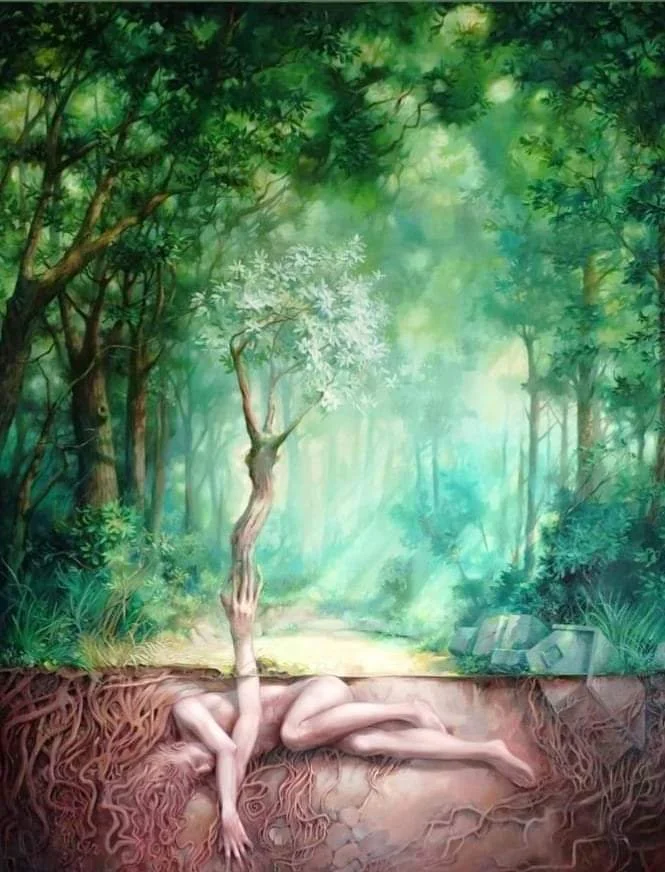
I notice lots of people are sad about things that did not happen in their lives or if they didn’t get what they think they deserve.  I think there is a difference here, this is more disappointment and it is totally ok to be disappointed with what has or has not happened in your life and you might experience great sadness with this.  There is a distinction for me between the two, it is nuanced for sure.

People do experience grief in big life transitions like parenthood and menopause and events like a chronic or acute illness like cancer.  These are all very big initiations and initiations take us into places that are unknown.  We wonder will we ever be the same again, who will we be on the other side?  We are not meant to be the same person on the other side, these are times of sheddings and endings and often we are brought face to face with our own mortality.  Often these experiences strip away all our defence strategies we created to adapt as children and we are forced to face our adult world that is much sweeter, riper and vivid.  Many people discover they can actually be with all the emotions we experience as humans and we will not only be okay, we can thrive.

The second gate is; The places that have not known love. This gate is about the parts of ourselves that we have separated from that are untouched by love.  These are the parts of ourselves that have been banished to the basement of our psyche because they are surrounded in shame.  They haven’t experienced kindness, compassion, warmth or a welcoming smile.  What we think or experience as a part of ourselves being defective or wrong is often what we experience grief for.  Weller explains that it is hard to grieve for parts of ourselves that we have banished because we feel they are unworthy of our grief.  Some of you might be familiar with IFS as a therapeutic modality.  It is very helpful to many people to help them bring these banished parts back on line.  When we bring them back it makes sense that we would experience grief having disconnected from them.  Shame separates us from our soul. It is an insidious emotion and I understand why academics like Brene Brown have spent their professional lives trying to understand it.

The third gate is, The sorrows of the world.  We experience this most days just looking at the TV and watching the news.  The grief we experience at lives lost to war, around climate change and natural life being destroyed, cultures being destroyed, people living without a home.  It takes everything that we have within us to walk down a street and not be affected by the sorrows of our world.  This is where being in community, ritual and grieving together is a very powerful process for people to process grief.  Often we do this through art, music, and dance.  Ancient cultures have been doing this for years.  We live in relational fields, in fields of consciousness, indigenous cultures have known this for years.  

The fourth gate is, What we expected we did not receive. This one is a little trickier to explain but I believe it links to belonging.  We are born into families, into communities.  There are certain things we are born to expect.  Weller says we are designed to hear (as babies) soothing sounds, to be comforted, and hear soothing sounds and noises to soothe and comfort us.  Yet some of us don’t experience that.  We are wired to want to belong, it is a very primal need of humans, we are not wired to do life on our own.  Our nervous systems are wired for connection.  Our feelings of not being enough, of feeling like we are lacking are most often not a sign of personal failure but of a community or a society that has failed to offer us what we are designed to expect.  I believe this is where marginalisation and discrimination deeply wounds us.  One of the rituals of Italian life I love is the passigiata.  This is where Italians go out at night before dinner and take a walk with family and friends. There is both communion and spectacle in this event, often dressed in their very best, the passigiata gives rise to a bit of theatre as well as connection with others. As the Italians meet in the community and talk about their day, maybe have a cafe or gelato or aperitivo.  It is a beautiful ritual where people come together at the end of our day.  

The fifth gate is Ancestral Grief.  This is the grief that we carry in our bodies that is handed down by our ancestors.  This can be held for generations and often creates secondary coping strategies of addiction, rage or silence in families.  Things that are never spoken of for generations until they turn up generations later in unexplained maladies like illness or chronic health conditions repeated throughout families. Or ways of being and showing up in the world that we think is personality but actually trauma.  People who lost touch with their cultural  rituals of dance, art, song and moved into survival strategy which is often silence.  I have a few Mexican friends and they all say borrow our Day of the Dead.  This is the 1st of November and it’s the day they all honour and remember their deceased ancestors.  I have started doing this, it's so lovely.

To help grief flow it must be witnessed by another.  Like trauma, grief requires a witness who can acknowledge and witness our experience.  That is why ritual and grieving in community are so important.  This allows us to live more fully as we are opening our heart to our emotions and not repressing them.  We learn to hold what is both bitter and sweet at the same time, what is painful and pleasurable.

I could write pages about grief. I feel like I have barely touched the surface here.  It is such an essential human experience that helps us let go, to keep growing as humans.  I often say to clients, the tears of our grief are like windscreen wipers for our heart.  They help us process our experience of being a human.  

I will finish with a quote from Martin Prechtel, a Mayan Shaman who is also a grief specialist.  “Grieving should never be avoided or postponed; griefing is absolutely necessary.  Without grief the world would never renew itself; the world would cease to exist”.

If you want to read more I highly recommend Francis Weller’s, The Wild Edge of Sorrow and Martin Prechtel’s, The Smell of Rain on Dust.
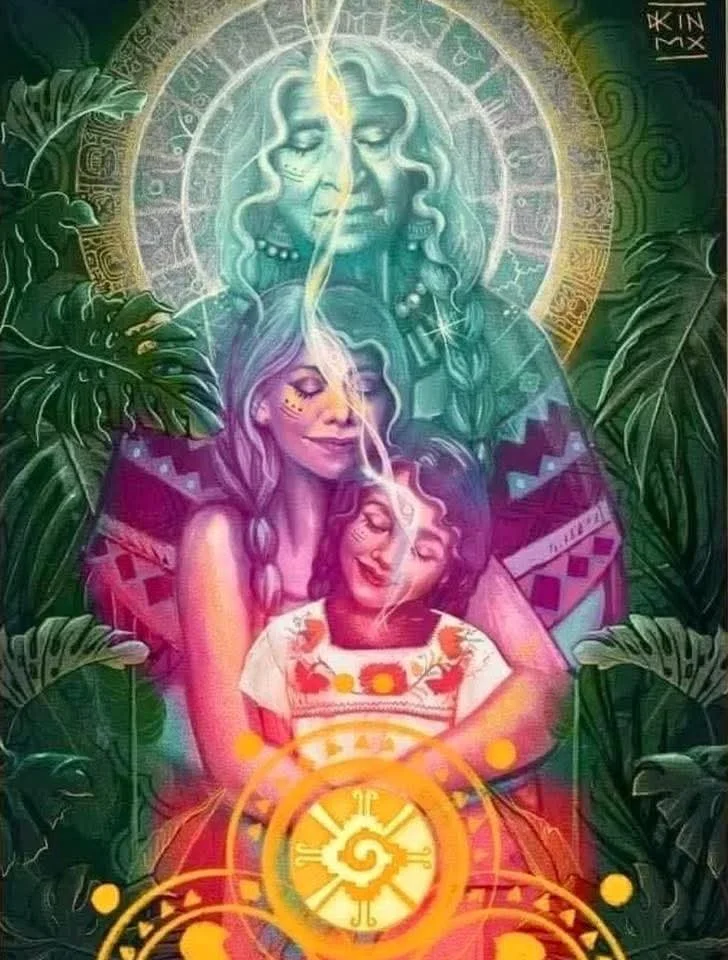
When our children trigger us

Children invite us into rooms within ourselves that we spend a lifetime avoiding

Nothing will expose your early wounds quite like trying to get children out the door before school.  In our house, mornings were often the hardest part of the day. One child moved slowly, just as I do. The other was quick and efficient. I hated the rush because slowness is my natural rhythm, and every morning felt like a collision between who I was and what the day demanded.

These days I meet many parents who are psychologically literate.  They have read a lot but they haven’t necessarily done their inner work.  So, even if you understand your inner child, can name your attachment style, have listened to the podcasts and read the parenting books; your child will meet the unconscious parts of you that haven't yet been integrated. Because it's when you're stressed and exhausted that those parts show up.

So when a little person cries, do you rush to fix them? Or do you shut down, explode, withdraw, go numb, feel guilty? Do you physically or psychologically leave the room?  With your teenagers do you find them too much and hard to handle so you leave them alone?  None of that makes you a bad parent. It makes you human with coping strategies you use to manage your internal experience.  We all have them.  Some of us experience these triggers a lot when our kids are little, some of us later when they are teenagers or young adults.   They are a signpost to where you need to explore your unconscious patterns.

Children have a way of touching our greatest wounds.  The places where our younger parts learned: I'm too much. I'm alone. Love has to be earned. There's no room for my needs.

Those beliefs don't live in your mind. They live in your body. That's why a toddler's tantrum, a refusal to put shoes on, a teenager's stonewalling, can awaken old grief, anger or fear inside of us because our nervous system doesn't know the difference between then and now.

The child isn't creating your triggers. Your triggers belong to you.  They're revealing the places where your younger self is still waiting for someone to choose them, for someone to stay and listen.  For someone to be interested in your emotional world.

That's why parenthood can feel so overwhelming. Children invite us into rooms within ourselves that we locked long ago and forgot existed.  Most of these rooms live in the basement of the psyche. We buried them there because what we were feeling at the time was simply too much. We dissociated, adapted, fragmented and survived. The problem is that the parts we left behind don't disappear. They wait.

Our child doesn't need us to be perfect. They need us to be conscious.  To be able to notice, to stop and pause, to repair when we have a rupture, to stay contained within ourselves whilst allowing them to have their emotional experience.  They need us to soothe them when they are young to help their nervous system learn how to soothe.  Our teenagers need some stabilisation and containment when their emotional swings are really big, so they feel safe and that there is room for them to explore who they are in the supporting container of our love.  That means when they are overwhelmed we can stay in our body, in our internal experience, soothe ourselves and stay connected to them.

Our children call us to choose differently, to make a choice that isn't reactive.  This is how we end generational patterns. Ancestral trauma gets passed down from one generation to the next until someone does the work on themselves.  When you choose to explore your inner world, to understand your coping strategies and pull them out of the basement and into the present, you are choosing to love parts of yourself that have been desperate for connection for many years.  

We can reclaim our inner child. We can reconcile with the parents who passed these patterns to us. But the greatest legacy we leave is to do our inner work, we do this for our children, they call us to be better people.

We don't need to keep carrying everything that came before us.

When we do our own healing, our children benefit. Our partners benefit. Our friendships deepen. Every relationship in our life becomes more honest, more connected and more alive.

Relationships are where we are wounded, but they are also where we heal. This is perhaps one of the greatest gifts our children offer us.

The anatomy of life transitions

Transitions are not problems to fix, they are patterns to Inhabit

We often think of change as linear but it is not at all, it is often a spiral, or a network of spirals. Life transitions are the unspoken pulses that shape our lives. Like the changing of seasons, they are natural and inevitable but they often catch us off guard, pulling us into the unknown. Whether it's the end of a relationship, a career shift, menopause or a profound personal awakening, transitions are both a death and a birth — a letting go and a stepping forward.

When big change happens in our life we are taught to treat change like an emergency. Something is really wrong with us. We search for clarity, next steps, and solutions as if something has gone wrong.

But what if transition isn’t something to fix?

What if it’s a pattern to inhabit?

I’ve come to see life transitions not as interruptions to life, but as part of its underlying design. The common model of life transitions is ending, the liminal space in between and then emergence or new beginnings. Whilst I think this is true to an extent, I believe its actually a bit more complex than that. The metaphor that captures this most powerfully for me is the torus: a self-renewing, spiralling field found everywhere in nature—from galaxies to trees, to the electromagnetic field of the human heart.

The Toroidal Field: A Natural Pattern of Change

A torus is a continuous, dynamic flow. It is not linear. It is not chaotic. It is regenerative. If you can’t picture it in your head it is a donut shaped field where energy moves up the middle and around the edges to the bottom and back up again. The heart has a toroidal field. The earth is a toroidal field.

Image source here

In nature, we see it in the vortex of a storm, the flow of sap in trees, the shape of magnetic fields, the inhale and exhale of breath. In us, it shows up in the rhythm of emotions, healing, grief, growth, and yes—transitions.

The torus reminds us that everything alive follows a rhythm of emergence, dissolution, and return. This rhythm can help us reframe how we experience life changes: not as problems to solve, but as intelligent patterns we are invited to move with.

The Four Phases of Transition (Through the Lens of the Torus)

Transitions often unfold in four phases, which mirror the toroidal flow:

1. The Known Self (Center)

This is the phase of structure and identity. You know who you are, what your roles are, and how the world responds to you. There is stability, predictability, and sometimes stagnation.

2. The Stretch (Expansion)

Something begins to shift. A role no longer fits, perimenopause starts, a relationship starts to change, a loss arrives, or a new longing awakens. You begin to spiral outward, away from the known. This phase can bring both fear and discomfort one minute and exhilaration and joy the next. It often triggers urgency—we want to know what’s next. We feel thrown off our centre - which we literally are because we are moving to the edges of the torus shape.

This is the start of what feels like a wild ride, it begins to get tough but this is a necessary unwinding.

Resistance often comes up here. Whilst this is to be expected, our nervous system feels very uncomfortable often at this point, it is bound to constrict and pull in with fear or anger as a defensive strategy if we have no context to make sense of what is happening. Or maybe we collapse into sadness and grief. This is the time to ask for help or support.

3. The Void (Outer Edge)

The old story has fallen away, but the new one hasn’t formed yet. This is the liminal phase—a sacred pause. It can feel like floating in the dark, ungrounded. We can feel like we have completely lost our connection with our north star or our rudder is missing. This is where many people feel most lost, because the inner compass that once guided them is no longer available. It can feel like being on a road less travelled—or in some cases, a road never travelled before.

This inner void is like a composting process. What no longer serves begins to break down and dissolve. Old identities, beliefs, or stories decompose in the darkness. And just like on a forest floor, that breakdown nourishes the ground of becoming. It's slow, it's unseen, and it's absolutely essential. Composting isn’t glamorous—it’s earthy, rich, and full of alchemy. Nothing is wasted here.

This space is deeply fertile. This is where integration, rest, and surrender happen. The soil of transformation is richest here. This is the time we often need the most support, to hold space for us through the via negativa, the road of letting go. This can also be the hardest because most of us have never experienced what it feels like to let go, we are afraid we may never get up if we do completely let go.

Again at this point more resistance can come up.

When we resist, it adds turbulence to the natural movement of the spiral out, and that can create loops of stagnation, denial and reactivity which shows up somatically in our bodies as tiredness, fatigue, over-activation, as our system tries to hold onto what is known but dissolving, or alternatively rush hard into what is emerging without allowing time to fully metabolise the middle.

4. The Return (Integration)

Eventually, something new takes shape. Not as a quick fix, but as a deeper coherence. You begin spiralling back inward, bringing with you what you’ve learned. You emerge changed. Not a return to the old self, but a return to your centre—wiser, more whole.

I always say to my midlife clients, the developmental challenge of midlife is to be radically honest with ourselves. So that means there is a lot of busting up belief systems, reconnecting with parts of ourselves we have pushed into our unconscious. It is time to do your healing work and come back to that very core essence of who you are. Let go of all the ego strategies that have got you here that don’t serve you well anymore in your adult life. Come back to the real you. You can see that by using the metaphor of the Torus, the core isn’t just a psychological concept, it is also physically coming back to your core.

I see this also in somatic experiencing because the toroidal field shows a natural expression of our vitality and coherence. What I learned form Brigit Viksnins, who is a pretty fabulous trauma resolution teacher is this. The core in the toroidal field is our life force, our true selves, our inner sovereignty. This supports boundaries, presence and our capacity to be with our own emotions and the emotions of others. It sets our blueprint of health. Trauma disrupts the flow of energy, we fragment, collapse in, leak outward, get disorganised, freeze and get stuck outside of our true centre. Our trauma leaves an imprint that can make it hard for us to get back to our centre.

These four phases are not steps to rush through. They are invitations to inhabit. They are cyclical, often overlapping. You may revisit them again and again in any given transition.

Inhabiting the Pattern

Most of us are conditioned to resist the stretch and rush through the void. But when we orient to transitions as toroidal patterns, we allow ourselves to stay in the flow of life itself.

In somatic work, I see how the body holds these transitions intimately: the contraction of loss, the expansion of grief, the trembling spaciousness of the void, the grounded return of integration. Nature doesn’t rush its seasons—why should we?

Whether it’s menopause, a relationship ending, a career shift, or a spiritual awakening, each transition carries the same energetic intelligence. We are being stretched, softened, and re-shaped. And the more we honour the pattern, the more we can inhabit the change with greater ease.

A New Orientation

If you’re in the middle of the stretch, or sitting in the void, you are not broken. You are in motion. You are in the field. The torus is holding you.

Transitions are not detours.

They are invitations into deeper coherence.

So the next time change arrives, try asking not "How do I fix this?" but instead:

"Where am I in the pattern?"

And then, with grace, let yourself inhabit the unfolding.

Reflection Questions for you

  • Where in your life are you being stretched or dissolved?

  • Can you name the phase of the transition you are in?

  • What might shift if you trusted this phase as intelligent, necessary, and even sacred?