Somatic experiencing

You can't think your way into feeling

Feeling your feelings is harder than it sounds.

We have increasingly found sophisticated ways not to feel. We've all heard it. Just feel your feelings. It sounds so simple , almost obvious. Yet, for most of us, it's one of the hardest things we'll ever do.

Not because we're weak, or broken, or doing something wrong. But because somewhere along the way, we learned that feelings weren't entirely safe. Then, quietly and collectively, we built an entire world that confirmed it.

The interesting thing about feelings is that they show us one simple truth, the body knows first. You know when you walk into the room and sense the emotional climate? That is what I am talking about, the nervous system reads the room first and we feel it.

Feelings aren't thoughts about emotions. They are physical events.

A tightening in the chest. A hollow opening in the stomach. Heat rising in the face. Heaviness settling in the shoulders like something invisible just landed there. The body receives experience first, before the mind has a chance to name it, frame it, or find somewhere useful to put it. Feelings don't live in your head. They live in tissue, in breath, in the subtle language of your nervous system.

So when we talk about avoiding feelings, what we're really talking about is learning to move away from sensation. From the body's own signal system and most of us have been doing it for so long, we don't even notice we're doing it.

The avoidance rarely starts as a choice. For most of us, it began as an inheritance.

We absorbed it from the culture we were born into, a culture that prizes productivity over presence, resilience over vulnerability, and forward motion over the messy, necessary work of actually processing what's happening inside us. “Push through. Stay positive. Don't dwell”. We've dressed emotional suppression up in the language of strength for so long that many people genuinely can't tell the difference between regulation and repression.

The "good vibes only" movement, for all its cheerful intentions, is perhaps the most recent iteration of a very old story; that difficult feelings are a problem to be solved rather than a signal to be heard.

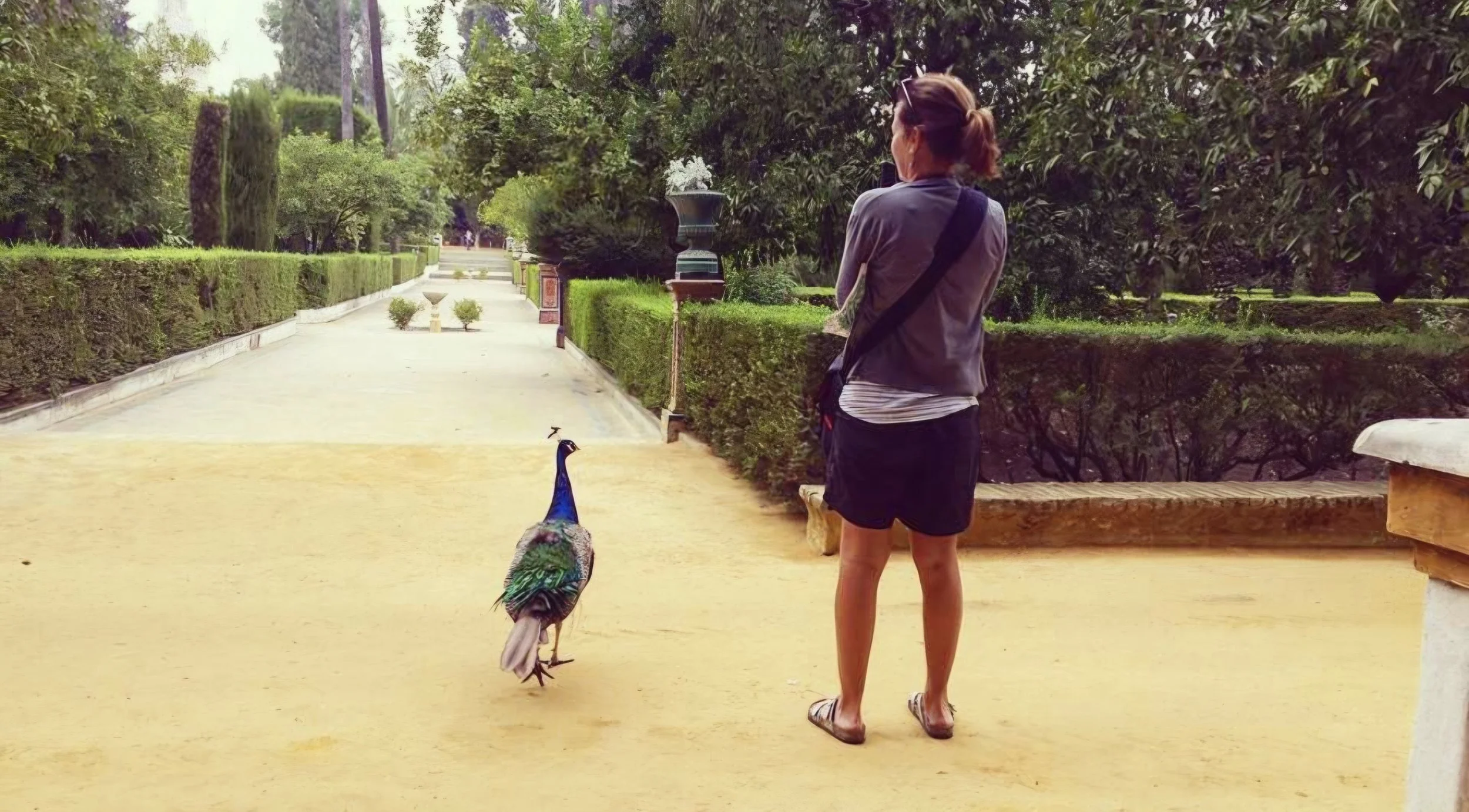
Image - Kellie enjoying the beautiful Alhambra Gardens, a few years ago. A quiet moment of feeling peace, awe and wonder, …….. with an unexpected new friend.

But culture is just the backdrop. The more intimate teaching happens closer to home.

In many families, emotions, particularly big, difficult ones, were not something that could safely exist in the shared space. Not because parents were cruel, but because they were human; carrying their own unprocessed histories, their own unmet needs, their own nervous systems doing the best they could.

Children are exquisitely attuned to the emotional climate of their home. They feel the tension before anyone speaks. They notice the shift in atmosphere when a particular topic is raised. They learn, with remarkable speed, which feelings are welcome and which ones make the air go strange.

So they adapt. They make themselves smaller. They learn to swallow the tears, contain the anger, perform the calm. Not because they were told to, though sometimes they were, but because they felt what happened in the room when they didn't. The withdrawal. The anxiety. The subtle but unmistakable signal that this was too much.

This is not a failure of the child. It is a profound act of adaptation. The child keeps the peace. The child holds the system together. The child learns that their inner world is less important than the emotional stability of the adults around them. The problem with this is it is not the child’s role in the family system to hold space. They don’t have the capacity in their own bodies to do this. Their nervous systems grow well when they have support and co-regulation for parents and caregivers.

That learning doesn't leave when we grow up. It becomes the architecture of how we relate to ourselves.

For some, this went even further. Perhaps there was a parent who struggled, with depression, with alcohol, with the weight of their own unresolved grief. Perhaps the emotional temperature of the household was genuinely unpredictable, and learning to monitor and manage it became a matter of felt safety.

These children became extraordinarily skilled at reading other people. They developed a finely calibrated sensitivity to mood, to need, to the earliest signs of distress in those around them. They learned to intervene before things escalated. To soothe, to deflect, to become whatever the moment required.

What they didn't learn was how to turn that same attention inward.

When your nervous system is organised around tracking others, when your survival, in some early and embodied sense, depended on getting that right , your own feelings become background noise at best. At worst, they feel like a liability. An indulgence. Something to be attended to only once everyone else is okay.

Which, of course, is never. Because these choices were intelligent strategies that our nervous system made, that helped us survive moments when protection, choice and support was missing. Over time they become habituated responses, very strong neural pathways that keep us alive. Those intelligent responses live in the nervous system and tissues; muscles stay contracted, breath stays shallow and the body stuck in a fight response, prepared for a fight that is no longer happening.

Culturally we started to notice in workplaces that we had a problem with poor emotional regulation and here's where it gets interesting.

Emotional disconnection, burnout, relational breakdown, it became impossible to ignore so we developed a response and we called it Emotional Intelligence.

We built frameworks. Competency models. Training programmes. We gave people a vocabulary for their inner world and a five-step process for navigating it. In many ways, it was very well-intentioned a genuine attempt to bring feeling back into professional and personal life. I want to say I think it is brilliant that organisations started to highlight this because left to their own devices, many people wound never come across this content. As I always say, you have to start somewhere.

But look at what we actually did. We took the most embodied, relational, lived thing there is and…. we put it in a PowerPoint. We made emotion into a skill to be optimised. Name the feeling, manage the feeling, deploy the feeling strategically. Which means it's still, fundamentally, a head operation. You're just thinking about feelings in a more sophisticated way. The body, where the feeling actually lives, barely gets a mention.

Emotions arise from the nervous system particularly the limbic system. This is a different part of the brain to the neo-cortex which is receiving this powerpoint information, which is all about logic and reason. If you want to build emotional capacity you have to work with those parts of the brain where implicit memory lives and you do it through the language of the nervous system, which we call ‘The felt sense’.

This, I think, tells you everything about how deep the conditioning runs. That even our solution to emotional disconnection had to be made safe by intellectualising it. We couldn't let it be messy and bodily and unquantifiable. It had to have a score. A framework. A return on investment.

We looked at the problem of not feeling and responded by finding a more sophisticated way to not feel. There is a huge cost of staying ‘just north of yourself’.

When we consistently move away from sensation, the feelings don't disappear. They go underground deep into our unconscious. They show up as anxiety without a clear source, as a vague flatness, as a body that's always tense for no reason you can name. They emerge sideways in sudden irritability, in chronic pain, in the persistent sense that something is off even when life looks fine on paper.

There's also a quieter cost. When we numb or bypass the difficult feelings, we inadvertently turn down the volume on the good ones too. Joy becomes harder to access. Aliveness feels further away. We go through the motions of a full life while feeling strangely absent from it.

Perhaps most poignantly, when we can't feel our own experience, we cannot feel others’ and we struggle to feel genuinely met by others. The connection we most want keeps glancing off a surface we've spent years polishing smooth. In relationships this is a major driver of loneliness because we cannot connect with our emotions let alone talk about them and share what is deep in our heart with another. That level of vulnerability is terrifying.

The body keeps the ledger, it waits, sometimes for decades, for the conditions to be safe enough to finally put some of it down.

We often talk about feeling feelings as though it's a matter of bravery of simply deciding to stop avoiding and diving in. But that framing misses something important.

Feeling, especially for those of us who learned early to move away from sensation, is a capacity that needs to be built. The nervous system needs to learn, slowly and with support, that it can be with experience without being overwhelmed by it. That sensation can be felt and survived. That there is enough space, enough ground, enough steadiness to actually let something land.

This is the heart of the somatic work I do with people. Not pushing into feeling, but gently expanding what can be experienced without the system needing to flee. It's slow work. It requires patience, curiosity, and a willingness to be a beginner in your own inner life.

It is some of the most important work I know.

Somatic work doesn’t force patterns to disappear it meets them with careful pacing and respect. Healing begins when we attend closely to the physiology and introduce layers of support that were not present in the original moment: co-regulation, steadiness, choice, support and the permission to be and move ever so slowly. Slow is more in somatic healing.

The nervous system begins to soften and loosen. It realises that it is no longer in a fight and the body learns that it does not have to hang on so tightly. The support that was missing is finally here.

If any of this resonates, here's a gentle place to start. The next time you notice an urge to reach for your phone, or to get suddenly very busy, or to launch into problem-solving mode, pause. Just for a moment.

Ask: what's happening in my body right now?

You don't need to feel everything. You don't need to go anywhere overwhelming. Just notice. A breath. A tightening. A warmth. A nothing.

That small, curious turn toward the body, that noticing, is the beginning of coming home to yourself.

This is unlike anything you'll find in a competency framework, nobody can teach it to you from the outside. It has to be lived, slowly, from within.

If you would like some support and learn how to build this capacity so that you have more energy to cope with what life throws your way, come talk to me.

Some reflections on Nostalgia and Collective Grief

There’s a trend circulating at the moment on social media. “Mum and Dad… what were you like in the 90s?” People are posting old photos, grainy images, oversized denim, sun-faded afternoons. There’s something almost tender about it. A collective wistfulness and I’ve noticed it in myself too.

Recently, I’ve been watching Ryan Murphy’s series on John F. Kennedy Jr. and Carolyn Bessette Kennedy. There’s something about it, the aesthetic, the pace, the feeling that evokes a different era. A quieter one. It stirs something. Not just memory but something deeper. The visuals evoke memories of my twenties living in London in the UK and times I visited New York in that time period.

Nostalgia is a slow form of grief where time shifts without our awareness. Chapters of our life end really quietly without much self awareness whilst we are living them. There are people, places and versions of ourselves that we never really got to say goodbye to, because we didn’t realise that we were at the end of something, until it was over.

We don’t really think of nostalgia as grief. Many of us learned that nostalgia was fondness or sentimentality. The yearning for the good old days. It is a felt sense, it’s very somatic; our senses are the gateway to our memories. A song comes on and reminds you of a time and place. You smell something and a whole era of your life comes flooding back. You might come across an old photo and as you look at it you remember the version of yourself that you see in your hand. How it felt to be that version of you. Sometimes you miss that version of yourself and sometimes you smile and think I am glad I am past all of that.

A few mornings ago, I was walking with my 17-year-old son. He’s been feeling the weight of the world lately like many young people are. The complexity of it. The uncertainty. The constant stream of information that never really lets the nervous system settle.

And he asked me: What was life like when you were 17, Mum?” So I told him about 1989. There were no mobile phones or internet. You rang your friends on the house phone and hoped they were home. People turned up when they said they would and most of the time you waited. We used to spend a lot of time waiting around for each other. Shops were closed on Saturday afternoons and Sundays. Nights were quieter. Life moved more slowly. As I spoke, I could feel something in my body soften. What was strengthened in our nervous system when we waited around was a greater capacity for uncertainty and a quiet trust that connection would come.

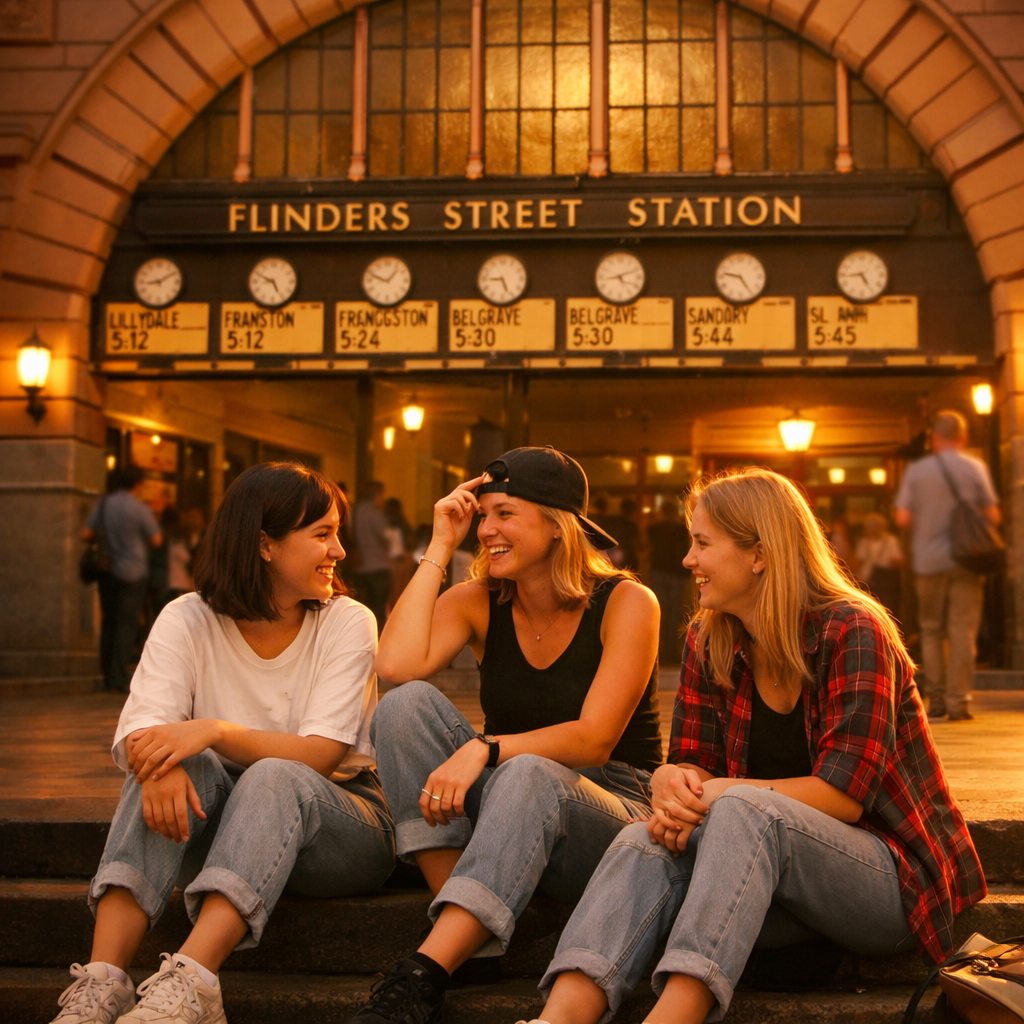
Digital image, Kellie Stirling. Waiting for our friends by the clocks.

Not because everything was better, it wasn’t. But because something about the pace of life was different. It was a little more contained, less exposed and relentless. I think that’s part of what we’re feeling when we experience nostalgia at the moment.

It’s often described as longing for the past but I don’t think we’re really longing for a decade. I think we’re longing for that felt sense. A way of being in ourselves when the world moved differently.

Later that day, I was in the car with my sons. My eldest, who’s nearly 20 and an engineering student at University, was driving. We were talking about fuel shortages and what might change in the future, electric cars, shifting systems, renewable energy options, the way the world is having to adapt.

I found myself asking: “What do you think we’ll learn from this?” He said, quite simply: “I think people have to realise that the only way we’re going to get through this is together. We have to collaborate. We have to support each other. We’ve got to change.”

I felt it land in my body as he spoke because in that moment, something shifted. Nostalgia looks back. But what he named looks forward. We can’t recreate the conditions of the 90s. The world is more interconnected now. It is more complex and demanding on our attention, our nervous systems, our capacity to process.

The slower pace we remember wasn’t just a lifestyle it was an environment that offered a kind of built-in regulation. There was less information, stimulation. and there were more natural boundaries between “on” and “off.”

That world doesn’t exist in the same way anymore. So the question isn’t, how do we go back? It’s: ‘How do we live well here? Perhaps this is where nostalgia becomes something more than wistfulness. Maybe it becomes a kind of remembering. Remembering not of a time but of what mattered and what was valued.

There was connection, presence and rhythm. It felt a little more spacious for our nervous systems and there was more connection and time spent in different types of community.

We are being asked to express those things differently now, not through simplicity, fewer inputs or retreating from the world, but through conscious collaboration with greater discernment. By learning how to stay connected within it.

What my son named, in that simple sentence, is something I see in my work every day. Whether I’m working with leaders, couples, or individuals navigating change the same truth emerges: we regulate in relationship and we find our way through complexity together.

So maybe the nostalgia many of us experiencing at the moment isn’t asking us to return to the past.

Maybe it’s helping us feel what we’re missing, so we can choose how to bring it forward. We may not get the slower world back, but we can create moments of slowness. We may not escape the complexity but we can learn to meet it with others, rather than alone.

I think perhaps that is the quiet invitation underneath all of this; not to go back but to become more intentional about how we live now.

Together.

The wisdom women carry

Reflections on International Women’s Day.

I am a bit late to international women’s day this year. It happened on the weekend, we had a long weekend where I live and my week last week was really hectic. It arrived before I realised what date it actually was. Sometimes I get a bit ‘meh..’ about it too.

International Women’s Day often celebrates women for their achievements. The roles we hold, the barriers we break, the leadership we demonstrate. All of these things are very important. But I wanted to bring to your attention the deeper truth I witness in my work with women is something quieter, older, and far more powerful. It is the wisdom women carry in their bodies.

The wisdom forged through cycles of life. Through life’s transitions, challenges and the roles we take up in our lives. This wisdom that is forged through birth and loss, relationships that begin and end, careers that are built then changed, and identities that reshaped. All of this through the long and often invisible work of healing.

Women’s bodies are cyclical by nature. We are designed for seasons; for expansion, contraction, renewal and rest. Yet many of us have spent decades living inside systems that expect us to operate like machines: linear, productive, always moving forward.

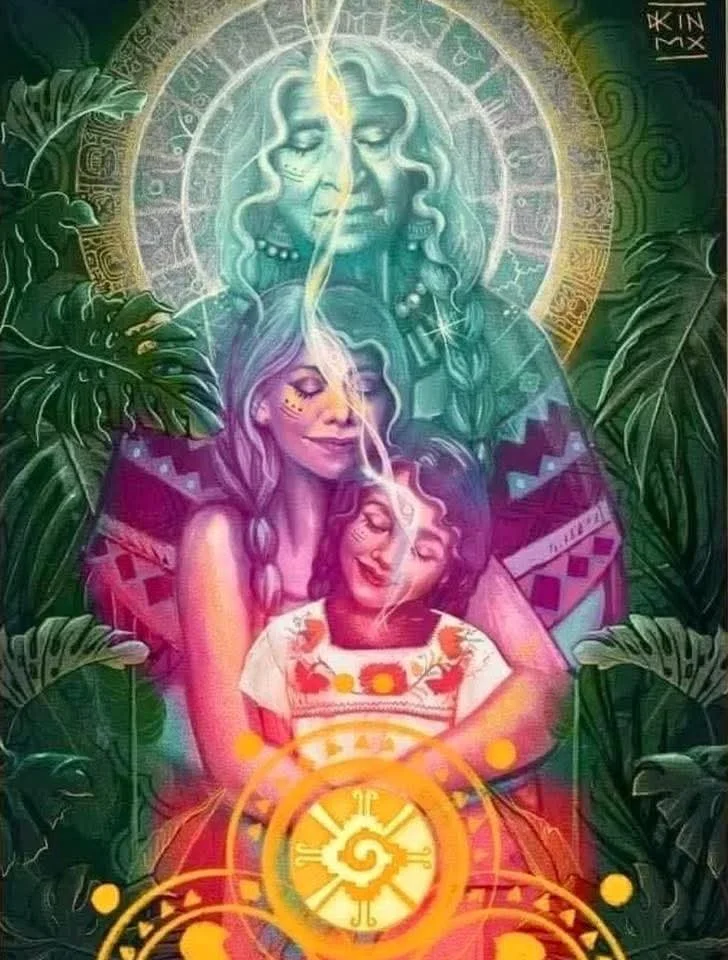
Digital Art, Kellie Stirling

However, a woman’s body never forgets its inherent nature. Eventually it calls us back and there are many different ways it speaks to us to do that. Often this call becomes louder during or after the big life transitions of becoming a mother and in our midlife when perimenopause arrives.

In midlife in particular, things really start to get shaken up. The old identities that once held us together begin to loosen. The roles that defined us, mother, partner, professional, caretaker often no longer fit in the same way they once did. What can start to feel like we have lost our inner compass a little at this point. What can feel like disorientation is actually something else entirely.

A threshold.

In my work as a somatic experiencing practitioner and somatic coach, I often see women arrive at this threshold carrying years of invisible labour, emotional labour, relational labour and generational patterns they have carried quietly for their families and communities.

When we slow down enough to listen to the body, something remarkable happens. The nervous system begins to soften and the old protective patterns that once helped us survive can gently loosen their grip.

Beneath those protective patterns something else emerges. It is not weakness or fragility. It is profound strength and a deep sense of knowing. This sense of knowing, this strength, comes from women who have lived.

What does it mean to have lived? It comes from our lived experience where we have have felt deeply, lost deeply, loved deeply. It looks like women who have learned that true power does not come from pushing harder, but from becoming more deeply connected to themselves, to their bodies, and to the web of life around them.

International Women’s Day, for me, is not only about celebrating what women achieve in the world. It is about honouring the depth of women’s inner worlds. Women who try so very hard to keep healing and growing as human beings. It comes from honouring the quiet courage it takes to heal and the wisdom that emerges when we listen to the body.

I notice the profound capacity women have to transform pain into compassion, for themselves, for others, and for future generations. When a woman heals, the ripple effect of it travels far beyond her. There is a saying that the mother is the anchor in the family system and constellation; when mum is okay, the family is okay. So when a woman works on her own healing the ripple effect is to all the social system she exists within. To her family, her intimate and platonic relationships and to her leadership.

The impact is far reaching.

So today I honour the women who are doing the deep work, the women who are reclaiming their bodies. The women questioning the systems they were taught to live inside and learning to reconnect with their deep knowing and learning to trust it again.

This kind of change rarely makes headlines but it is the kind of change that has a huge impact, one tiny step at a time.


When the Roots are revealed

A nervous system reflection on collective disgust, power, and disillusionment

There are moments when the collective emotional field shifts.  You can feel it, not just in headlines or conversations, but in the body. A heaviness. A tightening. A quiet sense of repulsion that sits somewhere in the triad of disgust, anger and grief.  Lately there has been a lot of upheaval in our lives and lots of information revealed that has frankly, shocked many of us to our core.

It is not just the big stuff.  I feel like every day I read the newspaper or look online and something about the abuse of power is there.

So it is not surprising that many people have been describing feelings of disgust, disbelief, and despair as more information circulates about powerful people, networks, and systems that appear far more complex and paradoxically far more human than we once imagined.

The reactions are strong and they make sense because this isn’t just an intellectual response.

It is a nervous system response and we notice that the body knows before the mind can explain.

When people feel disgust, the body is doing something very specific.

Disgust is a boundary emotion.  It is the nervous system saying, this is not safe, it has crossed a line and I need distance.  Disgust is an interesting emotion because it doesn’t say fight, it says move away.  Our visceral reactions with disgust are often really strong; recoiling, nausea, tightening in the throat and gut, facial expressions that close down intake.  It is like our body is saying, ‘do not ingest this’.  Which makes sense when you think that disgust evolved evolutionarily to protect us from contamination, like rotten food or toxins.  When you explore it psychologically that same neural circuitry extends to moral violations, ethical breaches, abuses of power and relational betrayal.  So when people feel disgust at certain events or revelations, the nervous system is experiencing something more than ‘this is wrong’.  It is experiencing a very different message.  The message is more ‘this feels contaminating to my sense of safety or moral order’.

It is a little bit different to anger.  Which we then might experience closely after it.  Anger is a mobilising energy that wants to restore integrity or fairness.  After that, for many if anger offers us no respite, then comes something heavier.  A flattening, fatigue and often a sense of despair. The moment when the body recognises that the systems involved feel too large to influence.

Now lets think about disillusionment for a minute. At a nervous system level, disillusionment isn’t just disappointment. It’s the moment when something we were orienting toward; a person, system, belief, or story, no longer provides stability. The illusion wasn’t just an idea, It was an organising principle that helped shape our mental models of how things are, how we perceive everything works together.

So when it falls away, the body momentarily loses its map. You might feel a drop in energy, a slowing or flattening, maybe heaviness in the chest or a kind of internal ‘oh…’ that comes with a sinking feeling in your belly. It is almost like our body is saying ‘I don’t know where to place my trust now’. With disillusionment, it is like relational disappointment and so we might be feeling something like a micro grief because we are carrying sadness rather than outrage (or maybe outrage too!). It might feel like we are grieving the certainty, innocence and simplicity we once knew.

In the context of what we are experiencing with information revealing abuse of power, these responses are not signs that something is wrong with us. They are signs that our bodies are orienting to what feels morally and relationally unsafe.

When trust and power collide

Human beings are wired to seek safety through connection.  Connection with trusted structures like families, communities, organisations, leaders, institutions.  When those structures feel compromised, the impact is deeper than opinion or politics.

It can feel like an attachment rupture at a collective level.

Deep inside of us we ask, Who can we trust now?  What is actually true?  How do we orient in the world?

In my work with teams and leadership systems, I often see a similar dynamic. When trust breaks in a leadership group, the entire nervous system of the team shifts. People become hypervigilant, cynical, or withdrawn. Energy that once went toward creativity or collaboration turns toward self-protection.

In society, the collective field behaves much the same way.

Digital art, Kellie Stirling

Another way we can look at it is by using a metaphor; The forest and the storm.

Sometimes a forest looks healthy from a distance.  The canopy is full and the trees stand tall. When we zoom up above and look down, everything appears stable.

But a storm arrives, and suddenly weak branches fall. Rot hidden deep within the roots is exposed. What seemed solid reveals its fragility.  The storm did not create the decay, it simply revealed what was already there.

This is often how systemic realities come into awareness not all at once, but through moments that expose the invisible networks of power, proximity, and influence that shape human systems.  The discomfort people feel is partly the shock of seeing complexity where we once wanted simplicity.

Living with complexity without collapsing

Our nervous systems like clear categories: good or bad, safe or unsafe, hero or villain.

Complexity asks more of us.  It asks us to hold multiple truths at once that people can be influential and flawed, connected and compromised, admired and deeply human.  It is asking us to hold the tension of polarity, of competing priorities.

When this ambiguity becomes too much, we tend to move toward extremes.  It can look like outrage that burns hot and fast or sometimes numbness that shuts us down.  Often we protect ourselves by demonstrating cynicism that protects us from disappointment.

But there is another possibility, a slower and more embodied stance.  That is Witnessing.

Not bypassing what we feel. Not rushing to certainty. Simply allowing the body to register what is present while staying connected to our capacity for discernment.

Staying human in a dysregulated world

When collective stories stir strong emotional responses, it helps to come back to what our nervous systems can actually hold. To orient to the present moment and to notice where we still have agency.  Can we find where we have choice in how we speak, how we relate, how we show up in our own circles of influence?

Systems change slowly and nervous systems change slowly too.  Often the most grounded response is not to harden, but to stay soft enough to feel, while strong enough to hold boundaries.

How can we rejuvenate and grow in the face of decay, how can we hold space for it?

In nature, decay is not the end of the story.  When something breaks down, it creates space for renewal. Nutrients return to the soil. New growth becomes possible.  Perhaps this is also true in human systems.  Moments that expose cracks in our collective structures can feel deeply uncomfortable, even destabilising, but they also invite reflection.

We can ask ourselves what kind of leadership we want to grow now within ourselves and what values we choose to root into, even when trust feels fragile.  The work is not only to witness what has been revealed.  It is to stay human, grounded, discerning, and connected as the system reorganises around us. The more we can stay in peace and calm and maintain a clear focus, the more easily we can navigate this time.  Can we stay connected to a vision of a much more compassionate and loving world for all of us as familiar systems shift and reshape around us?

If you are struggling at the moment with the chaos of the world, here are some reflection questions for you.

What sensations arise in your body when something feels morally confronting?

What helps you stay grounded and discerning when trust feels fragile?

What kind of leadership are you choosing to embody in your own sphere right now?


When our inner child is leading the fight

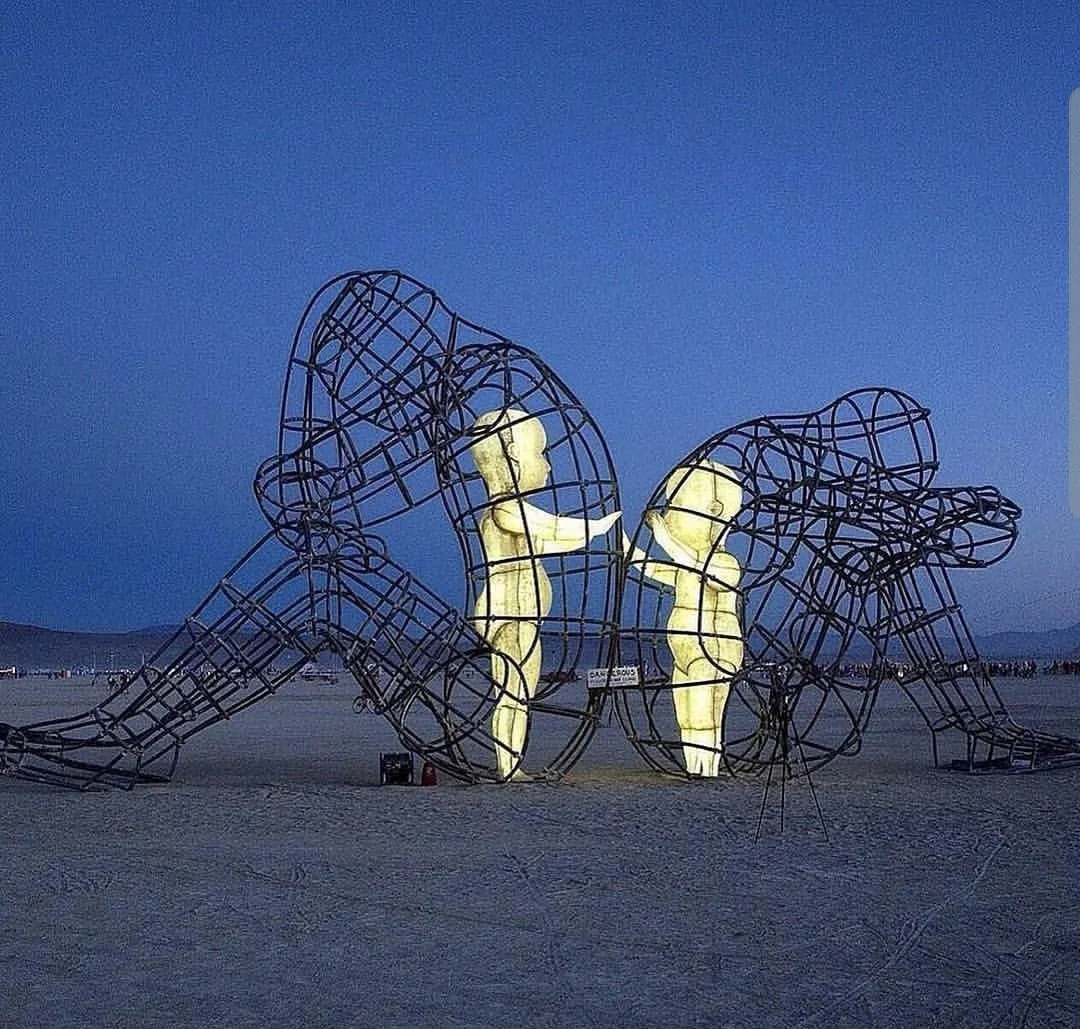
Our relationships can be the most fantastic containers for healing our inner child wounding. When we argue with our partners it is not our wise adult self having the argument it is almost always one of our adaptive childhood parts. These are the parts of us that learned very early how to survive emotionally in our families of origin.

When I work with couples through a systemic lens, I can see the recurring patterns that keep looping and generating conflict, alongside each partner’s adaptive child strategies. Once these patterns become visible, they’re impossible to unsee.

We think our fights are about the dishes, about a shutdown after a small comment, about tension around sex. Or maybe it is someone always needing to be right, or to be in control. Maybe it about someone who withdraws in the middle of tension, they clam up and say nothing. There is always something deeper there.

Artist unknown, From Burning Man

Once you see it, it makes a different kind of sense. The fight isn’t about the housework or the small irritations, those are just the signs. What’s really happening is that an adaptive child has taken the lead. The adaptive children are in the house.

It is our adaptive child that runs the fight. The problem with this is our adaptive child has no place running our adult relationships. It doesn’t have the discernment or capacity to make adult decisions.

The adaptive child is the part of us that learned how to stay connected, safe, or invisible in childhood. This is a very intelligent survival strategy that helped us survive when we were a child to stay safe. The only problem is that when this part is running the show in adult relationships, we don’t respond we react.

So when two adaptive children collide, the relationship quickly becomes a battleground rather than a place of safety.

In Terry Real’s framework, there are three common adaptive child imprints that often show up in adult intimacy. These are:

The Hero Child. This is the person who '“holds it all together.” They learned early that love came through competence, responsibility, or emotional caretaking. They took up a particular role in their family system and it was often either, the good one, the achiever, the surrogate spouse, the family therapist or they calmed things down.

They are often very competent, loyal and responsible people in their adult life. They show up, do their job and they do it well. They are often seen by others as competent, logical and good people.

When they are not good, what does that look like?

Well they can be passive sometimes and they are not particuarly good at being vulnerable because they have had to be good and responsible for a very long time. This means surrender, being open and receiving can be really challenging for them.

In adult relationships, this can look like:

  • Over-functioning

  • Carrying the emotional load for both partners

  • Resentment building beneath “being fine”

  • Struggling to ask for help or show vulnerability

When the Hero Child is activated, they often feel: “If I don’t manage this, everything will fall apart.” When they do eventually explode or withdraw, it often shocks their partner because their exhaustion has been invisible for a long time. The Hero child has had to hold a lot in the family system; in fact, they have probably been given more power than a child should have but it has not been based on them as an individual. It has been based on what the parents needed them to do to regulate the family system.

The Scapegoat Child. The scapegoat is the classic rebel or problem child. They learned that conflict, intensity, or acting out was the only way to stay seen. They often have very big feelings and express all that is not being expressed in the family system. They might be the person who fights with one of the parents all the time. Maybe the overbearing parent. They are often overtly or covertly shamed, being seen as the source of all the problems in the family.

In adult relationships, this can show up as:

  • Anger that feels bigger and disproportionate to the moment

  • Defensiveness or blaming

  • A sense of being misunderstood or unfairly criticised

  • Feeling chronically “wrong” or rejected

Underneath the reactivity is often a deep fear; fear that they are going to be shamed again. Often the whole family system can be organised around keeping this child in line. So they seem to carry a lot of power because everyone is walking around on egg shells around them. In some ways, they are the truth teller of what is not being expressed.

This child fights not to win but to protect against collapse. They are very emotional and often have big hearts. They are the rebels and the creatives of the world. Sometimes the bad boys. Why do we love the bad boys; because they have big hearts.

The Lost Child. The lost child runs their own race. Behind it is the belief, “If I disappear, I’ll be safe.”

The Lost Child adapted by minimising needs, emotions, and presence. The core wound here is often abandonment and that was learned early when this child went to their parent for co-regulation and they learned quickly that that was not available so they become independent and walled off as they have had to regulate themselves. They went and hid in their bedroom.

In adult relationships, this often looks like:

  • Withdrawal or emotional shutdown

  • Avoidance of conflict

  • Difficulty expressing wants or desires

  • A partner feeling shut out or alone

The Lost Child’s strategy isn’t disinterest, it’s self-protection. Their nervous system learned very early that connection is overwhelming or unsafe. There are lots of repressed emotions here because growing up there was no one they felt safe enough to be with to express how they were feeling.

When we eventually find a partner, the person we want to commit to, we often pick a partner that enables us to predictably repeat our role. Hence they saying ‘we marry our unfinished business’. We pair off with people who mirror the experience we received from our parents/caregivers so we can finally heal that pattern.

Why do fights often escalate so fast?

Here’s the key piece, when we are fighting from our adaptive child, we cannot access our Wise Adult self because our pre-frontal cortex, the part of our brain responsible for logical and rational thought, goes offline. We go into a survival response, our limbic system comes online and all our early adaptive patterns are alive and ready to go.

When we can stay in the Wise Adult part of ourselves we;

  • Can stay present

  • Can hold complexity

  • Can self-soothe

  • Can take responsibility without collapsing or attacking

But the adaptive child doesn’t have that capacity. Instead, the nervous system is organised around threat, survival and attachment loss. So the fight isn’t about the content. It is about our old unmet needs colliding in the present.

Two children are trying to feel safe, using strategies that once worked, but now damage intimacy. Our adaptive child strategies rarely serve us well in our adult relationships.

From Fighting to Repair

The work of adult relationship healing isn’t about erasing these parts. It’s about learning to:

  • Recognise when your adaptive child is running the interaction

  • Learning how to self soothe so that you can pause before responding

  • Build the capacity to come back online as your Wise Adult

  • Speak from the present rather than the past

This is deep nervous-system work. Because you can’t “think” your way out of an adaptive state.
You have to feel your way back into safety first. Only then can true repair happen.

The Quiet Shift That Changes Everything

When couples can see that this isn’t you versus me, but younger parts trying to keep us safe, the nervous system settles. Defensiveness eases, blame falls away, and curiosity makes space for compassion, for ourselves and for one another.

Very slowly, the relationship becomes less about winning or withdrawing and more about learning how to stay connected, even when it’s hard.

Here are some reflection questions for you to sit with.

  • When conflict arises in my relationship, what do I notice happening in my body first?

  • Do I tend to move toward fixing, fighting, or disappearing when things feel tense?

  • Which adaptive child strategy do you recognise most easily in yourself; the Hero, the Scapegoat, or the Lost Child? Do you see see a combination of two or maybe that you as you have matured you have moved from one to another?

  • What familiar loop do my partner and I seem to fall into when we’re under stress?

  • If this pattern had a job, what might it be trying to protect?

  • What old story or fear might be getting activated beneath the surface of our current conflict?