transition structure

The Gates of Grief

Last week a friend of mine passed away. I got the news early in the morning when I was at the gym.  This is unusual because I never take my phone with me when I am working out but for some reason this particular morning, I slid it unconsciously into the side pocket of my tights, put my headphones on and off I went.  I love listening to music when I exercise, I find it motivating and uplifting.  Normally I turn on my playlist on my phone and leave the phone in the locker; the bluetooth in my headphones is great and picks up the signal from quite a distance.  On this day I did not, I put my phone in my pocket.  

I have known this friend for twenty five years, I met him through my husband.  He was 90 years old, there is no tragedy in the death of a ninety year old but it is sad. He was our friend, we met him in Italy and got married in his town, which is a very beautiful place.  We were looking forward to seeing him next year.  Just a week ago, whilst out for a walk we were talking about him and we admitted to each other that there was a chance he might not be there next year and we talked about our feelings about that, should it eventuate.  Needless to say both of us were very sad when we found out.  I had a few tears at the gym, when I read it, walked home and hugged my husband for an hour.  He was very upset.

It got me thinking about the gates of grief that I learned off Francis Weller who is a psychotherapist who does a lot of work in the grief space.  If you google him you will find many conversations and interviews with him.  I did 12 months of training with him about 5 years ago, more for myself, when I noticed about 6 months out of chemotherapy treatment, I had a lot of grief about my medical experience.

Weller completely reframed the meaning of grief for me in this program.  What he has done is  create a profound contribution to soul-centered psychotherapy because he helps us shift the Western cultural narrative of grief, which often treats grief as private, pathological, and linear, toward one that is relational, ancestral, and integrated.  His map of the five gates of grief help us understand that we can experience grief for many different reasons in our life, beyond the experience of losing someone we love.

So I thought I would take you through them and add my thoughts on it.  I have found in my own experience and in working with clients that there are often many other emotions that get wrapped up with grief, and how it shows up in our lives changes all the time.  There is no unique experience of grief, it changes every time within us and it is different for every individual.

I often talk about grief as a crucible.  A container that can withstand great heat and stress to create something new.  We could see that Weller’s gates create that container by naming different types of loss, we allow others to stop bottling up their grief and sorrow and allow it to flow.  This is what helps us process transitions.

The first gate is, Everything we love we will lose.  Grief is an essential part of being a human.  Weller says one of grief’s most important teachings is everything is a gift, nothing lasts.  To accept this is to live on life’s terms.  This is what the Buddhists called impermanence.  There are no exceptions.  When we acknowledge grief we acknowledge that everything we love we will lose.
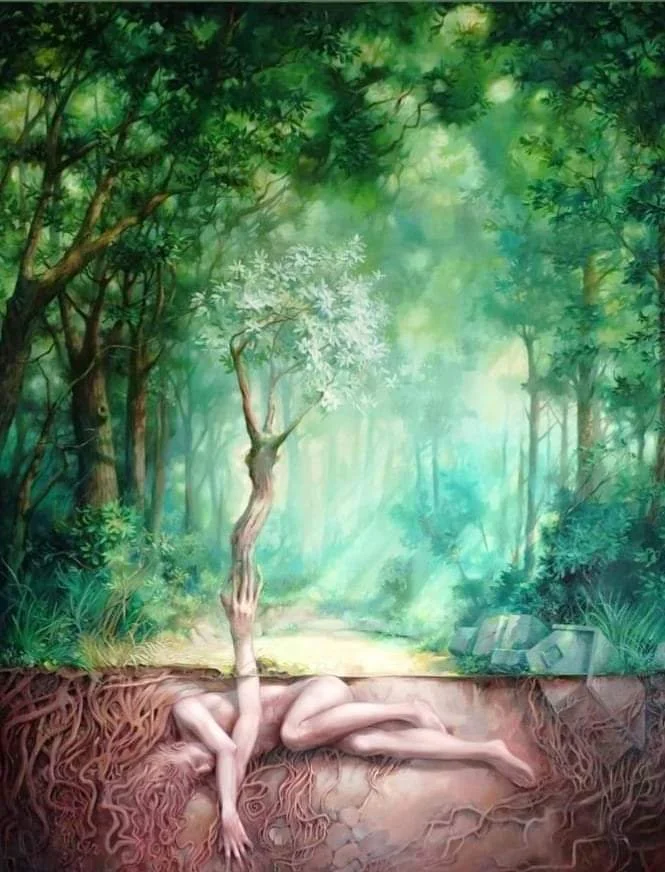
I notice lots of people are sad about things that did not happen in their lives or if they didn’t get what they think they deserve.  I think there is a difference here, this is more disappointment and it is totally ok to be disappointed with what has or has not happened in your life and you might experience great sadness with this.  There is a distinction for me between the two, it is nuanced for sure.

People do experience grief in big life transitions like parenthood and menopause and events like a chronic or acute illness like cancer.  These are all very big initiations and initiations take us into places that are unknown.  We wonder will we ever be the same again, who will we be on the other side?  We are not meant to be the same person on the other side, these are times of sheddings and endings and often we are brought face to face with our own mortality.  Often these experiences strip away all our defence strategies we created to adapt as children and we are forced to face our adult world that is much sweeter, riper and vivid.  Many people discover they can actually be with all the emotions we experience as humans and we will not only be okay, we can thrive.

The second gate is; The places that have not known love. This gate is about the parts of ourselves that we have separated from that are untouched by love.  These are the parts of ourselves that have been banished to the basement of our psyche because they are surrounded in shame.  They haven’t experienced kindness, compassion, warmth or a welcoming smile.  What we think or experience as a part of ourselves being defective or wrong is often what we experience grief for.  Weller explains that it is hard to grieve for parts of ourselves that we have banished because we feel they are unworthy of our grief.  Some of you might be familiar with IFS as a therapeutic modality.  It is very helpful to many people to help them bring these banished parts back on line.  When we bring them back it makes sense that we would experience grief having disconnected from them.  Shame separates us from our soul. It is an insidious emotion and I understand why academics like Brene Brown have spent their professional lives trying to understand it.

The third gate is, The sorrows of the world.  We experience this most days just looking at the TV and watching the news.  The grief we experience at lives lost to war, around climate change and natural life being destroyed, cultures being destroyed, people living without a home.  It takes everything that we have within us to walk down a street and not be affected by the sorrows of our world.  This is where being in community, ritual and grieving together is a very powerful process for people to process grief.  Often we do this through art, music, and dance.  Ancient cultures have been doing this for years.  We live in relational fields, in fields of consciousness, indigenous cultures have known this for years.  

The fourth gate is, What we expected we did not receive. This one is a little trickier to explain but I believe it links to belonging.  We are born into families, into communities.  There are certain things we are born to expect.  Weller says we are designed to hear (as babies) soothing sounds, to be comforted, and hear soothing sounds and noises to soothe and comfort us.  Yet some of us don’t experience that.  We are wired to want to belong, it is a very primal need of humans, we are not wired to do life on our own.  Our nervous systems are wired for connection.  Our feelings of not being enough, of feeling like we are lacking are most often not a sign of personal failure but of a community or a society that has failed to offer us what we are designed to expect.  I believe this is where marginalisation and discrimination deeply wounds us.  One of the rituals of Italian life I love is the passigiata.  This is where Italians go out at night before dinner and take a walk with family and friends. There is both communion and spectacle in this event, often dressed in their very best, the passigiata gives rise to a bit of theatre as well as connection with others. As the Italians meet in the community and talk about their day, maybe have a cafe or gelato or aperitivo.  It is a beautiful ritual where people come together at the end of our day.  

The fifth gate is Ancestral Grief.  This is the grief that we carry in our bodies that is handed down by our ancestors.  This can be held for generations and often creates secondary coping strategies of addiction, rage or silence in families.  Things that are never spoken of for generations until they turn up generations later in unexplained maladies like illness or chronic health conditions repeated throughout families. Or ways of being and showing up in the world that we think is personality but actually trauma.  People who lost touch with their cultural  rituals of dance, art, song and moved into survival strategy which is often silence.  I have a few Mexican friends and they all say borrow our Day of the Dead.  This is the 1st of November and it’s the day they all honour and remember their deceased ancestors.  I have started doing this, it's so lovely.

To help grief flow it must be witnessed by another.  Like trauma, grief requires a witness who can acknowledge and witness our experience.  That is why ritual and grieving in community are so important.  This allows us to live more fully as we are opening our heart to our emotions and not repressing them.  We learn to hold what is both bitter and sweet at the same time, what is painful and pleasurable.

I could write pages about grief. I feel like I have barely touched the surface here.  It is such an essential human experience that helps us let go, to keep growing as humans.  I often say to clients, the tears of our grief are like windscreen wipers for our heart.  They help us process our experience of being a human.  

I will finish with a quote from Martin Prechtel, a Mayan Shaman who is also a grief specialist.  “Grieving should never be avoided or postponed; griefing is absolutely necessary.  Without grief the world would never renew itself; the world would cease to exist”.

If you want to read more I highly recommend Francis Weller’s, The Wild Edge of Sorrow and Martin Prechtel’s, The Smell of Rain on Dust.
Building Circles of support

When I was about nine years old, the grandchildren of some elderly neighbours died.  My neighbours who were probably in their 60s at the time, although they looked really old to my nine year old self, were devastated.  What was more devastating was that during an acute experience of severe post-partum depression or psychosis, their daughter in law took the lives of the two young children.  The children were very young, I can remember the eldest being about three years old and the other child a baby.  I can still see the little boy running around on his grandparents front lawn.  The front lawn was the best lawn in our street; it was like a bowling green, so smooth and even, we all loved to walk over it in our bare feet.   The case went to court and she was found not guilty, thank goodness, it was clear that this lady had been suffering terribly.  Devastating for everyone.  This was 45 years ago, did we even know that post-partum psychosis was a thing back then? I don’t know the answer to that. So lately the case involving Lindsay Clancy in the USA, which is currently underway, has brought this memory back for me.  We also had another case happen only a month ago close to where I live in Australia.

This is troubling to me because what is very clear is that we are failing mothers.  I feel terrible for these mothers who have not received adequate care and support from the health system that is supporting them.  I know post-partum psychosis is rare but what I also know is that many women have a pretty tricky time during this life transition. Becoming a mother is called Matrescence; did you know of this word? Many people don’t and I think that in itself is cause for us to think more compassionately about our rites of passage and becoming a parent in particular.   Many of us who have had children find there is a big hole in the mental health care and adjacent services that new mums receive.  I also see this mirrored in the midlife time when women go through menopause.  

I also think to myself, what is going on with us as a community, as employers, who have people who are very vulnerable working for them during these transitions?  I question whether we are looking out for people enough and where and with whom is the line for responsibility and care?  These are tricky questions and issues of change often fall apart in the space between.

This is one of the big reasons why I choose to work with Life Transitions because I have seen over the years both in my corporate life, and now private practice, that people are grossly under-supported in these huge changes.  But more than that, they are expected to come back to work and be the same old person they have always been.  Not only is it delusional and dismissive, it is extremely toxic for families.  This socially constructed myth of life being a solitary journey and having to manage, medicate or white knuckle major life transitions of parenthood, midlife, menopause and ageing is toxic. The felt sense of navigating a massive life transition in isolation sees the body automatically go into hyper-vigilance, bracing, and feelings of overwhelm, before we even start.  I have been at times furious with the fear mongering I have seen propagated by medical doctors on social media regarding menopause, who are telling women if they don’t take HRT they will get very sick.  

Our human bodies are wired for connection; we are not meant to do life on our own.  There is a reason people used to live in tribes.  The female nervous system in particular is predisposed to a fawning response, or a tend and befriend response, over fight or flight because oxytocin is a neuromodulator of the female nervous system.  This was brought by Shelly Taylor's research in 2000 that showed that female nervous systems heavily utilise oestrogen and oxytocin pathways under stress to ‘tend and befriend’ the threat in order to protect themselves and their children.  Her work brought this tend and befriend response to our attention.  There is a little nuance to this though. Her research found that oxytocin requires a safe and supportive container to be produced and absorbed. When the female nervous system faces these big life transitions without that safe and supportive circle, the oxytocin pathways get blocked and what is left is a body stuck in a high cortisol state.

These big rites of passage are when our body needs a circle of support the most.  Historically our ancestors held these rites of passage as collective experiences and we were held in the transition space by our community.  I will say in Australia we have this thing called the Mothers Group, where new mothers are randomly assigned to a group of new mothers soon after birth.  They are gatherings initially facilitated by the community health nurse organiser and then we branch off on our own to self-organise.  Some people have very strong life long friendships that come out of these groups.  We need these groups because the raw un-armoured nervous system of a new mother needs community support for co-regulation so her body can drop out of threat detection when it needs to.  Women navigating Menopause need support because it is not just a hormonal shift; their brain is re-wiring as is their nervous system. Hello Brain Fog.   The reduction in estrogen that happens in menopause tends to drop away any fawning, people pleasing tendencies we have, creating a fierce need for a supportive, authentic, non-judgemental community.  We have all heard midlife women say one of their greatest joys is they don’t care anymore!! In our elderhood transition, stepping into wisdom means we need to be held by a community that can receive, hold and honour that wisdom; otherwise ageing feels like we are disappearing.

Why is it so hard to build these supportive circles?  Well the individualist culture is one reason, but I also believe sisterhood wounding is a very big issue for many women.  Women can be very mean to other women when they are competing for limited resources, approval or safety.  Then there is the whole mean-girl dynamics many experience in early teen years, which is both developmental and somatic.  These wounds often happen in early teens and they can leave big imprints on our nervous system.  They make us compete with each other and frankly it's not very nice and it causes relational trauma that makes women shy away from female only spaces.  When women experience betrayal, micro-aggressions, exclusion and conditional warmth in these spaces, their nervous systems maps other women as a threat rather than a resource.  The irony is most women crave a circle of support during these life transitions but their nervous system and adaptive armour fears it.  That creates self-dialogue of an inner critic whispering, Do I belong here?  Am I enough?  Are they judging me?

What is the answer?  Micro-dosing relational safety.

You don’t have to jump into a twenty person retreat.  Start with health practitioners like a coach or therapist, or body workers who you can work on your transition with.  Put yourself in the centre of your own circle.  If you can work with practitioners who you feel safe with, who can hold space for you without judgement, help you complete adaptive stress responses that are still operating underneath, and learn to feel safe being held and witnessed by others (other women in particular), you will slowly start to build the capacity to sit in these held spaces.  You want someone who can work slowly with you, pace yourself.  The nervous system likes slow.

If you are forming a circle container I want to caution you that it is not just a social event.  There is anatomy to a circle space, it needs supportive connection.  I am not talking about having lots of people who agree with you; I am talking about creating an ecosystem of people with different relational capacities.  Often these groups need people who can naturally take up “implicit roles” like the person who is a grounding presence, whose steady nervous system can help you settle when you are activated.  Or the mirror/truth teller, the person who can gently call you out when you are using your adaptive strategies without shaming you.  Or maybe you need a strong co-regulator who can witness your grief, rage and joy without having to fix, dismiss or intellectualise what is going on.  We need people with these skills and capacities in our lives.

Circles of support are not just a social calendar event when they are well held.  When they are well held by skilled facilitators they become a nervous system container, a co-regulation resource and an antidote to isolation and self abandonment.

And for the men reading this, yes, you need circles of support during your life transitions. Men also move through profound rites of passage too and we were never meant to navigate life on our own.

Will I Still Belong If I Become Who I Am Becoming?

There is a question that sits quietly beneath many of life's biggest transitions.  Most of us never say it out loud.  Instead, we ask questions about careers, relationships, ageing, health, identity, purpose, or the future.  But underneath those questions is often another one:  Will I still belong if I become who I am becoming? With that there is often fear and also a quiet awareness that life as we know it cannot continue in the same way.  Sometimes it is a whisper and sometimes it is a crisis.  Either way we become aware that change is asking something of us.

That question lives somewhere below the throat. You might not have words for it yet. You might not even know you're asking it. But if you're in the middle of a significant life transition, becoming a new parent, a relationship ending, a career dissolving, a sudden life threatening illness, a version of yourself becoming suddenly ill-fitting, your nervous system is asking it on your behalf, constantly, in the background of everything.

It's not really a question about the future. It's a question about whether you are fundamentally safe to change.

What I have discovered is that thinking your way to the answer doesn't work. Not because you're not intelligent enough, but because the question isn't being asked by your intellect. It's being asked by something much older and much more fundamental, the part of you that is wired, before anything else, for connection and survival.

Last Saturday I sat in a room with a group of somatic experiencing and TCM practitioners and learned something that my body already knew.

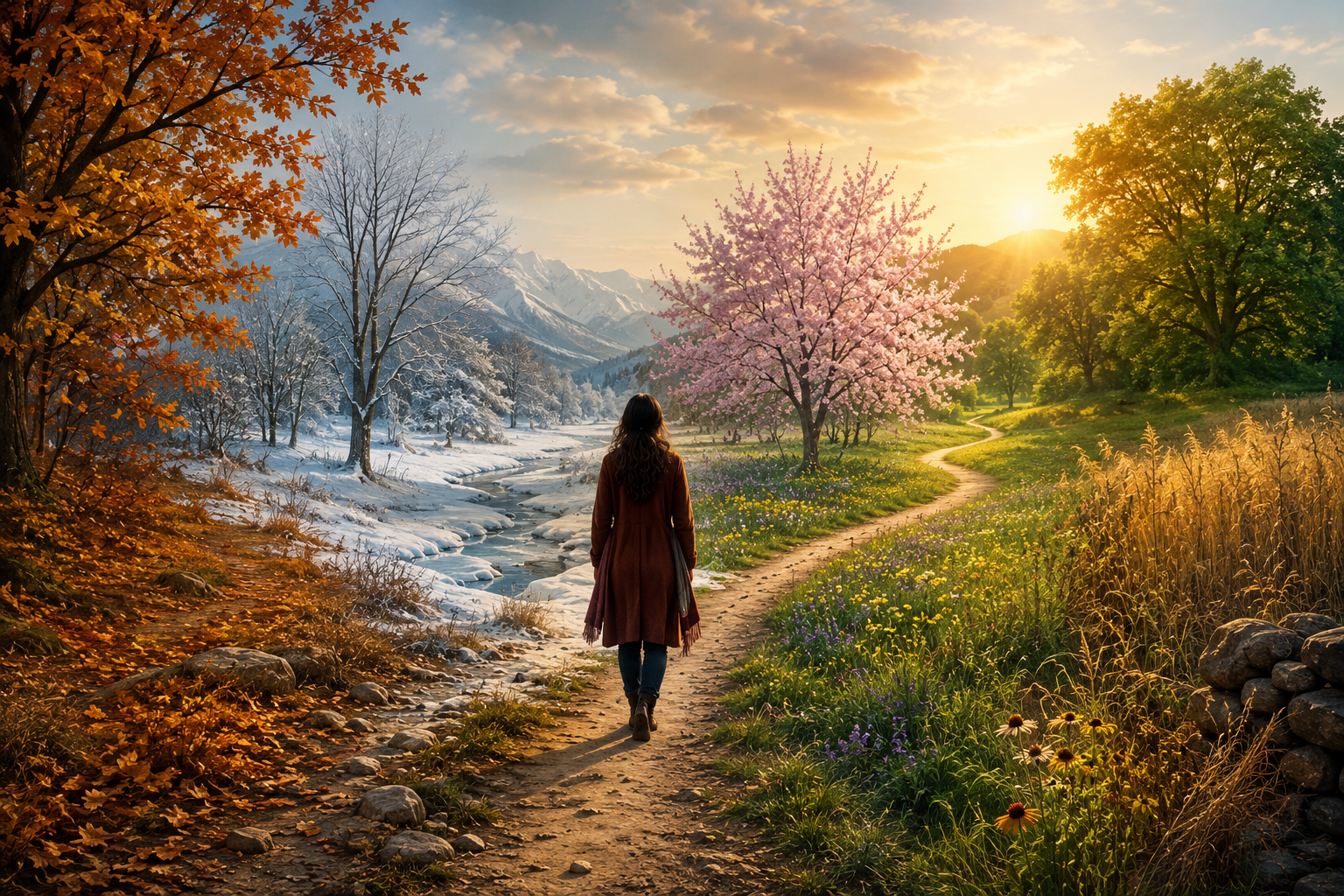
We were working with the Five Elements of Chinese Medicine, an ancient framework that maps all of life onto a seasonal cycle. Being taught by the incredible Alaine Duncan (TaoTrauma). Metal, Water, Wood, Fire, Earth. Autumn, Winter, Spring, Summer, Late Summer. Each element with its own quality, its own organ system, its own emotional signature, its own role in the great turning of things.

What stopped me, what caused a kind of internal earthquake I'm not sure anyone else in the room noticed, was the moment I understood that these five elements describe not just the seasons of the natural world, but the seasons of every significant transition a human being moves through. More than that actually.  Each element carries precisely the quality of support a nervous system needs at that particular moment in the cycle.

I've been working with people in life transitions for nearly ten years. I thought I was learning something new about somatic touch work and I want to reaffirm to you that I absolutely did.  But I was also actually finding the map for territory I'd been navigating and creating by felt sense all along.  Every transition we go through has a cycle within a cycle.  These big transitions are not linear, they are fractals within a fractal.  Spirals that move in, out and around.

Digital Art, Kellie Stirling

Here's what I mean.

Every transition begins in Metal that sits with the season of Autumn. Something ends. Something is released, or taken, or outgrown. The Metal element governs our capacity for sensate awareness, the skin that registers the first chill, the gut that knows before the mind does that something has shifted, that sense we have when we experience slight arousal because our gut knows something is not quite right. The resource energy of Metal is respect. Respect for what is ending. Respect for the fragility of the threshold. Precision in how we hold what is being lost.  How might perimenopause be experienced if culturally we had more respect for what women experience at this time.  If we could offer that in a large container for them.  If getting older was not denigrated but rather respected.

In transition, Metal asks: can you let this be what it actually is?

Then comes Water, the element associated with Winter. The not-knowing. The fallow. The period that our culture is most brutal about rushing, most intolerant of sitting inside. Water is where fear lives, but also where wisdom gestates. You cannot see the shape of what's coming yet. The resource energy here is protection,  to anchor, to contain, to hold someone steady while they cannot yet hold themselves.  This is often where we reach out to others for help, trying to regulate through connection.  Our tribal need to connect to help us regulate ourselves through the fear that is rising up.  This is where providing a container of support is really useful.  In Australia, new mothers are connected with other new mothers in a mothers groups so they can have connection during this time.

Water asks: can you bear not knowing what comes next?

Wood is Spring.  Spring cannot be manufactured. But when the conditions are right, when there has been enough winter, something moves. Wood governs the mobilisation of life force, the capacity for healthy anger and also hope.  It is directed forward movement.  Life wants you to move, something new is trying to emerge. A dream that was never pursued, or a  truth that was never acknowledged. A boundary that was never spoken. The resource required here is encouragement. Encouragement is not pushing, it is standing alongside someone and quietly saying: "I think you can trust this next step."

 In our training room last Saturday, a colleague placed her supportive hands under my ankles. The intention with the somatic touch was encouragement and support in the spirit of a coach. As I was lying there I felt a moving forward energy in my body. Then an image arrived in my mind, unbidden, I was running through a field of flowers in pure delight. That's Wood. That's what an unimpeded mobilisation response actually feels like in a body that has been through enough winter. Whilst the resource energy for wood is encouragement, the felt sense is of something or someone believing in your capacity to move, even when you cannot yet believe it yourself.

Wood asks: what wants to emerge through you now?

Fire is Summer, coherence restored. This is the moment in a transition when you suddenly start to know yourself again, when the scattered pieces find their arrangement and come together in a new constellation, when connection becomes possible again. Fire governs the heart, and the heart's capacity to communicate both danger and equanimity to the whole system. The resource energy is love, not sentiment, but the agape quality of full, unconditional presence. Being truly met.

Fire asks: can you let yourself be known again?

Finally Earth, the arrival of late summer, the harvest. This is where the gristle gets digested. Where the lessons move from being things that happened to you into being part of who you are. Where the gut microbiome, the immune system, the capacity for giving and receiving, all of it comes back online. This is the time in a life transition where we have enough distance from the challenge that we can harvest the lessons we have learned along the way.  In menopause in TCM this time is known as the second spring.  The resource energy is support  coming from underneath, nurturing, a trust and knowing that the ground is holding you rather than you holding yourself up.

Earth asks: what has this made you?

Then we move back to Metal again.  Metal is both the beginning and ending of a cycle.  Life is nothing but a series of transitions, beginnings, middles and endings that keep on happening.

Respect. Protection. Encouragement. Love. Support.

Five different answers to the same question. Will I still belong if I become who I am becoming?

Yes. When we are in transition we feel like we have lost our inner compass because our nervous system is often rewiring and this affects other systems in our body.  When we experience all of this it offers a sense of what it feels like to belong within a transition.  Within each season of our life.

The reason transitions are so hard in our culture is not that we lack resilience. It's that we treat them as problems to be solved rather than seasons to be moved through. We try to think our way to summer while our bodies are standing in the frost. We pathologise winter and try to get out of it as soon as we can, often without support. We rush spring. We skip the harvest because we're already anxious about the next thing ending.

But the body knows. The body has always known. What it needs, what it has always needed is not a solution. It is the right quality of presence for the season it is actually in.

When you help someone belong to themselves through a winter they didn't choose, you are doing something that ripples far beyond the room. A nervous system that has been met in its fear, encouraged in its spring, and supported in its harvest doesn't mobilise that unresolved energy outward. It completes the cycle. It becomes available for connection, for contribution, for the next season, whatever it brings.

You don't learn this with your mind first. You learn it the way I did last Saturday through highly attuned presence of another person, sitting with you and holding space for you through it.  With that your  body suddenly remembers what moving forward safely feels like.

That's where we start. Not with the answer to the belonging question. With the conditions that make the question safe enough to ask.

Here are some reflection questions for you if this resonates with you.

Can I respect what is ending in my life? How can I protect myself in uncertainty? What do I need to be able to encourage what is emerging? Can I meet myself with love? What support do I need to foster time and space for the integration of my experience?

Lying in the Dark

One of the things I find most interesting is that we are all, on some level, afraid of the dark. I don’t mean the literal dark, like the night. I mean we are afraid of dark emotionality, dark times, dark moods, that dark place we go when we our life is changing dramatically, death. We are afraid of all that dark.

What I find so striking is that the dark isn’t foreign to us. It’s the first home we ever had. Before we had language, consciousness and identity, we were held in a warm, fluid, completely dark womb.

For nine months, the dark was our sanctuary. We were nourished, protected, and completely connected without ever seeing a thing. We didn’t need sight to feel safe, or light to orient. Our bodies knew how to rest and grow in the dark.

Isn’t it ironic that we spend the rest of our lives fearing the very place we began?

Popular culture treats the dark as something dangerous or disorienting, a space where we lose ourselves. But from a somatic perspective, the dark is often where we find ourselves again. Because the dark asks nothing of us. It doesn’t demand performance, productivity, clarity, or answers.

The dark invites us to rest, to slow into ourselves and just be.

The dark womb is an archetype of profound safety, not because it is soft and easy, but because it strips away everything that is unnecessary. In the dark, we are not seen for what we do. We are held for who we are.

Maybe that’s the deeper truth; the dark isn’t here to frighten us, it’s here to return us to ourselves.

There are seasons in life when everything familiar falls away. Not by choice or spiritual aspiration but because life itself becomes a burning ground. My cancer journey was one of those seasons.

I remember feeling stripped bare, not just physically, but emotionally and existentially. It wasn’t simply the fear or the medical complexity. It was the sense of being dismantled at every layer. The parts of me that used to hold me together stopped working. My usual ways of coping fell away. There was nowhere to run, nowhere to hide inside myself. In fact, I found the best place to be was in the present. I must admit that it felt like being dropped into the dark womb of the world and strangely, or maybe not that strangely at all, that’s exactly where the healing began.

We all have experiences in life where we feel like everything is being burned down and we are going to fall into our own dark hole. You don’t need to have cancer to experience this. Midlife, menopause, divorce, grief, trauma healing, big career transitions, or sometimes all the above at the same time. The thing is they all bring us to the same threshold.

That threshold is a place where you realise you can no longer be who you were, you feel rudderless, but if you can stick with it you have this deep sense of knowing that you are being carved into who you truly are. You are becoming yourself.

While this process can feel brutal, it’s also profoundly sacred.

Sometimes life breaks us open so the truth can finally be felt. Sometimes life drags us into the dark so we can be remade. Sometimes life strips us bare so we can emerge more honest, more embodied, and more deeply alive.

When we come through the other side of these big life transitions, we often notice that yes we are still here, but we are not the same person we were before. We will never be that person again.

There will be parts of you that survive and are the same, there are parts that are gone and there are new parts of you that are being birthed.

During my treatment I spent my days resting and I read a lot. I came across Meggan Watterson’s Divine Feminine Cards (which are great by the way) and within them I found the archetype of the Black Madonna. I would shuffle the cards and many times she would just drop out.

The Black Madonna, archetypally, represents the power we all have to emerge from dark times transformed. Jungian Analyst, Marion Woodman believes that the Black Madonna represents a new awareness or consciousness toward out bodies. She represents the wisdom we can only gain when we go through the painful fires of transformation.

The Black Madonna is not the soft, glowing mother of the light. She is the fierce mother of the dark.

She is the one who meets us in our descent, not to pull us out, but to sit with us in the shadow until something true emerges. She is the archetype of the underworld, the womb, the ashes, the grief that breaks us open.

By connecting with this energy I can tell you that I felt spiritually held; not by something that promised rescue, but by something that promised presence.

The Black Madonna taught me that the dark is not a punishment. It’s a crucible. A crucible is what alchemists used to melt down metals to turn them into gold. The dark and our grief that often comes with it, are a crucible, a container that holds us.

So what burned away for me? Well a few things, a compulsion to hold everything together and the pressure I put upon myself to be endlessly available, a need to make other people comfortable and identity shaped by survival rather than by my soul. What emerged and was born was a quieter and steadier self with clarity about what actually matters, a deeper respect for the wisdom of my body and its profound capacity to heal, an acceptance in the fragility of life whilst at the same time being able to hold a deep trust in life.

The darkness, the feeling of burning down or being stripped bare, it wasn’t destruction it was actually refinement.

If you are in your own dark season right now, feeling like you are burning down, or you are lying down in a hole and can’t move, I want you to know this. What is burning down or being stripped away was never meant to be there.

Like the Black Madonna, the dark can hold you whilst you let go of whatever you need to. It is not to rush you or rescue you, but to support you and witness your becoming.

Because sometimes the most loving thing life can do to us is strip us bare so we can finally see ourselves clearly.


Grief at Midlife: Letting go of you who you thought you had to be

There comes a quiet moment in midlife—a reckoning, a soft ache that sits beneath the surface of busy lives. It's not always dramatic. Sometimes it arrives like a sigh you didn’t know you were holding. But when it comes, it brings with it a flood of emotion: grief, sadness, even anger. And for many, it’s disorienting.

It is disorienting because many of these emotions get couple and mixed up together so it can feel really overwhelming when we are triggered.

This midlife grief we often feel doesn’t always have a name. It isn’t always tied to a death, a divorce, or a specific loss. It’s the grief of a life lived in service to someone else’s expectations. A life shaped by what your parents hoped for you, what culture told you success should look like, or what you thought you should want.

In your twenties, you made plans. You built dreams based on a vision of the world that was handed to you. You worked hard, ticked boxes, created a life. And maybe from the outside, it looked like you “made it.” But at some point—often in your forties or fifties—you wake up and feel the soul knocking.

And it doesn’t always knock gently.

Sometimes it arrives as a sudden wave of sadness or emptiness that you can’t explain. Other times it shows up as restlessness, irritability, or a low-grade resentment toward your life or those closest to you. It might look like a deep craving for freedom—a need to break out of your current life structure—which can get projected outward in dramatic ways: affairs, spontaneous spending, quitting jobs impulsively, or fantasising about starting over somewhere far away.

You might feel like you’re coming undone. But what’s really happening is that something deeper is trying to come through.

This is the soul’s call. It’s asking you to return to the essence of who you are beneath the roles, the responsibilities, and the expectations. Come back to the truth of who you are and it is asking you, what wants to be expressed through you.

And with that call comes a kind of heartbreak.

Heartbreak that you didn’t listen to the whisper of your own longings when you were younger. Heartbreak that you silenced your true self to belong, to be responsible, to be good. There’s sadness for the years that were spent climbing a ladder that wasn’t even leaning against the right wall. Or maybe you got close to the top of the ladder and realised there is nothing there for you , it’s not the place you want to be. There’s grief for all the parts of you that went underground just to survive.

Sometimes, that grief turns to anger. Anger that no one taught you to trust your inner voice. Anger that you betrayed yourself to meet others’ expectations. And sometimes, it turns inward—an ache of self-blame, of “Why didn’t I know better?”

But here’s the truth: you couldn’t have known better. The conditions weren’t there. You did what you needed to do with the tools you had. And now, something new is emerging.

Midlife is not just a crisis. It’s a rite of passage.

It’s a threshold between who you have been and who you are becoming. And every threshold requires a letting go. This is why grief walks alongside transformation—it clears the ground. It softens us. It prepares us to live a life that is more aligned, more honest, and more intimate with our soul.

This grief is not something to fix or rush through. It’s something to be honoured. It’s sacred.


Because on the other side of it is a new kind of freedom. The freedom to stop performing. To stop striving. To live in deeper integrity. To choose from the inside out.

In this second half of life, something quieter but more enduring begins to take root: a life built on your truth; not the one you inherited, but the one you are here to live. Your are free to be the most authentic expression of yourself and it takes time to grow into those shoes because you have been avoiding those shoes for a while to stay safe, to survive, to get the love your old self wanted.

Grief is the crucible that will allow you to transform into your true self, to let go of all the masks you have had on for many years. One of the hardest things to do is to learn to feel the grief in your body and let it express because so many of us have cut ourselves off from our grief. We are terrified if we lay down and let it flow we may never get up again.

You see this is not just an exercise in thinking about our emotions; it is somatic. You have to learn to feel safe to feel the grief in your body so that it will flow and sometimes you might need some help to do this.

Grief is your friend.

The tears of our grief are the fluid that helps us keep on learning, growing and changing.

When we make space for grief, we are not falling apart—we are making room. Room for new life. Room for truth. Room for becoming.

Because on the other side of grief is a new kind of freedom. The freedom to stop performing. To stop striving. To live in deeper integrity. To choose from the inside out.

The freedom to be your true self.

Why the feminine is the change maker - part 2

Last week I started this conversation about why the feminine energy in our culture tends to be the instigator of change. I know this is not always true but I do find that many women whether by choice or force of life events, tend to explore themselves deeply and the fact that we have this deep inner knowing which I talked about in last week’s blog which means we tend to read the ‘tea leaves’ and know when it’s time for change.

Anecdotally, when I think about all the training and professional development I have done over the years, there has always been a much higher percentage of female participants than male participants and so we notice this and we talk about it. You could complain about it and say men don’t do the hard work, but I don’t think this is entirely true because I have lots of male clients and friends who have committed to exploring themselves, but to be honest it is usually after something going really wrong in their lives. Maybe it is that it is women who are the instigators of change in relationships, in families, in cultures. Many studies of couples on relationships and marriages consistently show that around 70% of divorces are instigated by women.

There are many ways we can explore why this happens and I always love taking a Jungian lens on what is actually happening because it always explores the shadow side of everything which I find super interesting. If we look through a Jungian lens, It is always the masculine within the feminine that changes first. In Jungian parlance, the animus (the inner masculine in a woman) seeks direction, clarity, and forward motion. When a woman begins her transformation (say, through grief, menopause, creativity, or awakening), it’s often her inner masculine that reorients first, perhaps by finding new values, boundaries, or purpose. Once that internal alignment shifts, her outer relationships must also adjust. How I notice this in clients is they cannot pretend to be anything other than their authentic selves anymore and this often causes friction in different relationships in their lives as this authentic self in them is emerging. Things can be a bit wobbly for a while as she finds comfort with meeting these new parts of self.

And yes, often this catalyses change in the masculine partner or in the wider system. But not always right away. Sometimes the feminine awakens and moves first, and the masculine (whether internal or external) resists or lags—until it feels safe or necessary to catch up. That friction can either break the container or refine it.

Digital image - Womb in the Sky, Kellie Stirling

Why does the feminine change first?

In the simplest form, we are the ones who can create life and give birth to that. Even beyond biological birth, the feminine is the archetypal womb—the container that holds, gestates, dissolves, and re-emerges. This role isn’t limited to women, but in most systems, it is the feminine energy that initiates the deep work: the descent, the death, the regeneration. Women, especially at midlife, often step into this initiatory role on behalf of their families, partnerships, and communities.

It’s like we become the crucible in which the old dies and the new is born. Let’s look at it from a few different perspectives:

  • Biologically: Our hormonal cycles force us into regular encounters with change. Life transitions like menstruation, pregnancy, birth, perimenopause, and menopause demand transformation. For example, every month when we have menstrual cycles, we are moving through a cycle of change, a cycle of birth, death, rebirth metaphorically speaking that is experienced in an embodied way with our menstrual cycles.

  • Emotionally: The feminine is finely attuned to relational field dynamics because we have lots of estrogen which helps creates oxytocin. Our nervous system is regulated by oxytocin which acts as a neuro-modulator. Neuro-modulators fine tune and shape how our nervous system reacts to stimuli over time. So we become more relationally attuned and attuned to social safety. We feel what’s missing, what’s breaking down, or what wants to emerge sooner. So oxytocin plays an enormous role in regulating arousal, stress responses and healing.

  • Spiritual/Archetypal: The feminine holds the wisdom of the underworld. We know how to descend and return with insight. That’s where true alchemy happens.

So when it comes to relationships, often, when a woman begins to change, it upsets the systemic homeostasis of the relationship. If she holds the relational field (as is often the case), any shift she makes is deeply felt by the other. This can either provoke resistance or invite the partner to evolve too. Sometimes both. In this sense, women often become the alchemical fire that either transforms or reveals what’s no longer sustainable.


The anatomy of life transitions

Transitions are not problems to fix, they are patterns to Inhabit

We often think of change as linear but it is not at all, it is often a spiral, or a network of spirals. Life transitions are the unspoken pulses that shape our lives. Like the changing of seasons, they are natural and inevitable but they often catch us off guard, pulling us into the unknown. Whether it's the end of a relationship, a career shift, menopause or a profound personal awakening, transitions are both a death and a birth — a letting go and a stepping forward.

When big change happens in our life we are taught to treat change like an emergency. Something is really wrong with us. We search for clarity, next steps, and solutions as if something has gone wrong.

But what if transition isn’t something to fix?

What if it’s a pattern to inhabit?

I’ve come to see life transitions not as interruptions to life, but as part of its underlying design. The common model of life transitions is ending, the liminal space in between and then emergence or new beginnings. Whilst I think this is true to an extent, I believe its actually a bit more complex than that. The metaphor that captures this most powerfully for me is the torus: a self-renewing, spiralling field found everywhere in nature—from galaxies to trees, to the electromagnetic field of the human heart.

The Toroidal Field: A Natural Pattern of Change

A torus is a continuous, dynamic flow. It is not linear. It is not chaotic. It is regenerative. If you can’t picture it in your head it is a donut shaped field where energy moves up the middle and around the edges to the bottom and back up again. The heart has a toroidal field. The earth is a toroidal field.

Image source here

In nature, we see it in the vortex of a storm, the flow of sap in trees, the shape of magnetic fields, the inhale and exhale of breath. In us, it shows up in the rhythm of emotions, healing, grief, growth, and yes—transitions.

The torus reminds us that everything alive follows a rhythm of emergence, dissolution, and return. This rhythm can help us reframe how we experience life changes: not as problems to solve, but as intelligent patterns we are invited to move with.

The Four Phases of Transition (Through the Lens of the Torus)

Transitions often unfold in four phases, which mirror the toroidal flow:

1. The Known Self (Center)

This is the phase of structure and identity. You know who you are, what your roles are, and how the world responds to you. There is stability, predictability, and sometimes stagnation.

2. The Stretch (Expansion)

Something begins to shift. A role no longer fits, perimenopause starts, a relationship starts to change, a loss arrives, or a new longing awakens. You begin to spiral outward, away from the known. This phase can bring both fear and discomfort one minute and exhilaration and joy the next. It often triggers urgency—we want to know what’s next. We feel thrown off our centre - which we literally are because we are moving to the edges of the torus shape.

This is the start of what feels like a wild ride, it begins to get tough but this is a necessary unwinding.

Resistance often comes up here. Whilst this is to be expected, our nervous system feels very uncomfortable often at this point, it is bound to constrict and pull in with fear or anger as a defensive strategy if we have no context to make sense of what is happening. Or maybe we collapse into sadness and grief. This is the time to ask for help or support.

3. The Void (Outer Edge)

The old story has fallen away, but the new one hasn’t formed yet. This is the liminal phase—a sacred pause. It can feel like floating in the dark, ungrounded. We can feel like we have completely lost our connection with our north star or our rudder is missing. This is where many people feel most lost, because the inner compass that once guided them is no longer available. It can feel like being on a road less travelled—or in some cases, a road never travelled before.

This inner void is like a composting process. What no longer serves begins to break down and dissolve. Old identities, beliefs, or stories decompose in the darkness. And just like on a forest floor, that breakdown nourishes the ground of becoming. It's slow, it's unseen, and it's absolutely essential. Composting isn’t glamorous—it’s earthy, rich, and full of alchemy. Nothing is wasted here.

This space is deeply fertile. This is where integration, rest, and surrender happen. The soil of transformation is richest here. This is the time we often need the most support, to hold space for us through the via negativa, the road of letting go. This can also be the hardest because most of us have never experienced what it feels like to let go, we are afraid we may never get up if we do completely let go.

Again at this point more resistance can come up.

When we resist, it adds turbulence to the natural movement of the spiral out, and that can create loops of stagnation, denial and reactivity which shows up somatically in our bodies as tiredness, fatigue, over-activation, as our system tries to hold onto what is known but dissolving, or alternatively rush hard into what is emerging without allowing time to fully metabolise the middle.

4. The Return (Integration)

Eventually, something new takes shape. Not as a quick fix, but as a deeper coherence. You begin spiralling back inward, bringing with you what you’ve learned. You emerge changed. Not a return to the old self, but a return to your centre—wiser, more whole.

I always say to my midlife clients, the developmental challenge of midlife is to be radically honest with ourselves. So that means there is a lot of busting up belief systems, reconnecting with parts of ourselves we have pushed into our unconscious. It is time to do your healing work and come back to that very core essence of who you are. Let go of all the ego strategies that have got you here that don’t serve you well anymore in your adult life. Come back to the real you. You can see that by using the metaphor of the Torus, the core isn’t just a psychological concept, it is also physically coming back to your core.

I see this also in somatic experiencing because the toroidal field shows a natural expression of our vitality and coherence. What I learned form Brigit Viksnins, who is a pretty fabulous trauma resolution teacher is this. The core in the toroidal field is our life force, our true selves, our inner sovereignty. This supports boundaries, presence and our capacity to be with our own emotions and the emotions of others. It sets our blueprint of health. Trauma disrupts the flow of energy, we fragment, collapse in, leak outward, get disorganised, freeze and get stuck outside of our true centre. Our trauma leaves an imprint that can make it hard for us to get back to our centre.

These four phases are not steps to rush through. They are invitations to inhabit. They are cyclical, often overlapping. You may revisit them again and again in any given transition.

Inhabiting the Pattern

Most of us are conditioned to resist the stretch and rush through the void. But when we orient to transitions as toroidal patterns, we allow ourselves to stay in the flow of life itself.

In somatic work, I see how the body holds these transitions intimately: the contraction of loss, the expansion of grief, the trembling spaciousness of the void, the grounded return of integration. Nature doesn’t rush its seasons—why should we?

Whether it’s menopause, a relationship ending, a career shift, or a spiritual awakening, each transition carries the same energetic intelligence. We are being stretched, softened, and re-shaped. And the more we honour the pattern, the more we can inhabit the change with greater ease.

A New Orientation

If you’re in the middle of the stretch, or sitting in the void, you are not broken. You are in motion. You are in the field. The torus is holding you.

Transitions are not detours.

They are invitations into deeper coherence.

So the next time change arrives, try asking not "How do I fix this?" but instead:

"Where am I in the pattern?"

And then, with grace, let yourself inhabit the unfolding.

Reflection Questions for you

  • Where in your life are you being stretched or dissolved?

  • Can you name the phase of the transition you are in?

  • What might shift if you trusted this phase as intelligent, necessary, and even sacred?